
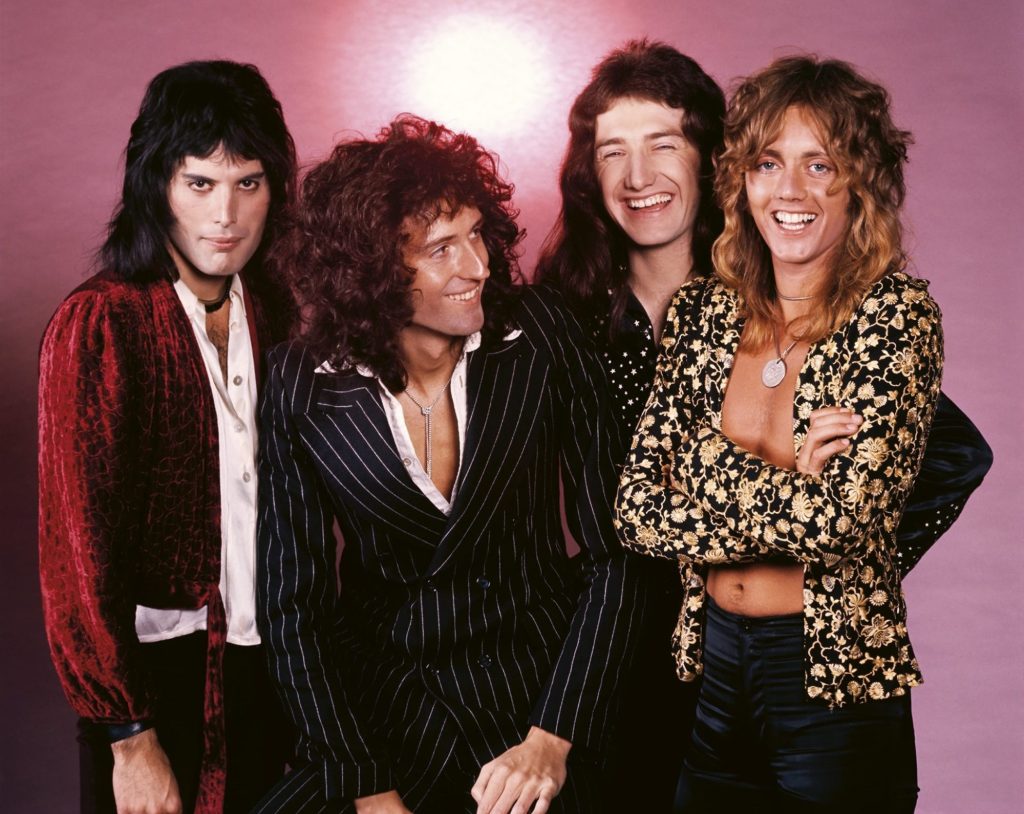
Over half a century after it set them on the path to superstardom, Queen’s regal second album, “Queen II,” remains the first great of many great pinnacles of the band’s career.
Arguably the heaviest Queen effort, it was originally released in the spring of 1974 and widely heralded as their first true masterpiece.
Now, to give it the recognition it so rightfully deserves, and with band co-founders Brian May and Roger Taylor serving as executive producers, the album has been remixed, remastered, and expanded for a lavish new box set by the team of Justin Shirley-Smith, Joshua J Macrae and Kris Fredriksson.
The five CD and two LP “Queen II Collector’s Edition” box set features a 2026 mix of the album, plus intimate fly-on-the-wall audio of Queen in the recording studio, previously unheard outtakes and demos, live tracks, and radio sessions.
It also comes with a 112-page book featuring previously unseen photographs, handwritten lyrics, diary entries, and special memorabilia, as well as memories of writing and recording the album from the band members.
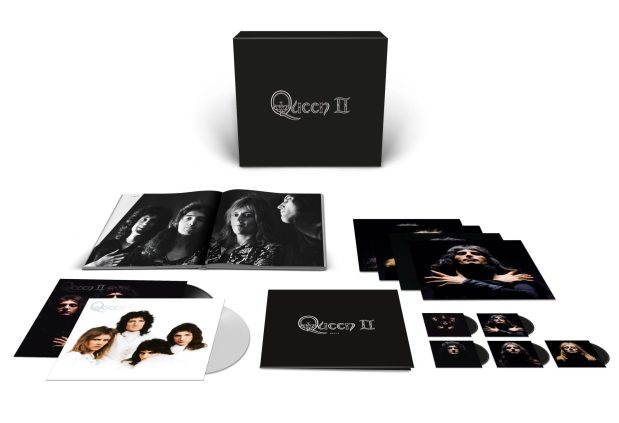 “Queen II Collector’s Edition” (COURTESY OF ELEKTRA RECORDS)
“Queen II was the single biggest leap we ever made,” says May. “That’s when we really started making music the way we wanted to, rather than the way we were being pushed into recording it.”
“With Queen II, I couldn’t believe how much work we put into it,” adds Taylor. “I think we felt we were evolving our own sound. We were pioneering this sort of multitracking thing. It gave you a tremendous palette, massive choral effects with just three of us singing.”
Queen’s self-titled 1973 debut album had established the band as one of the boldest and most unique new voices in music. Even a troubled recording process, which resulted in a sound the band was unhappy with — subsequently rectified on the 2024 reissue — couldn’t dull the brilliance of the songs, nor the ambition behind them.
For the follow-up, recorded once again at Soho’s Trident Studios with “Queen I” co-producer Roy Thomas Baker, Queen seized control of their own destiny.
They were already incredibly well-rehearsed beforehand, with “Father to Son” and “Ogre Battle” appearing in live shows as far back as September 1973.
The result was an album that didn’t so much tear up the blueprint as redraw it on a grand scale.
“I wanted to give it everything, to be self-indulgent,” said frontman Freddie Mercury at the time. “But the whole band in particular, we don’t go in for half-measures, and I’m pretty hard with myself. There are no compromises.”
Originally released in the U.K. on March 8, 1974, and stateside on April 9, 1974, “Queen II” still sounds fresh.
Bold, brave, and madly ambitious, it’s the work of a band whose self-belief and vision were unmatched. Its songs range from the intricate and complex to the raw and heavy, with vocals stacked to near-operatic levels and May’s fabled “guitar orchestra” providing a sound like no other of the era.
Rather than the traditional sides one and two, in characteristically flamboyant Queen fashion, the album is divided into “Side White” and “Side Black.”
The former is dominated by May’s songs, including soaring “Father to Son” and the ethereal “White Queen (As It Began),” with Taylor’s raucous but bittersweet “The Loser in the End” capping off the white side.
Side Black is given over to Mercury’s complexities, from the roaring “Ogre Battle” and “The Fairy Feller’s Masterstroke” inspired by a 19th-century painting by maverick artist Richard Dadd, to the quasi-mythical fanfare of “Seven Seas of Rhye,” which gave the band their very first U.K. hit single.
The centerpiece of the second side was “The March of the Black Queen,” a multi-part mini epic that, like much of “Queen II,”pointed towards the band’s sprawling future.
“‘The March of the Black Queen’ was definitely a forerunner of ‘Bohemian Rhapsody,’ ” May says. “Freddie’s mind was just working on a different level, even at that point.”
Even beyond the 2026 mix, the “Queen II Collector’s Edition” reframes the album on a much bigger canvas. The second disc, “Queen II – Sessions,” is a treasure-trove for Queen fans, presenting a completely different and previously unreleased version of every song from the album in the form of outtakes from the original Trident sessions, complete with false starts, guide vocals, the odd mistake and some fabulous studio banter among the four band members.
Most intriguingly, the “Sessions” disc also includes early versions of two songs in a solo May take on “As It Began,” aka “White Queen,” dating from 1969, plus two solo demo versions of Taylor’s “Loser in the End,” which show the song’s evolution.
Then there’s the lilting, evocative “Not for Sale (Polar Bear),” a song the band worked on during the “Queen II” sessions but never completed.
The third disc, “Backing Tracks,” complements both the album itself and the “Sessions” CD by offering mixes of the songs from the album without lead vocals, highlighting the individual musical performances of the band members.
Disc four is titled “At the BBC,” and brings together tracks from three separate sessions the band did for BBC Radio 1 DJs and early Queen supporters John Peel and Bob Harris in late 1973 and early 1974.
Two tracks, future B-side “See What a Fool I’ve Been” and a version of “Ogre Battle,” were recorded for Harris’ “Sounds of the Seventies” program and John Peel’s show, respectively, in September and December 1973, predating the release of “Queen II” by several months and showcasing the huge leap forward they’d made from their debut.
The CD is rounded out by the band’s set at the Golders Green Hippodrome on Sept. 13, 1973, a full six months before Queen II was released.
The box set is completed by the fifth disc, “Queen II Live,” a showcase of the album’s songs from concerts at North London’s fabled Rainbow Theatre on March 31, 1974, and Hammersmith Odeon in December 1975.
The story of “Queen II” is further fleshed out by the 112-page book, which shines a new light on both the album and the band, including a host of previously unseen photographs, including outtakes from Mick Rock’s legendary photo session for the album cover.
Handwritten lyrics and musical notation for the songs on the album, as well as journal entries, letters to friends and supporters, and a bounty of memorabilia, including images of vintage adverts and gig posters, turn “Queen II Collector’s Edition” into a multi-dimensional experience.
Vinyl of the Week
Keep an eye on this spot as each week we’ll be looking at new or soon-to-be-released vinyl from a variety of artists. It might be a repressing of a landmark recording, special edition, or new collection from a legendary act.
This week, it’s the 20 th anniversary of an alt-rock LP that served as a breakthrough for Blue October.
!["Blue October: "Foiled [20th Anniversary Edition]" (COURTESY OF UNIVERSAL)](https://www.newsbeep.com/us-ny/wp-content/uploads/2026/05/1779975876_554_BlueOctober_Foiled_2LP-Deluxe-Universal.jpg) “Blue October: “Foiled [20th Anniversary Edition]” (COURTESY OF UNIVERSAL)• Blue October: “Foiled [20th Anniversary Edition]”
“Blue October: “Foiled [20th Anniversary Edition]” (COURTESY OF UNIVERSAL)• Blue October: “Foiled [20th Anniversary Edition]”
Twenty years after the album that launched them into the global spotlight, Blue October celebrates the anniversary of their platinum-selling record “Foiled” with three special vinyl releases, arriving on shelves on Friday.
The anniversary set comes in three distinct versions: a newly remastered “Foiled” two-LP on 180-gram black vinyl, featuring a gatefold jacket and fold-out lyric insert, a deluxe two-LP edition pressed on smoky translucent vinyl, and a two-LP set limited to the band’s webstore and on tour dates, pressed on silver marble vinyl.
The deluxe edition serves as the crown jewel of the collection, featuring exclusive bonus tracks not available on any other version, including an acoustic recording of the Platinum-certified “Hate Me” and two rare remixes of “X Amount of Words.”
It was the deeply personal songwriting and emotionally resonant sound on “Foiled” that cemented the Houston-bred Blue October as one of rock’s most distinctive voices.
While the record marked a breakthrough moment for the band, it was only the beginning, as the impact continues to ripple outwardas new listeners discover the album alongside the expansive catalog that followed.
The connection many felt through its lyrics has only deepened over time, helping grow a devoted global audience.
Initially, “Foiled” sent frontman Justin Furstenfeld and Blue October’s life into a whirlwind. He wrote the songs during an intensely personal period while living alone in Los Angeles, first capturing them as raw demos that reflected equally exposed vulnerability.
Produced by Furstenfeld and David Castell, the collection balances deeply confessional lyrics with soaring melodies and emotional honesty that became a hallmark of the group.
Ultimately cracking the Billboard Rock Chart Top 10, “Foiled” remains a cornerstone of early ’00s alternative rock, anchored by Billboard-charting hits, including the aforementioned “Hate Me,” “Into the Ocean,” and fan favorite “She’s My Ride Home.”
This fall, Blue October will further celebrate “Foiled” by performing the record in its entirety on an extensive tour. Regionally, the band will be showcasing the LP at the F.M. Kirby Center for the Performing Arts in Wilkes-Barre on Nov. 14 and the following night in Philly at The Fillmore.
The 20th anniversary of “Foiled” can be found online and from all respectable retailers who carry vinyl.
To contact music columnist Michael Christopher, send an email to rockmusicmenu@gmail.com. Also, check out his website at thechroniclesofmc.com.