
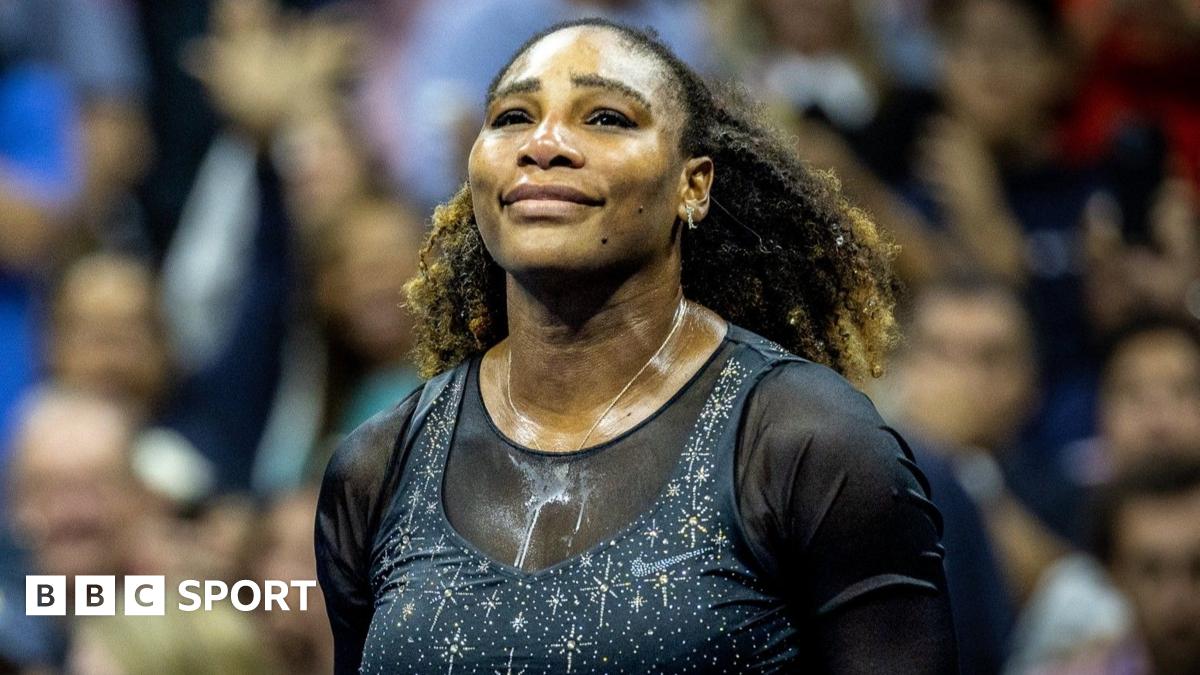
Tennis icon Serena Williams is reportedly orchestrating a sensational return to the professional circuit, entering deep discussions to compete at the prestigious Queen’s Club tournament in London this June. The unprecedented move would resurrect one of the most dominant careers in the history of global sport.
Four years after bidding an emotional, tear-soaked farewell to the sport at the 2022 US Open, the 44-year-old titan has meticulously laid the groundwork for her return. Having quietly re-entered the rigorous anti-doping protocols six months ago, Williams was officially cleared for competitive play in late February. Sources within the sport confirm she is actively requesting wildcard entries, targeting a doubles partnership with 19-year-old Canadian phenom Victoria Mboko as a strategic precursor to a potential Wimbledon appearance.
The Anatomy of a Methodical Comeback
This is not a spontaneous decision born of nostalgia, but a calculated, heavily regimented athletic operation. The administrative hurdle of re-entering the World Anti-Doping Agency testing pool signaled her genuine intent long before the rumors surfaced. By fulfilling the mandatory six-month testing window, Williams has cleared the bureaucratic path back to the baseline. Former world number one Andy Roddick, alongside tennis insider Jon Wertheim, confirmed the logistical maneuvers on their popular podcast, noting that Williams is personally driving the requests for wildcard slots rather than waiting for tournament directors to approach her. The sheer gravitational pull of her legacy ensures that any event, particularly the WTA 500 at Queen’s, will instantly accommodate her requirements, setting the stage for a spectacular grass-court campaign.
The Doubles Strategy: Precision Over Endurance
The tactical decision to launch her comeback via the doubles format is an act of sheer competitive brilliance. Grass courts are notoriously unforgiving, demanding explosive lateral movement and punishing the joints. By partnering with the teenage sensation Victoria Mboko, currently ranked number nine globally after surging through the Canadian Open, Williams effectively halves her required court coverage. Doubles play relies intensely on split-second reflexes, dominant serving, and aggressive net play—attributes that remain largely immune to the ravages of age. For a 44-year-old returning from a four-year hiatus, the team dynamic provides a controlled environment to recalibrate her match rhythm without the agonizing cardiovascular demands of a grueling three-set singles marathon.
The Grass Court Legacy
London remains the spiritual home of Serena Williams’s dominance. Her unparalleled record at the All England Club includes seven Wimbledon singles titles and an astonishing six women’s doubles titles alongside her sister Venus, who is remarkably still active on the WTA Tour. The Queen’s Club event, commencing on June 8, serves as the ultimate crucible to test her readiness for the brutal realities of Wimbledon, which begins three weeks later. While her initial foray is focused strictly on doubles, elite commentators universally suspect that a successful showing at Queen’s will inevitably trigger a singles wildcard request for Wimbledon. A return to Center Court would generate unprecedented global viewership, transcending tennis to become a defining cultural moment of the decade.
Global Inspiration and the African Court
The resonance of Williams’s return extends far beyond the manicured lawns of West London; it reverberates deeply within emerging tennis communities worldwide. In East Africa, where the sport is experiencing a fragile renaissance spearheaded by talents like Kenya’s Angella Okutoyi, Williams remains the ultimate archetype of baseline power and racial barrier-breaking. Her refusal to quietly accept retirement challenges the systemic ageism pervasive in women’s sports. For young African athletes navigating underfunded federations and limited infrastructure, watching a 44-year-old mother of two command the world stage reinforces the belief that athletic longevity and dominance are defined entirely by willpower, not convention.
The Legacy by the Numbers23: The number of Grand Slam singles titles Williams holds, the most in the Open Era.14: Her total major women’s doubles titles, showcasing her elite versatility on the court.Six Months: The mandatory duration Williams spent in the testing pool to achieve WTA eligibility.44: Her current age, defying biological precedent for high-impact professional racquet sports.
The sporting world is holding its collective breath. Whether this comeback yields another historic trophy or simply provides one final victory lap, Serena Williams is proving once again that she refuses to let anyone else write her final chapter.