
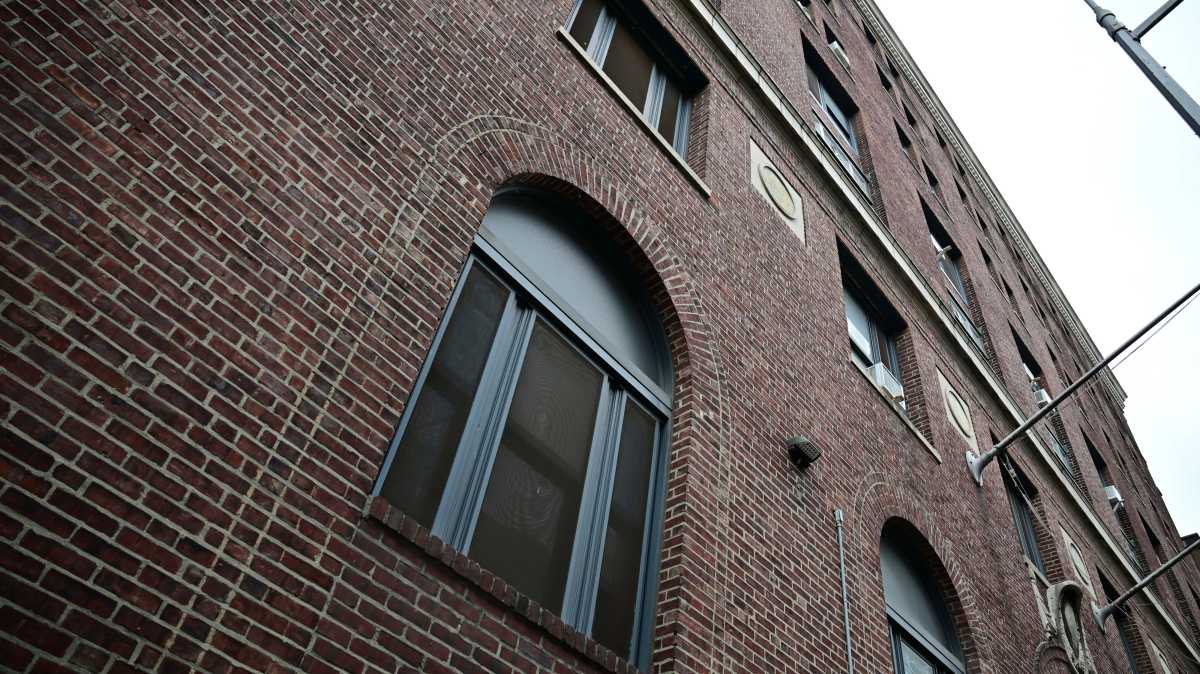
A Manhattan judge Thursday questioned city attorneys on the Mamdani administration’s plans to move a homeless intake center to the East Village, appearing skeptical of city arguments that it had the authority to do so without public review processes, a group of residents suing to block the center alleges the city improperly bypassed.
While Supreme Court Judge Sabrina Kaus declined to rule on May 28 regarding whether the intake center may open, she has already given a temporary victory to V.O.I.C.E, the unincorporated group of East Villagers opposing the plan over “neighborhood safety concerns,” and allegations the city “rushed” the plan without properly informing them.
Earlier this month, Kaus issued a temporary order prohibiting the city from changing the 8 East 3rd St. site, which currently operates as a men’s homeless shelter, into an intake center on its planned date of May 1.
The city says it’s necessary to move homeless intake services to the East Village and out of their current location at the dilapidated Bellevue shelter in midtown as it repairs safety issues in that building. It’s well within its right to do that without triggering public review processes, the city argued, because city agencies have broad authority to rearrange shelter services and the site would still be used for the same general purpose – to serve homeless men – meaning there wouldn’t be a significant change in use.
Kaus appeared to see value in arguments from V.O.I.C.E., represented by ex-Mayor Eric Adams’ former First Deputy Mayor Randy Mastro, that the switch from a shelter to an intake center could be subject to review processes, suggesting that the fact that the city plans to increase security at the site after changing it into an intake center seemed to demonstrate there would be a significant change that would trigger reviews.
“You’re increasing security just for the heck of it, not because there’s increased danger?” Kaus asked. “You’re putting more security because of the change in what’s happening now and what will happen will increase danger.”
“People experiencing homelessness are not an inherent danger to neighborhoods,” city attorney Leia Seereeram said. “That is the basis of [V.O.I.C.E.’s] argument and we reject that premise,” adding that the reason the city was adding security was because there were “more unknowns” around a transient intake population.
“Counsel. I mean, come on,” Kaus responded. “You’re acknowledging an increased security risk and you’re planning for it … If it’s gonna be the same as it is right now, why would you need that change?”
Questioning the East Village homeless intake center construction
Seereeram said the change in security did not warrant public review, emphasizing that the same homeless population would be served and that the site had been an intake center in the 1980s. To necessitate public review, the change would have to be a city capital project, which she said it isn’t.
While Mastro argued that, according to resident photos, the city was carrying out over $1 million worth of construction and appeared to be doing a “gut demolition” on the building made it a capital project, Seereeram said that the construction didn’t touch any structural parts of the building and were simply renovations to make required accessibility improvements, so it wasn’t meaningfully changing the building’s use or function, nor was it a capital project.
She added that if the city were to be subject to public review processes for every accessibility improvement it made to city buildings, the city would “grind to a halt.”
City Hall did not respond to a request for comment. A Mamdani spokesperson previously said it will continue running intake services out of Bellevue until it’s able to move into this East Village location.
The Legal Aid Society said it was “concerned,” about this, as Bellevue has significant safety issues, indicated by the city’s need to repair it. Staff attorney Josh Goldfein told amNewYork it was “frustrating” that the judge declined to rule on the case today and leave the issue unresolved.
The Legal Aid Society has previously called Kaus’s handling of the case out of the ordinary, saying that judges usually don’t take cases against homeless shelters so seriously, as there is little, if any, legal basis for the arguments groups opposing them are making, calling the judge’s decision to even temporarily halt the shelter’s opening strange.
“Usually, in the long history of NIMBY cases opposing shelters opening, judges have seen that the neighbors don’t have any good faith basis to block the opening of the shelter, and they nip it in the bud,” Goldfein said. “For whatever reason, this judge saw something that made her think it was okay to delay the opening of the new intake site for a period of weeks, despite the fact that the city expressed to her their concern that someone is going to get hurt if they continue to have to use the existing intake office.”
Kaus Thursday said she believed the case was different from other NIMBY cases she’d seen because she thought the East Village community was “open to living with unhoused,” citing their argument that they didn’t oppose the site’s current homeless shelter, but felt this specific change would have a greater impact on their lives because it would bring in a more transient population and that they were not properly informed about it.
“It’s not a ‘not in our backyard’ kind of case … this is not that,” Kaus said. What this was, she said, was a case where a change was happening without enough information sharing, due process or addressing of community concerns.
When asked about the judge’s remarks, Goldfein told amNewYork he felt that wasn’t an accurate characteristic, adding that people saying they just needed more information is “exactly the same as any other NIMBY case.”
Kaus made no indication on when she intends to rule on the case. She said she’d make herself available to both sides if they wanted to attempt to seek a compromise settlement prior to her ruling.
The next court date is set for June 4.