
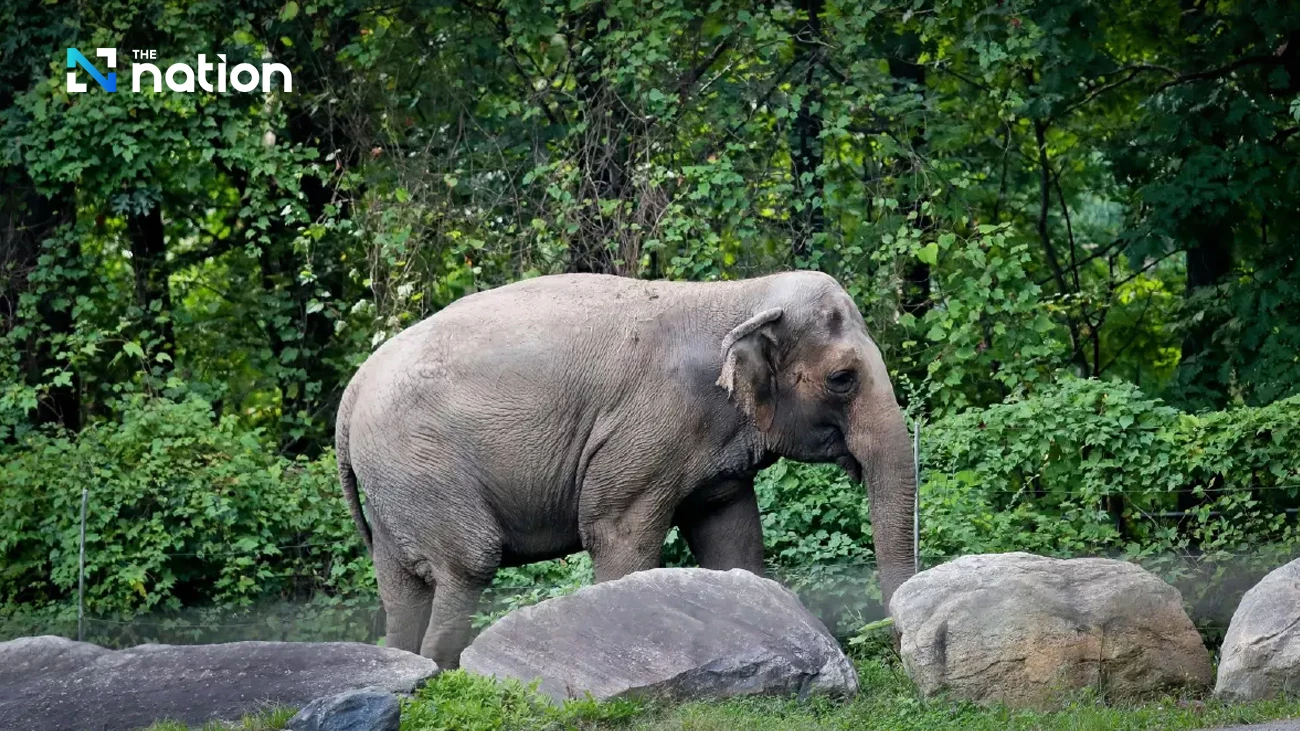
Happy’s death at the Bronx Zoo ends a half-century in captivity and closes a historic chapter in the global fight over animal autonomy.
Happy, the captive Thai elephant who altered the scientific understanding of animal self-awareness and became the global focal point of a landmark legal battle over non-human “personhood”, has been euthanised at the age of 55.
The legal advocacy group Nonhuman Rights Project confirmed that the Asian elephant was put to sleep at the Bronx Zoo on Tuesday following a rapid decline in her health.
Post-mortem findings revealed she suffered from advanced arthritis and a large, inoperable uterine tumour, alongside liver and kidney failure.
Her death leaves the zoo with just one remaining elephant, marking the twilight of large mammal exhibition at the historic New York institution.
From the Thai wild to scientific history
Captured in the wild in Thailand in the 1970s, Happy was separated from her herd at just one year old and imported to the United States. She arrived at the Bronx Zoo in 1977, where she spent nearly five decades in captivity.
While her early years reflected the traditional entertainment-focused role of zoo animals, Happy secured a permanent place in scientific history in 2005.
During a cognitive experiment, she became the first elephant documented to pass the mirror self-recognition test—a benchmark of self-awareness previously observed only in humans, great apes, and dolphins.