
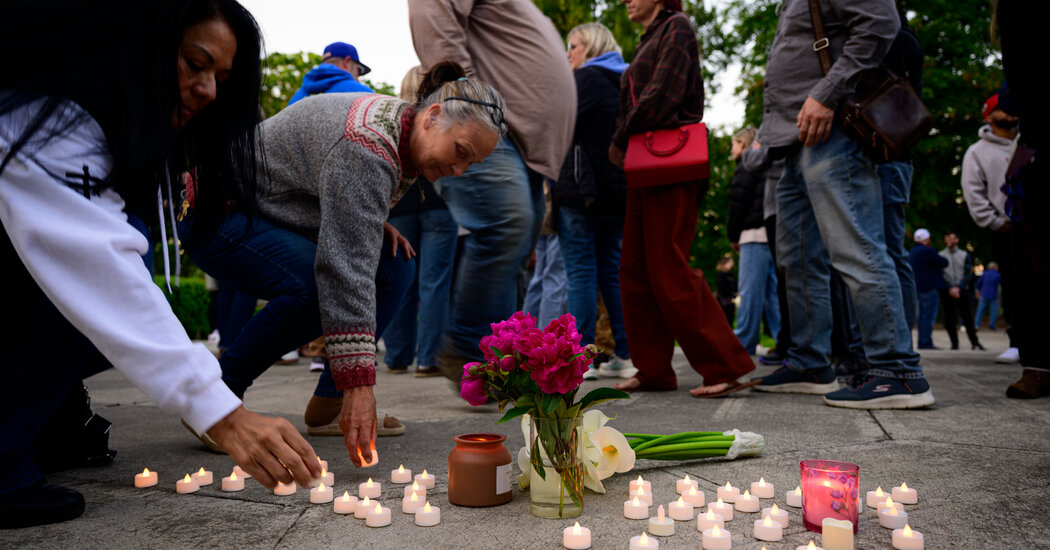
Crews searching the site of the paper mill explosion this week in Longview, Wash., have recovered seven bodies, bringing the confirmed death toll to nine, but the work to find all the missing has been slow because the area around a destroyed chemical tank remains dangerous.
A tank holding 600,000 gallons of “white liquor,” a caustic chemical used in the process of turning wood chips into packaging board used in milk and juice cartons, exploded a little after 7 a.m. Tuesday at the Nippon Dynawave Packaging plant.
On Friday, emergency workers continued to search for the remains of workers caught in the blast, which occurred during an early morning shift change.
Most of the dead and missing were in an area where employees gathered before getting their assignments for the day, Matt Amos, a battalion chief with the Longview Fire Department, said Thursday.
Firefighters believe there are two more bodies they have not reached yet, making the plant explosion the worst industrial disaster in the state’s modern history. They said the work was arduous because of structural damage to the plant and the mix of water and chemicals standing near the tank. Crews must wear protective gear and undergo decontamination and a health check each time they search. They have not been able to approach the chemical tank itself and can enter the explosion site only a few times a day.
The Longview fire chief, Brad Hannig, said Thursday that he knew families of missing workers were anxious for clarity but that recovery crews had to balance that desire for information with the risk they faced.
“It still continues to be a highly complex industrial hazard,” Mr. Amos said. “It’s very labor intensive and takes a lot of personnel.”
Environmental regulators have been monitoring the air around the plant and downwind for dangerous chemicals, including hydrogen sulfide, which can cause nausea and dizziness even at low levels, but have not detected anything that is unusual or cause for concern.
Longview’s drinking water, which comes from aquifers 200 feet underground that are charged by the Columbia River, was not contaminated. But chemicals from the plant did enter the local storm water drainage system and a ditch that sits above an aquifer, and there have been reports of dead carp and other fish by a dike near the plant and a stronger-than-usual odor caused by contamination.
City water crews spent much of the week flushing water and opening hydrants to push potentially contaminated water out of the drainage system and into the Columbia. Environmental regulators are not worried about contamination in the river because of its size, though they warned that fish killed in the Longview drainage system may inadvertently end up in the river as part of the flushing process, so people should not touch or approach dead fish found in the Columbia.
“It is safe to swim and fish in the Columbia River right now,” Brooks Stanfield of the Environmental Protection Agency said Thursday. “There are no warnings or advisories.”
Around 550 people work at the Nippon Dynawave factory. The plant is not fully shut down; a company executive, Brian Wood, said Thursday that “critical operations,” such as an effluent treatment system, were continuing. Workers who are not allowed on the site right now are being paid, he said.
The company has also begun pumping out caustic chemicals released when the tank imploded, beginning cleanup work that will expand after all the bodies have been recovered.