
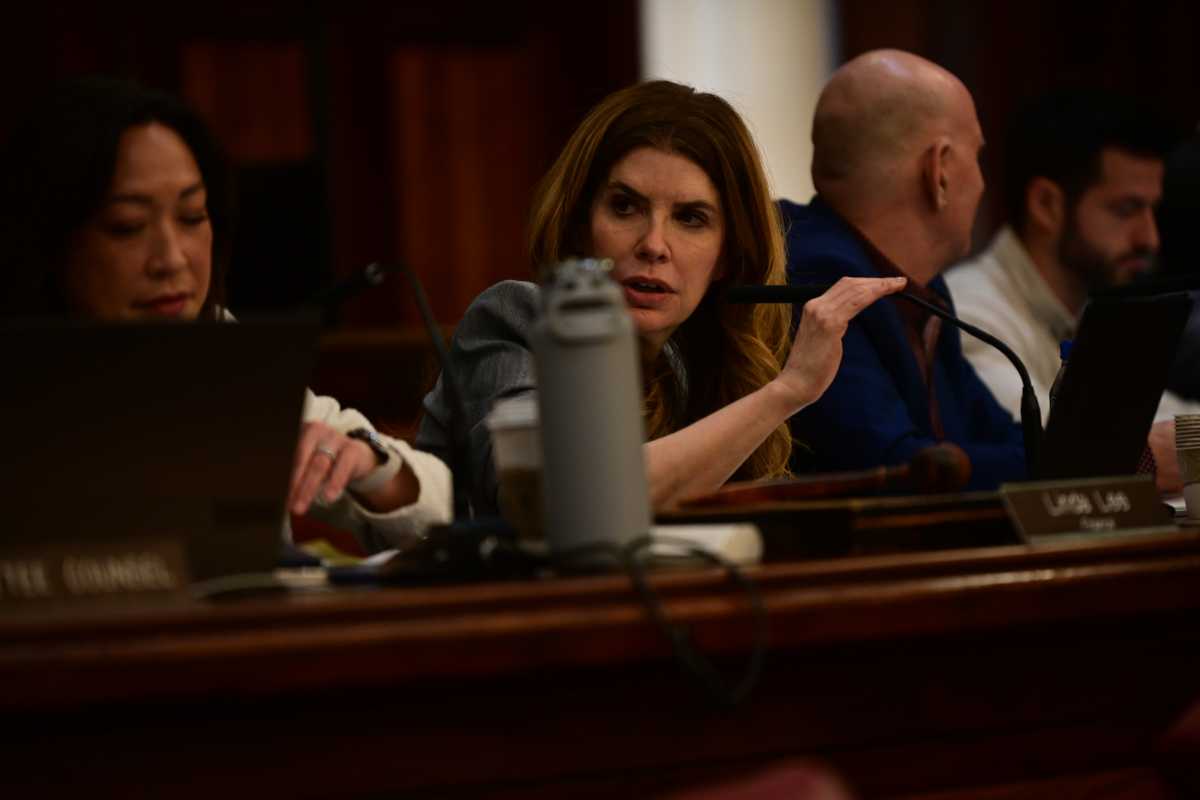
The City Council urged Mayor Zohran Mamdani on Friday to budget an additional $32 million for the agency tasked with enforcing dozens of its laws — expressing concern that without the extra money, a chunk of the landmark worker protection legislation that it passed in recent years won’t actually work.
The council’s proposal would bring the Department of Consumer and Worker Protection’s (DCWP) budget to just about $111 million, a roughly 40% increase from Mamdani’s May budget proposal, which allocated $78.4 million to the agency.
Council members are anxious that the agency receives sufficient funding because the success of some of their most critical and hard-fought legislation is directly tied to the amount of funding it receives. That includes laws that increase job security for Uber and Lyft drivers, raise the minimum wage for food delivery workers and security guards, ban the majority of broker’s fees, and expand street vendor permitting.
DCWP Commissioner Sam Levine, who has carefully avoided positioning himself against the mayor who appointed him throughout the budget fight, maintained confidence Friday that his agency had enough money to enforce all of the council’s laws without the extra $32 million. Nevertheless, City Council Speaker Julie Menin and her colleagues didn’t seem so sure.
“We in the council feel this is insufficient funding to handle DCWP’s ability to investigate complaints and impose local laws,” Menin said. “I’m concerned about whether the department has sufficient staffing for its wide range of oversight and enforcement responsibilities.”
City Hall has touted its May budget plan of $78.4 million for DCWP as a historic investment in the agency. But that number is actually about 4% less than the $81.6 million the agency had last year, and a far cry from the $135 million Mamdani pledged for the department on the campaign trail when he said he’d double its 2025 budget of $67.5 million.
When amNewYork asked whether Mamdani would up DCWP’s budget by $32 million in response to the council’s request, a City Hall spokesperson did not directly answer the question. He instead pointed to the mayor’s “investment” in the agency this budget cycle and said it was “one of the most powerful tools we have to protect working people and crack down on corporate abuse.”
DCWP head in a tight spot
The council’s push to secure extra money for DCWP came as a surprise to Levine, who only learned of it a few hours before the council hearing where members first made the proposal public. It seemed to put him in a bit of a tight spot between an apparent desire not to overstep the mayor’s budget proposal and an opportunity to get more money for his agency.
Levine said that, while he appreciated the council’s confidence in DCWP, additional funding to hire more staff wouldn’t necessarily alleviate concerns that the agency was overburdened. New staff have to be trained, he said, and the time current staff spends onboarding new staff is time they aren’t spending enforcing worker and consumer protection laws.
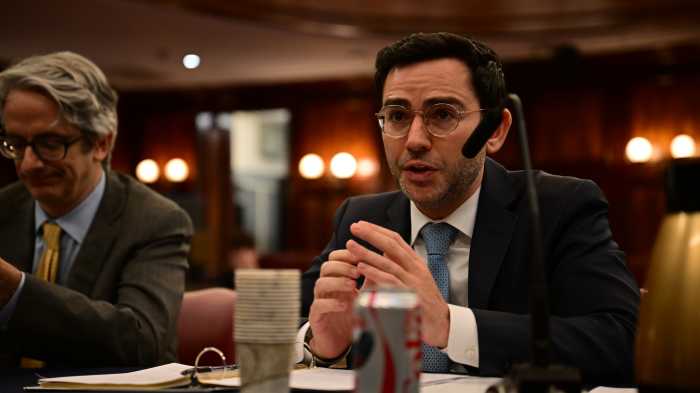 Levine speaks at his agency’s City Council budget hearing.Photo by Lloyd Mitchell
Analysis from the city’s independent Office of Management and Budget (OMB) backs up the council’s concern that its laws could be toothless if DCWP isn’t able to quickly hire enough lawyers and investigators to ensure big companies are actually complying with its legislation and sue over violations if they aren’t.
OMB found that the agency needs 193 new staff to properly enforce laws increasing job security for Uber, Lyft and food delivery drivers; another 60 to enforce laws raising the minimum wage for security guards and food delivery workers; and 26 more employees to handle the influx of street vending permits stemming from the council’s landmark package of street vendor reforms it overrode a veto from ex-Mayor Eric Adams to pass.
In total, the department says it needs roughly 300 additional staff to carry out its new responsibilities. The mayor’s May budget, however, would pay for only about 77 additional agency employees.
“We’ve done the work to pass these laws, but we don’t have the resources to ensure we will be getting the results that we need,” Menin said. “The council has passed so many important bills, so we really want to make sure that the agency then has the proper resources to enforce them.”
Former DCWP chair Lorelei Salas, who served the agency under ex-Mayor Bill de Blasio, and worker advocacy groups, like the Workers Justice Project, Los Deliveristas and the Street Vendor Project, have also told amNewYork the agency needs more funding if it’s going to be able to properly carry out its duties.
The city’s final budget is due June 30.