
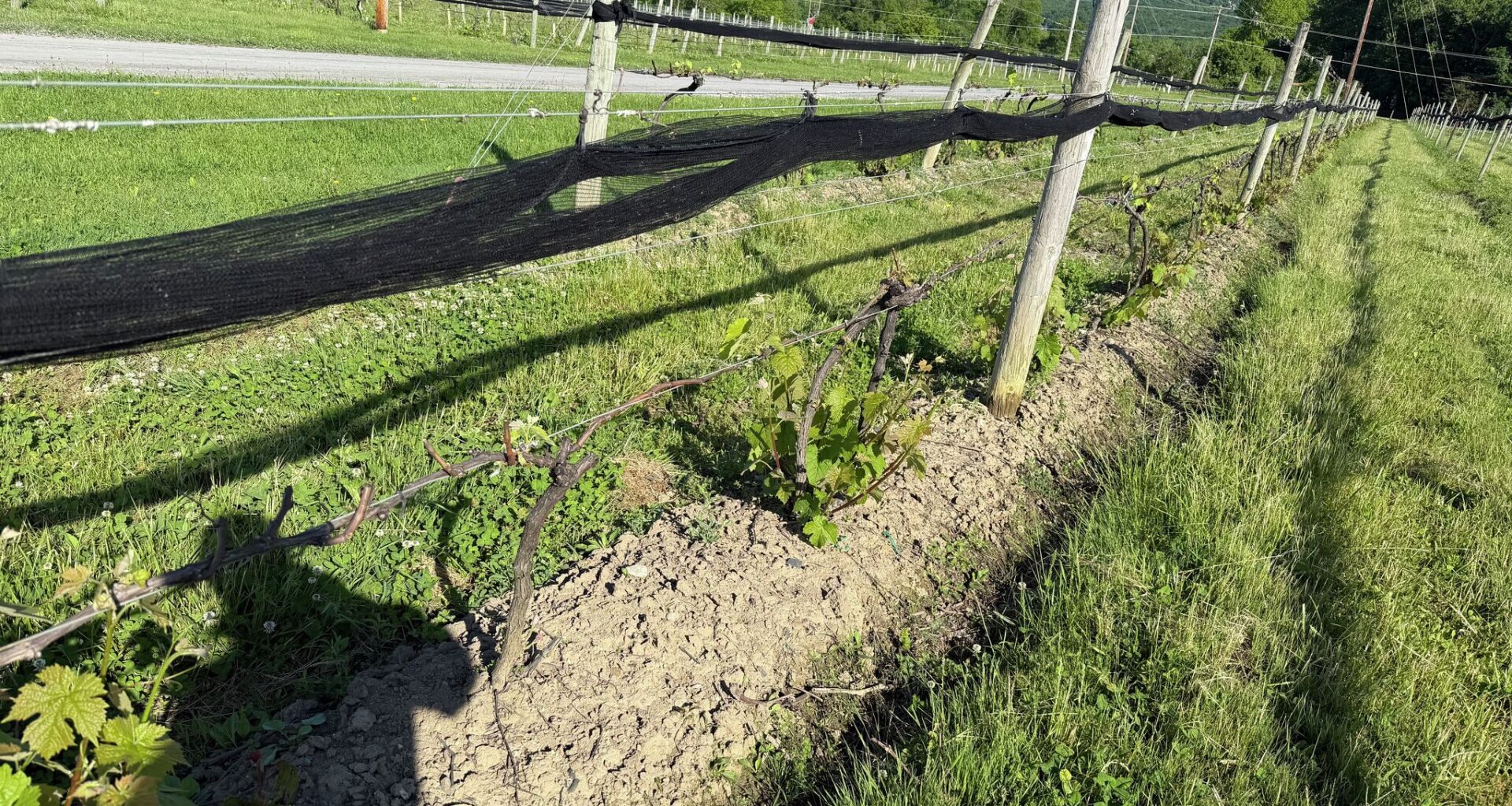
Whitecliff Winery co-owner Michael Migliore’s grape crop in Gardiner, Ulster County, was decimated by freezing temperatures on April 19 and 20. Fruit crops were impacted throughout upstate New York.
Courtesy of Michael Migliore
NEW PALTZ — Tim Dressel of Dressel Farms in Ulster County put it bluntly.

“This was the worst freeze any of us has ever seen, including my 90-year-old grandfather,” he said Friday.
Article continues below this ad
The freeze on April 20 and 21 sent temperatures plunging into the low-to-mid 20s across upstate New York, after unseasonably warm weather earlier that month had caused crops to bud ahead of schedule. It reached 86 degrees in Albany on April 14, according to the National Oceanic and Atmospheric Administration. When the cold arrived days later, many of the emerging blooms were killed.
Dressel called it a “perfect storm” for crop losses. The full extent of the damage will not be known until harvest season, but he estimated he lost 80% to 90% of his apples and peaches. His strawberries fared better.
Federal crop insurance would “keep us afloat,” Dressel said, allowing the farm to pay property taxes and some bills. He would at least keep the farm. But the payout would not be enough to fund much else. Dressel does not plan to hire additional seasonal workers this summer and fall as he usually does, and paying current employees will be a struggle.
Make the Times Union a Preferred Source on Google to see more of our journalism when you search.
Add Preferred Source
Now, state officials are pressing the USDA to declare a disaster, which would open low-interest loans to farmers who reported losses in impacted counties — Albany, Chautauqua, Columbia, Dutchess, Erie, Greene, Niagara, Onondaga, Orange, Putnam, Schuyler, Sullivan, Ulster, Westchester and Yates — as well as counties bordering them. If a disaster is declared, farmers must file within eight months of the event and meet various criteria.
Article continues below this ad
Gov. Kathy Hochul officially requested a Secretarial Disaster Designation on May 20. In a statement Thursday, Hochul said New York farmers took “a significant hit” and urged the federal government to take “swift action” to “help our growers get the assistance they need to recover and move forward.”
She also encouraged New Yorkers to support hard-hit growers, “whether it’s by buying fresh local products from the farm or purchasing the many products made from New York fruit.”
U.S. Sen. Kirsten Gillibrand, U.S. Reps. Pat Ryan and John W. Mannion, and state Sen. Michelle Hinchey echoed Hochul’s call for a disaster declaration.
Damage to apple buds at Crist Bros Orchards in Orange County.
Courtesy of the Courtesy New York Department of Agriculture and Markets
The frost comes three years after low temperatures decimated apple and grape crops in upstate New York. Michael Migliore, the co-owner of Whitecliff Winery and the president of the Hudson Valley Wine & Grape Association, said at the time that the mid-May freeze was the worst in 60 years.
Article continues below this ad
This time around, Migliore said his grapes in Gardiner were completely wiped out. But he considers himself luckier than most farmers he had spoken to — his crop in East Durham had not yet budded and was spared, while his vineyards outside Hudson and Newburgh, which are close to the moderating effects of the Hudson River, did not experience temperatures cold enough to kill them.
But other members of his association reported vineyard losses between 50% and 80%, while some were more fortunate and estimated losses between 20% and 30%. Large viticultural operations fared best, Migliore said, because they could rent helicopters to push warmer air downward due to temperature inversion.
Migliore had giant fans designed to force down warm air, but he did not even bother turning them on. They would have raised the temperature only slightly, and it was already 20 degrees outside.
The freeze did not only impact New York. Pennsylvania farms could suffer losses between $150 million and $200 million, according to Gov. Josh Shapiro. The USDA declared a disaster Tuesday in 17 counties in the state due to the freeze.
Article continues below this ad
The damage in New York varied widely by farm and crop. Apples, peaches, grapes, plums and cherries were particularly badly hit. Dressel said he could not find a single living Red Delicious apple bud on his farm, but his Gala apples fared relatively well because that variety buds later in the season.
A survey conducted by the New York State Department of Agriculture and Markets estimates that many growers are facing losses anywhere from 15% to 100%, with an estimated economic loss of more than $30 million, according to the governor’s office, a number that could grow significantly.
Mannion, who represents a district including Syracuse and Cortland, said in a statement that the cold snap “could have a serious impact on fruit farmers across NY-22 this year.” He said he “strongly supported” ensuring impacted producers could access emergency assistance, low-interest loans and additional relief programs.
Article continues below this ad
Dressel said he tries not to rely on USDA loans: they “can be helpful, but you still have to be able to pay them back in the future, and digging a deeper hole when we’re struggling is not always the best plan.”
However, Dressel added that “if there’s something that needs to get done, then (the loans) are a nice thing to have as an option.”