
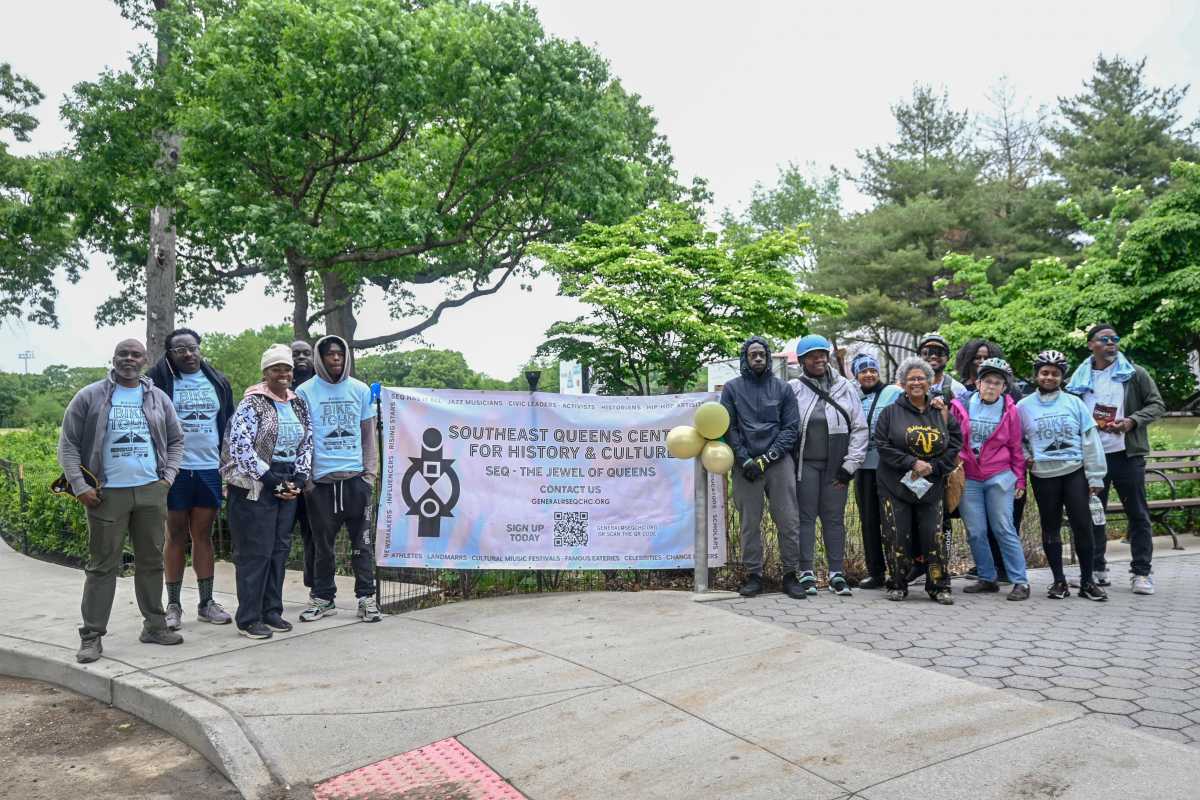
On May 23, the Southeast Queens Center for History & Culture (SEQHC) hosted its second annual Jazz & Heritage Bike Tour, where guests could pedal through the Addisleigh Park Historical District and its surrounding areas in St. Albans, visiting recognizable places such as the homes of W.E.B. Du Bois, Count Basie, and Ella Fitzgerald, as well as the laundromat where the rap group A Tribe Called Quest filmed their music video for the song, “Check the Rhime.”
“We got to visit historical landmarks within and around St. Albans, specifically Addisleigh Park, going to see the homes of jazz legends like Ella Fitzgerald, Count Basie, and Lena Horne,” said Ayanna Telfort, president of SEQHC. “But then also seeing just the neighborhood and knowing that we had celebrities of all different levels, we had civic leaders […] seeing the murals that we took to dedicate to their memories and their legacy.”
 The Southeast Queens Center for History & Culture hosted its second annual Jazz & Heritage Bike Tour, where guests could pedal through the Addisleigh Park Historical District and its surrounding areas in St. Albans.Photo by Alice Moreno
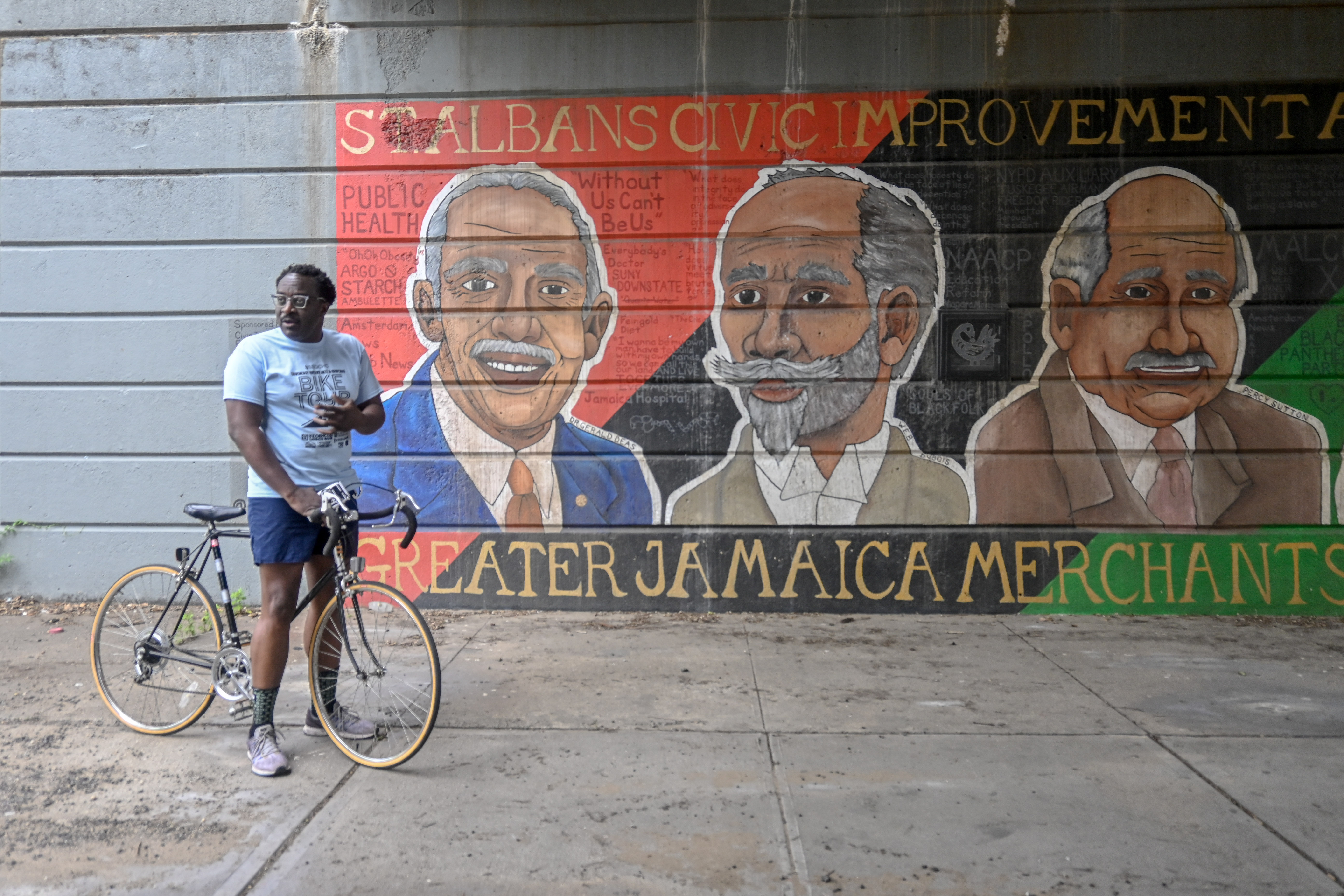 The Southeast Queens Center for History & Culture hosted its second annual Jazz & Heritage Bike Tour, where guests could pedal through the Addisleigh Park Historical District and its surrounding areas in St. Albans.Photo by Alice Moreno
The purpose of the event is to bring forth attention to the historical and cultural richness in southeast Queens. Though only focusing on St. Albans, Telfort hopes to expand to other areas, including Cambria Heights, Laurelton and Springfield Gardens, which she refers to as the “historic wonderland of Queens.”
“It’s important for us to not just talk about history for history’s sake,” said Telfort. “We want to inspire the next generation to take pride within their community. We are hoping that it helps them want to get educated and come back here, start businesses here, bring their families here, to help Southeast Queens continue to grow and flourish, to not only be a beacon of cultural richness, but also economic development.”
 The Southeast Queens Center for History & Culture hosted its second annual Jazz & Heritage Bike Tour, where guests could pedal through the Addisleigh Park Historical District and its surrounding areas in St. Albans.Photo by Alice Moreno
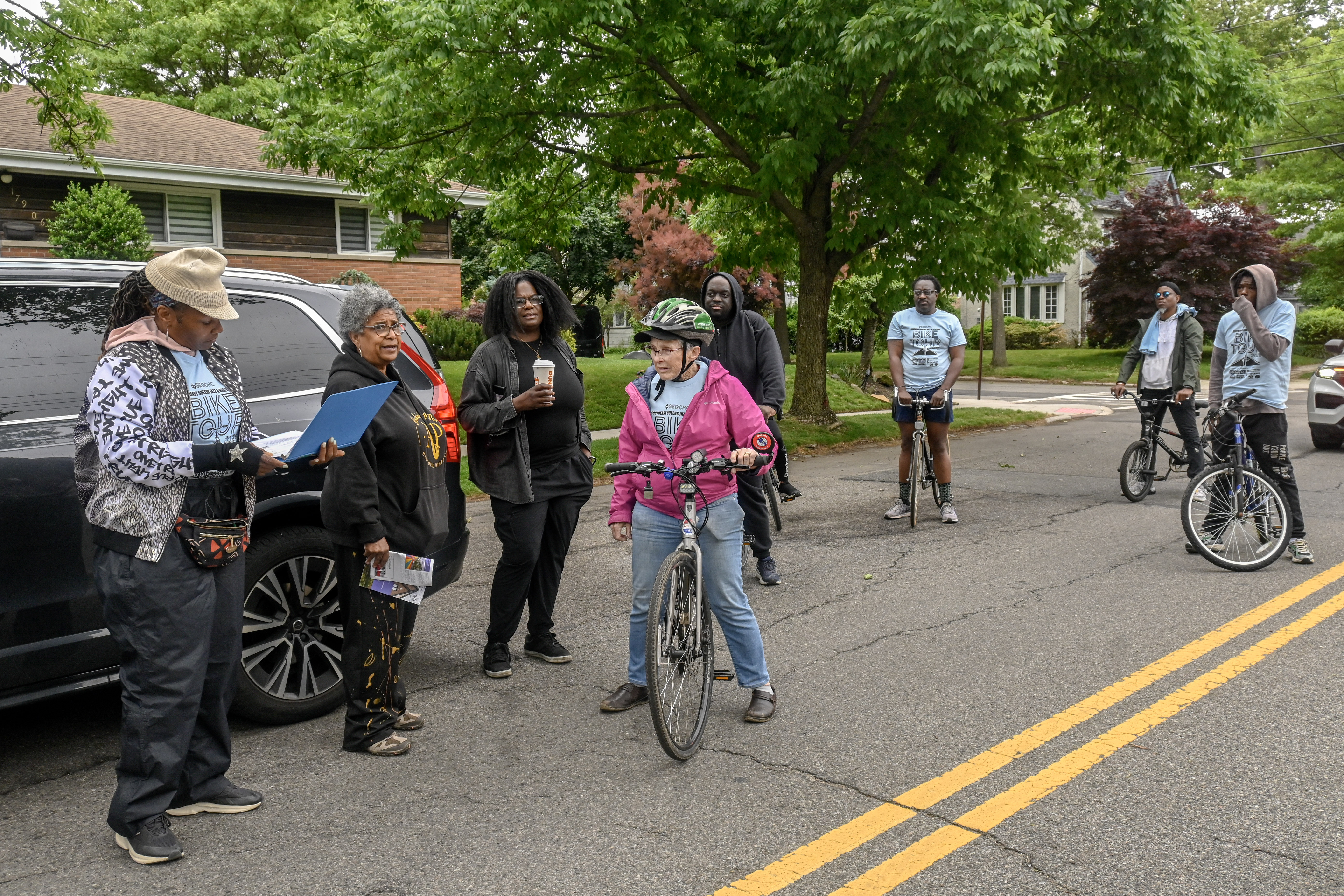 The Southeast Queens Center for History & Culture hosted its second annual Jazz & Heritage Bike Tour, where guests could pedal through the Addisleigh Park Historical District and its surrounding areas in St. Albans.Photo by Alice Moreno
The bike tour had guests of all ages, interesting to learn more about the cultural history of St. Albans. The tour began in the Addisleigh Park Historical District. A suburban enclave, it went from being a segregated neighborhood to a predominately Black neighborhood by the 1950s. Filled to the brim with tudor-style houses, guests got to see a plethora of former homes of jazz and historical legends. It was once referred to as the “Black Hollywood,” for its famous homeowners.
As the bikes toured the neighborhood, guests got to stop at a small parked coined “The Live End.” A colorful, car-free space with basketball hoops and a Little Free Library, it was created by the Addisleigh Park Civic Association.
Then, guests got to see the Nu-Clear Cleaners laundromat, famous for being the location of the music video of A Tribe Called Quest song “Check the Rhime.” It was filmed on the rooftop in 1991, and to commemorate this, a mural was placed on the side of the laundromat. Built after the death of member Phife Dawg, the mural features the faces of the members, the album cover of “The Low End Theory,” and the group’s logo.
Guests also got to see a variety of murals throughout St. Albans. One of the murals – which features all the Jazz legends who lived in the area – lies by the LIRR Station. Another mural was created by the St. Albans Civic Improvement Association. Painted with the colors of the Pan-African flag, it features renowned leaders such as W.E.B. Du Bois, Percy Sutton, and Assata Shakur.
To conclude, guests were invited to tour the legendary Black Spectrum Theatre. Since its opening in 1970, the Black Spectrum Theatre has hosted shows that focus and bring awareness to issues in the African-American community.