
Advocacy group 9/11 Health Watch celebrated Manhattan Supreme Court Judge James Clyne’s May decision forcing officials to testify. Attorney Andrew Carboy said the group was glad it had those 68 boxes of records now, but felt the public deserved an explanation as to how and why the city initially told advocates who filed Freedom of Information Act requests for the records it didn’t have anything to share from the months following the attack when it actually had hundreds of thousands of documents, calling it extremely concerning.
“I mean, it’s crazy,” Carboy said of how the city handled producing documents about what it knew and when about the danger of Lower Manhattan’s air quality after the attack 25 years ago this September. “The court has determined we are entitled to an explanation for these wild contradictions.”
Clyne’s decision to force the officials to testify is notable. It’s incredibly uncommon for live testimony to be permitted in these types of suits against city decisions, particularly those regarding FOIA determinations, Carboy said, adding that he “didn’t envy” those who’d be forced to take the stand.
“I told the judge, ‘Look, we’re not asking you to rule on what the city did right or did wrong in response to 9/11. We’re only asking for [testimony from] these record searchers, because the story keeps changing,’” Carboy said. “So, to preserve the integrity of the court system in this proceeding, he is allowing us to ask the record searchers these questions.”
9/11 Health Watch sued the city in March over its refusal to turn over air quality records after it submitted FOIA requests in 2023 for risk assessments the city performed and communications between city agencies and the federal government immediately after the attack. The group’s said its goal is to ascertain how the city made the decision to tell the public that the air in lower Manhattan immediately following the attacks was so safe that life could essentially go back to normal.
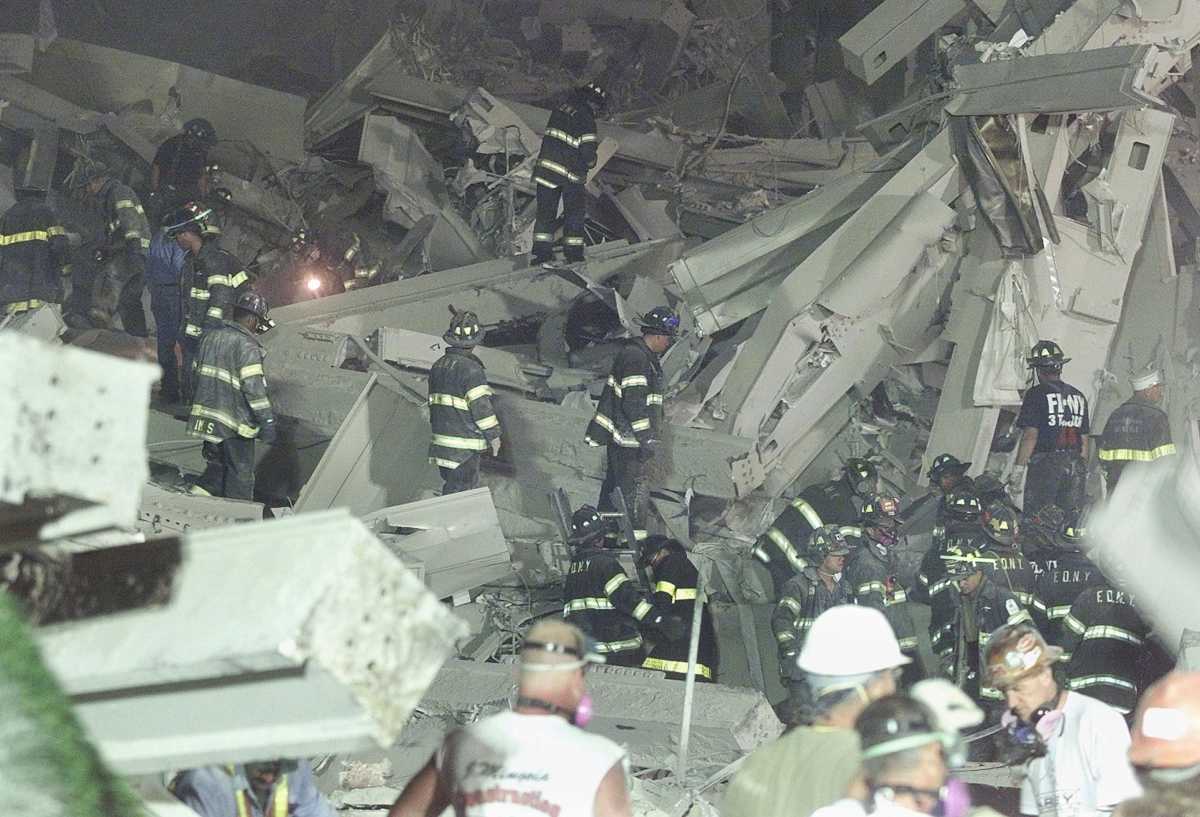 A group of firefighters search the remains of the destroyed World Trade Center in New York on Sept. 11, 2001. More than 400 firefighters have died of 9/11-related illnesses nearly 25 years after the attacks.REUTERS/Shannon Stapleton
Over 5,000 people have died to date from health conditions, like cancer and lung diseases, stemming from exposure to toxic air in the wake of the attack, significantly more than the roughly 3,000 who died on the day of the attack.
9/11 survivors demand healing of ‘a moral injury’
Carboy said the group isn’t seeking the information so survivors have new grounds to sue the city — there are multiple legal blockers preventing them from doing so at this point — but for answers and accountability.
He’s described the city’s choice not to hand over documents as “a moral injury” and an affront to the public’s trust in government. While he still feels there are likely records the city hasn’t turned over, he said he’s focusing first on preparing to question the officials on why and how they said they didn’t have any records before handing over 68 boxes of them.
“These are public records. They belong to the public. They’re not to be withheld,” Carboy said. “This was a complete misstatement that the records did not exist. This was a complete misrepresentation that the records could not be found with a diligent search.”
He said forcing the officials to testify helped preserve the integrity of not only the FOIA process related to 9/11 records, but in the city at large.
“If our government is going to be so cavalier and incorrect about the records of the most significant event in New York City history, imagine how they are in more everyday things that affect individuals, whether it’s zoning documents, tax assessment documents,” the attorney said. “It’s really, really disturbing.”
Clyne appeared to agree in his decision, saying that the city’s denial of the FOIA request was arbitrary and capricious and lacked any individualized reasoning to deny the public records request.
“The purpose behind FOIL is to promote open government and public accountability by imposing upon governmental agencies a broad duty to make their records available to the public,” Clyne wrote. “Petitioner has asserted facts to establish their cause of action and has demonstrated a need for discovery.”
When asked for a comment on the decision, the city’s Law Department referred amNewYork to comments Corporation Counsel Steven Banks made at a City Council March budget hearing where he told council members his team was working to set up a public portal so the public could freely view documents related to the city’s actions in the wake of 9/11.
“Since I was confirmed a couple of weeks ago, we have set up a team that is reviewing what documents can be posted on a portal to provide access to the public and the cost for maintaining such access, and what documents cannot be posted,” Banks said at that hearing. “We’re working on this very hard to be able to, as I said, post documents to be available to the public.”
Carboy said he believed the city was fighting the release of documents because “career staffers” in the mayor’s office and the Law Department have spent their lives keeping the documents hidden.
“The only people on the planet who are fighting the release of these records are the career staffers at the Law Department and the Mayor’s Office,” Carboy said. “As best as I can see it, for whatever reason, they’re basically disregarding the publicly stated wishes and instructions of their bosses, Mayor Mamdani and Corporation Counsel Steven Banks.”
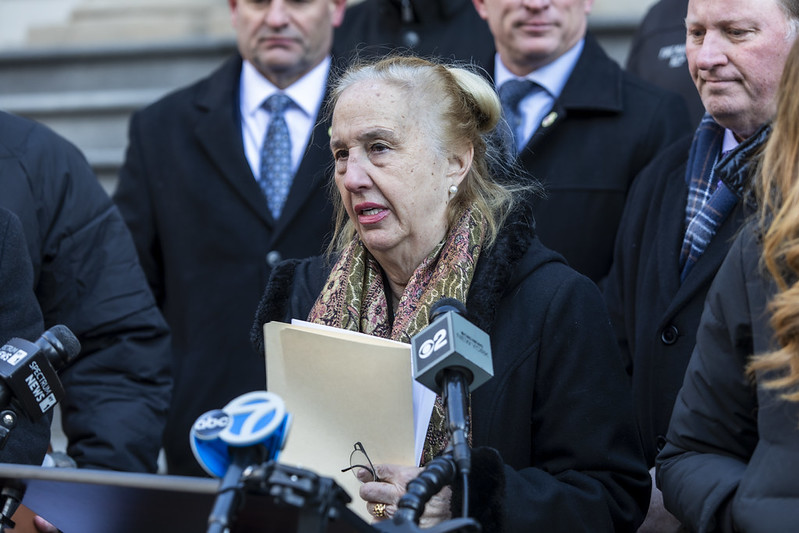
The City Council has pushed hard for the release of all documents related to the terrorist attack, with Speaker Julie Menin and Council Member Gale Brewer repeatedly urging the mayor and Law Department to share everything they can and calling for an investigation into the city’s handling of the crisis.
The officials’ testimony is set for July 1 and July 8.