

Walking peacefully through Manhattan’s Chelsea neighborhood this spring, I felt unexpectedly content. A melody kept following me: “I want you, I want you…” That romantic song by Bob Dylan had always embodied New York for me.
Yet this visit felt far more emotional than I had anticipated. As Dylan marked his 85th birthday around this time of year, I found myself wanting to experience Manhattan through his eyes, or perhaps through the soundtrack he had quietly provided to the city for generations. Walking through New York this time felt like a scene from the latest Bob Dylan biopic ‘A Complete Unknown’, drifting through the city with nothing but memories, music, and the feeling that no one notices you at all.
Not far from Washington Square Park, beneath the iconic arch where guitar cases still seem to echo with the ghosts of folk singers, I met the energetic Ann McDermott. A guide with The Bowery Boys Walks,whose tours invite lovers of New York history to discover the stories and characters that shaped the city. “As a little girl I listened endlessly to my brother playing Dylan’s songs,” she tells me. “Now I take enthusiastic travelers to the places where it all began.”
The tour was illuminating. Greenwich Village still feels as if time partially froze somewhere in the 1960s. The walk felt like stepping into the black-and-white photographs of Dylan’s early years. Along MacDougal Street, old folk clubs and cafés continue whispering stories of all-night performances, poetry, rebellion, and the birth of a new American sound.
We passed unmarked apartments where he once lived, along with countless places whose remarkable stories are now hidden behind ordinary smoke shops or college buildings. Even the Hotel Earle, where Dylan temporarily stayed during his early New York days, is today known as the Washington Square Hotel.
A few blocks uptown, arriving at the legendary Hotel Chelsea on 23rd Street left me almost speechless. Leonard Cohen famously immortalized the place, singing:“I remember you well in the Chelsea Hotel…” This is where Dylan spent time with singer Joan Baez, and where a room associated with his name can still be found.
In Chelsea, the intimacy of the Village gives way to galleries, converted warehouses, and long stretches of brick buildings glowing in the late afternoon light. My independent stroll through the neighborhood suddenly felt like moving through Dylan’s own transformation. From wandering folk troubadour to cultural legend.
Chelsea itself was once a rough but authentic working-class neighborhood. Famous food products such as Oreo cookies were produced in what is today Chelsea Market. Now a buzzing food hall filled with travelers, locals, and the aromas of global cuisine replacing the scent of industry. It is a vibrant symbol of how the area transformed into one of Manhattan’s most fashionable neighborhoods, filled with galleries, macro luxury towers, restaurants, and the energy of a constantly reinvented New York.
Where freight trains once carried meat and factory goods, in West 34th Street the elevated High Line now floats above the streets as a landscaped urban park lined with art, gardens, and skyline views. Beneath it, galleries, designer boutiques, rooftop bars, and stylish cafés spill into streets that once belonged to warehouses and underground artists.
Farther west, the futuristic towers of Hudson Yards rise above the Hudson River, crowned by the dramatic Edge observation deck. A symbol of the new Chelsea: polished, vertical, macro-scale luxury and constantly redefining itself. Nearby stands the striking Vessel, an interactive maze of staircases and platforms designed as a modern Manhattan landmark.
I found myself trying to imagine Dylan wandering through Chelsea today, passing mirrored macro-towers, the soaring Edge, and the futuristic Vessel, quietly marveling at how far Manhattan has drifted from the raw, restless city he once knew.
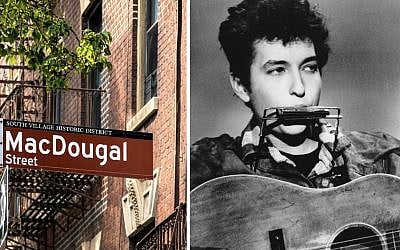
Bob Dylan, early 1960s. (Photo by Don Hunstein, Courtesy of Wikimedia Commons) and New York’s Greenwich Village famous street (photo by Motti Verses)
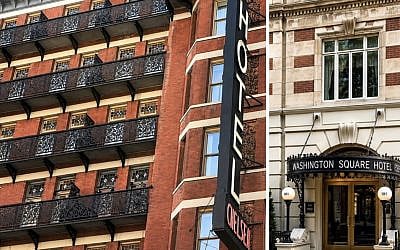
Two New York hospitality addresses. Endless stories. Chelsea and Washington Square – previously the Hotel Earl (Photos: Motti Verses).
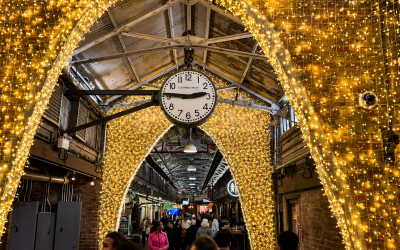
Chelsea Market, a buzzing food hall filled with travelers, locals, and the aromas of global cuisine (photo by Motti Verses)
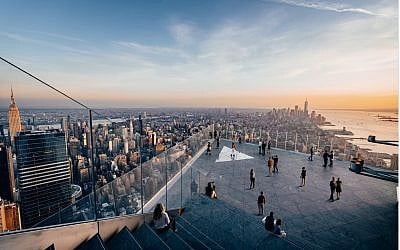
Edge observation deck – Manhattan from a bird view (Photo by Edge at Hudson Yards)
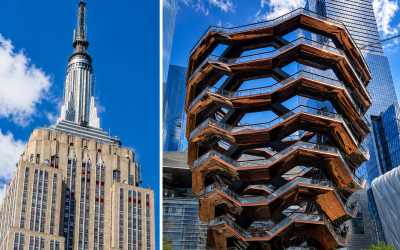
The Empire State Building feels like the Midtown grand gateway into Chelsea, while The Vessel symbolizes the neighborhood’s modern transformation (photos by Motti Verses)
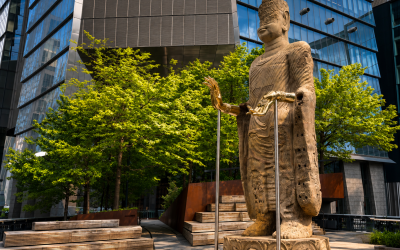
The elevated High Line floats above the streets as a landscaped urban park lined with art and gardens (photo by Motti Verses)
The real challenge today is finding a hotel in Chelsea that still feels connected to New York’s creative energy without disappearing into Manhattan’s sky-high prices. In a former industrial neighborhood with artists’ lofts, modern lifestyle hotels emerged as part of Chelsea’s revival: stylish, social, design-driven, but affordable in Manhattan?
I was in for a surprise.
On West 28th Street, in the historic Flower District, home to generations of floral wholesalers for more than a century, I discovered the Moxy Chelsea, part of Marriott’s younger lifestyle-driven brand.
The entrance begins with a pleasant flower shop and gives almost no indication that this is even a hotel. Refined yet playful. Handcrafted yet modern. Inside, after passing two cool industrial-style check-in counters, I ascended to the second-floor lobby and what a surprise awaits. The venue blends numerous live-work-play spaces including bars, lounges, co-working corners, and meeting studios that seamlessly transform from workplace to a busy social scene.
Rising 35 stories above the Manhattan skyline, the 350-room hotel reshapes the traditional urban stay and offers a surprisingly different hospitality product. One many Israeli travelers may find both intriguing and relatively budget-friendly with rates from $189 per night.
“The Moxy Hotel was conceived to deliver an affordable room to our guests without sacrificing style and design,” explains Mitchell Hochberg, President of Lightstone, a New York–based real estate development and investment company, which owns and operates Moxy Hotels in New York City. “There was a white space in the hotel market that we felt we could exploit. Basically, what we offered our guests was a smaller-than-normal room in exchange for an affordable rate, high design, and lots of amenities. Micro room, macro amenity, high style and design.”
I was impressed to spend time with a hotel developer executive in his early seventies who still radiates youthful energy, a vivacious spirit, and an open-minded vision for hospitality. Even the brand’s name comes from the word “moxie”, meaning confidence, courage, energy, and bold attitude. According to Hochberg, that spirit defines the entire concept: youthful, playful, energetic, and unconventional rather than formal luxury.
Over the years, Lightstone Group has quietly grown into one of America’s major privately held real estate players, building a portfolio that spans hotels, apartments, mixed-use developments, commercial assets, and real-estate finance. Behind Lightstone’s American success story lies an unexpected Israeli link: capital raised through bond offerings on the Tel Aviv Stock Exchange helped support the company’s U.S. expansion. With Lightstone seven Moxy hotels across the United States – five of them in New York alone – the strategy appears to have paid off.
The true challenge in the Moxy Chelsea was experiencing Manhattan life while staying inside a micro-sized room on the 20th floor, together with our two gigantic suitcases. At first, my wife and I looked at each other quite helplessly. But surprisingly, after embracing Hochberg’s philosophy, we adapted quickly. With custom-designed multipurpose furniture, clever luggage racks, wall pegs, and flexible storage systems, the room gradually revealed its logic, allowing us to personalize the space according to our needs. We were even offered the option to store our empty suitcases in a dedicated luggage room.
The shower felt wonderfully pampering, but the real moment came at night and again at sunrise: straight from our bed we enjoyed the breathtaking Manhattan skyline visible through the dramatic floor-to-ceiling glass wall overlooking Chelsea. Watching the city lights before sleep and waking up to the skyline felt unforgettable.
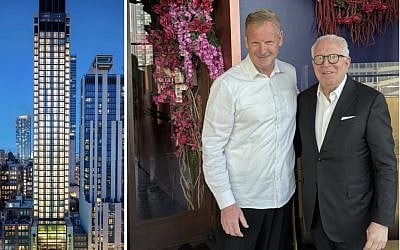
With Mitchell Hochberg, President of Lightstone, a real estate development and investment company, which owns and operates Moxy Hotels in New York and the hotel exterior (photos by Motti Verses and Moxy Chelsea)
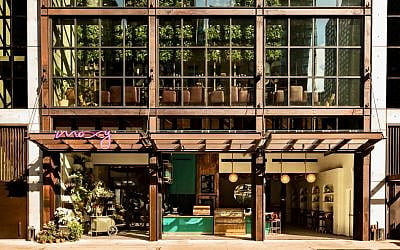
On West 28th Street, in the historic Flower District, home to generations of floral wholesalers I discovered the Moxy Chelsea (Photo by Moxy Chelsea)
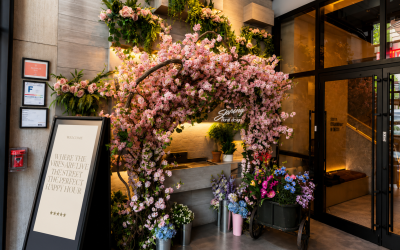
The Moxy entrance begins with a pleasant flower shop and gives almost no indication that this is even a hotel. Refined yet playful (photo by Motti Verses)
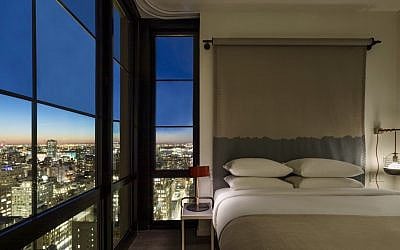
Moxy Chelsea: Micro rooms, macro amenities, and Manhattan-sized views. (Photo by Moxy Chelsea)

Mitchell Hochberg at the Moxy, demonstrating the open-concept room design, where the sleek sink is placed directly within the bedroom area (photo by Motti Verses)
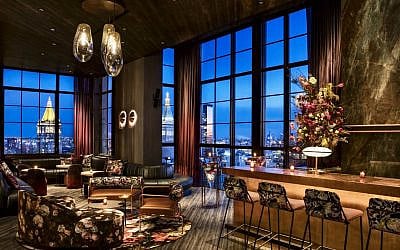
Moxy’s Fleur Room, a glass-enclosed rooftop lounge where sweeping 360-degree panoramas (Photo by Moxy Chelsea)
Trying to imagine what Dylan might have felt standing in Chelsea today, gazing up at glowing glass towers, feels almost surreal. He arrived in New York with little more than a guitar, lived extremely modestly, often in tiny micro rented rooms. Back then, Chelsea and the Village were rougher, grittier, unpredictable.
Walking into the Moxy today, with its designer interiors, windows stretching the full height and young travelers chasing the energy of Manhattan, I couldn’t help but wonder whether Dylan would have smiled at the irony of it all.
The city that once gave shelter to struggling artists in modest rooms now celebrates creativity in a completely different language – cocktails, DJs, skyline views, and curated style such as the Moxy’s Fleur Room, a glass-enclosed rooftop lounge where sweeping 360-degree panoramas stretch from the Statue of Liberty to the Empire State Building.
Yet somewhere beneath the polished surfaces and modern soundtrack, Manhattan still carries that same hunger, movement, and endless possibility he must have felt when he first wandered downtown streets searching for a song. New York – “I want you. Yes I want you, so bad”.
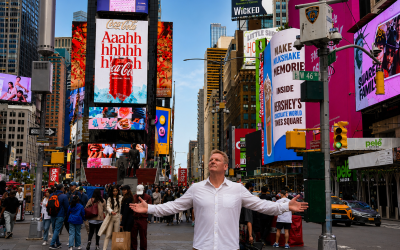
Times Square – the world’s living pulse (photo: Motti Verses)