
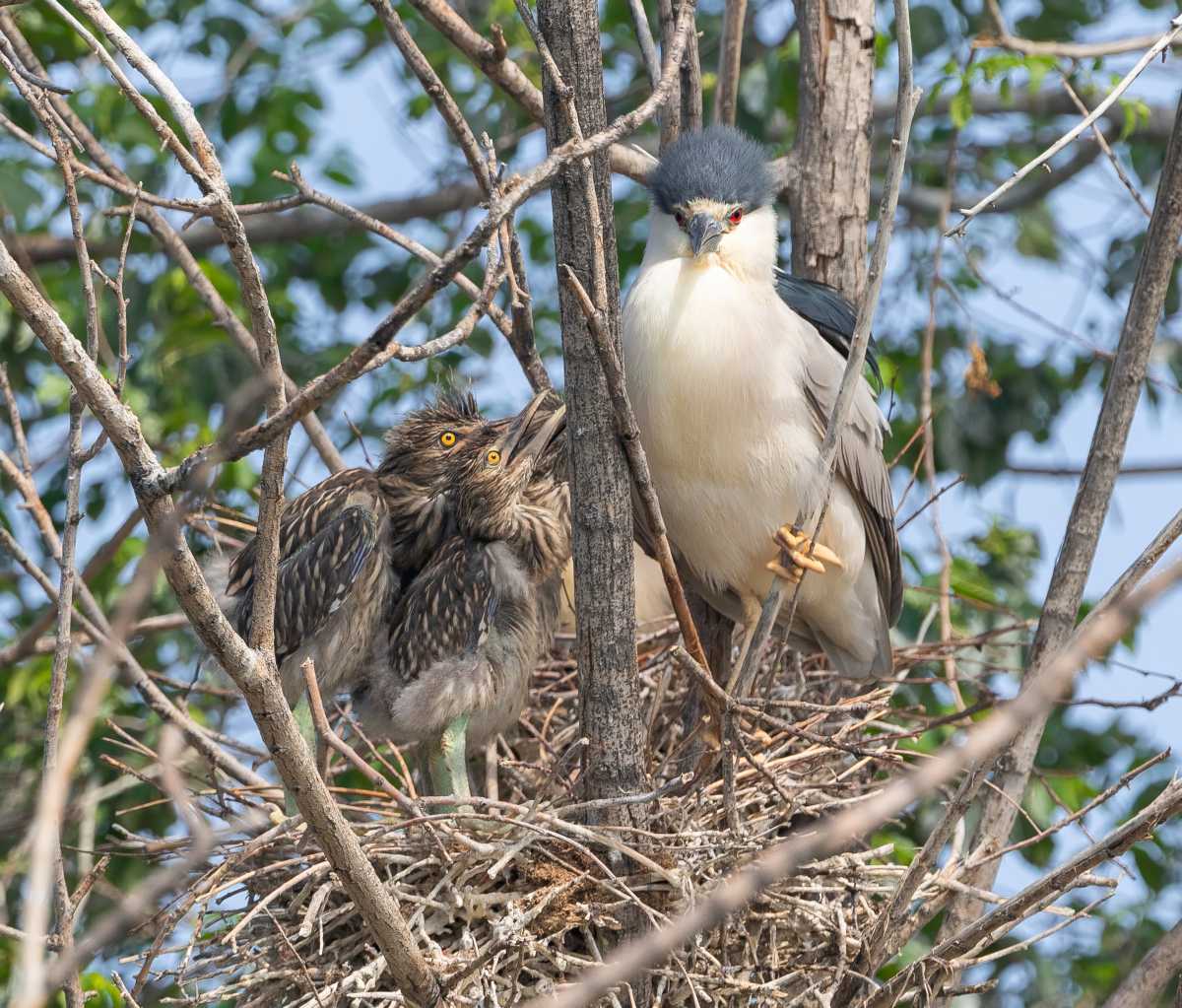
The night heron — a NYC bird species known for his stocky body, stilt-like legs, and a love for perching in Central Park — is on the path to extinction, according to an alarming new study published in Conservation Science and Practice on Wednesday.
The black-crowned night heron (Nycticorax nycticorax), native to the tiny islands of New York Harbor and the shores of the boroughs, makes people smile when they spot the popular bird in parks, lakes, and even at times on NYC streets and alleyways.
Conservationists from the NYC Bird Alliance, who published the study, said the black-crowned night heron, the most common nesting wading bird in the harbor, has declined by a staggering 55% since 2000. If the trend continues, researchers warn the species could vanish from local waters by 2037.
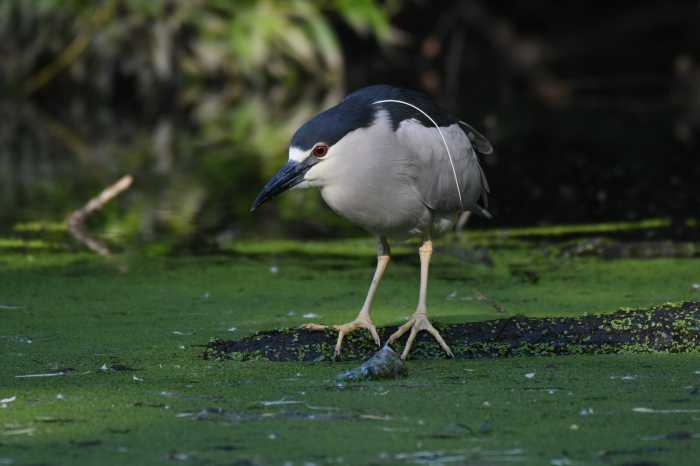 A black-crowned night heron in Central Park.
The black-crowned night heron is more than just a cute bird and a familiar sight in NYC. Experts consider it a key indicator of environmental health, meaning its struggles could signal larger problems in the harbor ecosystem.
In other words, when something is wrong in the environment, they have a way of letting humans know.
“They are really powerful ecosystem indicators because they are particularly susceptible to various pollutants,” Dustin Partridge, PhD, lead author and senior director of conservation and science at NYC Bird Alliance, told amNewYork. “So when pollutants like heavy metals or PCBs [Polychlorinated Biphenyls] or something else is present in a waterway, their young don’t survive.”
The study’s findings are based on 40 years of data collected through the alliance’s Harbor Herons program, which has been monitoring nesting islands in NYC since 1985. While studying the data, researchers found a clear and consistent decline.
Environmental contamination is a very likely cause of the species’ decline, but scientists are not ruling out other factors, including predation and habitat loss.
Partying on the islands doesn’t help this NYC bird
Zeroing in on human disturbance, Partridge said visits to nesting islands during the breeding season can have devastating consequences for the herons. Because NYC Bird Alliance has tracked the species since its original recovery following the 1972 Clean Water Act, researchers have been able to monitor the effects of disruptions on nesting colonies.
The birds are highly sensitive, and human activity can cause adults to abandon nests.
“There have been cases where we went to an island for a survey, and the chicks were dead in the nest, and there’s a smoldering fire and signs of people partying,” Partridge shared.
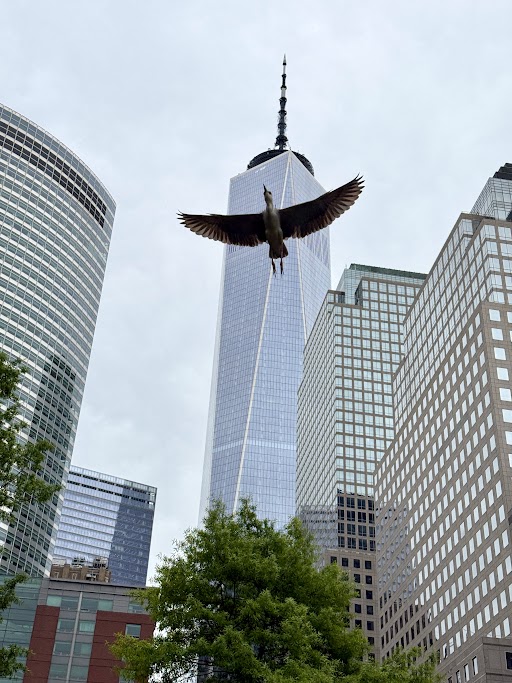 Soaring through the Big Apple skies.Photo by Dustin Partridge
While black-crowned night herons span beyond the shores of New York and New Jersey, the harbor hosts the largest breeding population of the animal in the Northeast. Because the night herons in NYC serve as a regional stronghold, their local decline could signal trouble for the species across the region.
While the black-crowned night heron is rapidly declining, saving the species is far from a lost cause. The NYC Bird Alliance is urging New York to consider listing the bird as an official threatened or endangered species in the state. Researchers are also calling for stronger protections on nesting islands and increased investment in restoring wetlands and feeding grounds that feathered friends rely on.
“What’s great is that we’ve discovered this while this common bird is still common,” Partridge said. “We can act on this. We’re taking actions that are needed to make sure that this bird does not disappear.”
Tod Winston, co-author and urban biodiversity specialist at NYC Bird Alliance, pointed to another famous avian success story—the recovery of the great egret.
“The recovery of the Great Egret is proof that people can fight for the birds they love, and win,” Winston said. “Birds connect people to the natural world in a profound and personal way, and the Black-crowned Night Heron – with its striking red eyes, glossy black crown, and jaunty plume – is one of those birds that stops people in their tracks.”
He said he is determined to save the heron and prevent the species from going extinct.
“We are going to make sure this iconic bird doesn’t become a distant memory like the Passenger Pigeon or Carolina Parakeet,” he said.
Jonahan Kramer, PhD, president and CEO of the Hudson River Foundation, a nonprofit that funds environmental research, said studies such as the night heron one are important for conservation.
“Studies like these are essential to helping us understand how human activity and habitat loss are driving environmental and species shifts and to developing actionable solutions to sustain the wildlife, habitats, and waterways that are so integral to our region,” Kramer said.