
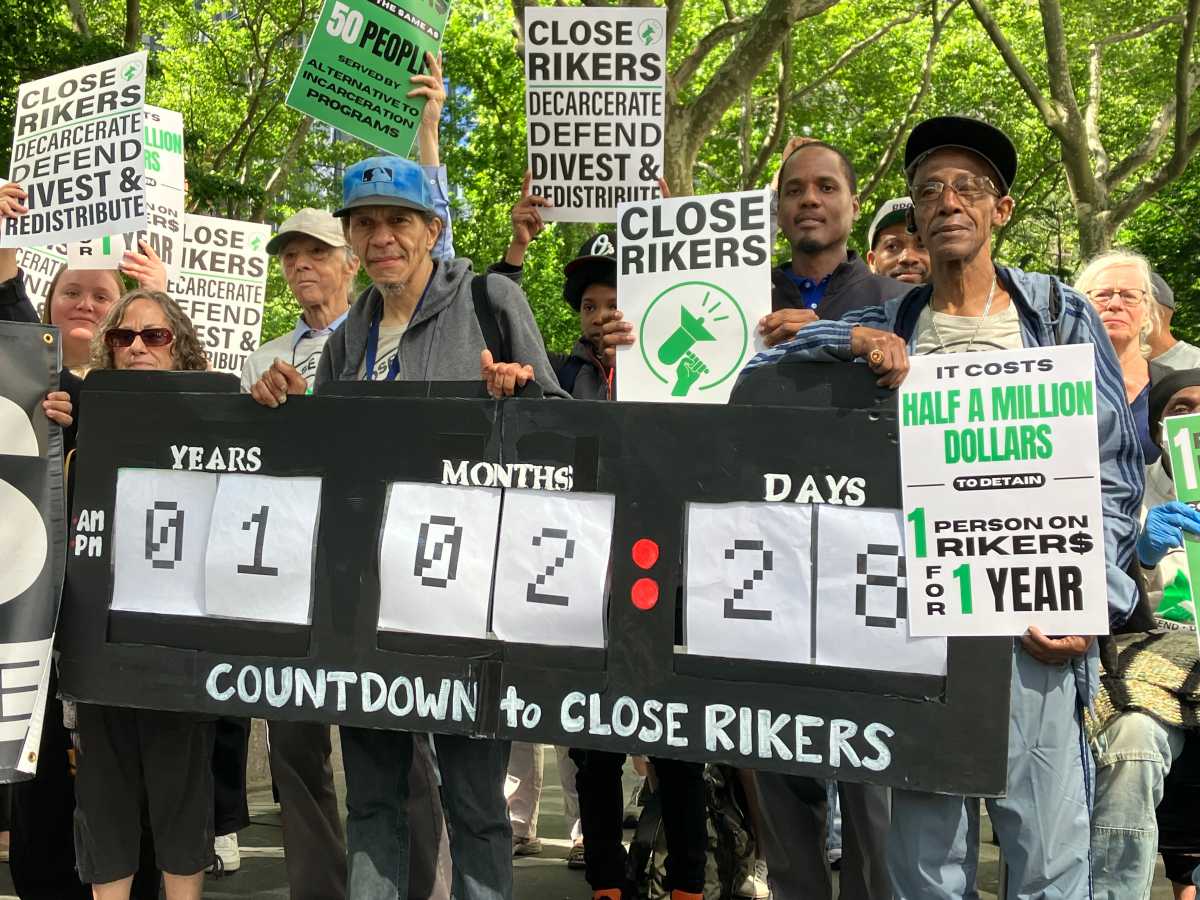
Advocates and City Council members seeking to get the city moving on closing Rikers Island say Mayor Zohran Mamdani needs to allocate tens of millions more in the new NYC budget to make it happen sooner rather than later.
Rikers is legally mandated to close by 2027, but it’s more than likely the jail complex won’t shutter then: the four borough-based jails are currently not tracked for full completion until the early to mid 2030s.
The funding is being sought for prison diversion programs, alternatives to incarceration, and community reentry efforts so the Rikers population can drop low enough for the jail complex to close by 2027, with remaining inmates being sent to borough-based jails that have about half the capacity.
Advocacy group Close Rikers Campaign said on Tuesday the budget needs about $57 million more for alternatives to incarceration and prison diversion programs and roughly $30 million more for community reentry and support programs, such as low-barrier housing and healthcare, so people aren’t staying on Rikers after they’ve been given the green light to leave because they don’t have access to resources and have the support necessary so they don’t back up in Rikers.
“The conversation about closing Rikers is no longer a question of whether change is needed,” said Samantha Becerra, a representative of advocacy group Providence House. “The question is whether we have the courage to invest in solutions that save lives and strengthen communities.”
Alternatives to incarceration programs Close Rikers Campaign and council members, including Lincoln Restler (D-Brooklyn) and Tiffany Cabán (D-Queens), say they need more funding for alternatives to jail, community-based correction programs, community-based mental health programs and “crisis respite centers” that aim to offer people support to prevent crime from happening in the first place.
Mamdani’s current budget proposal includes some funding for such initiatives, but advocates say more is needed in order to reduce the jail population to a level where the city can shift the population to borough-based jails.
Currently, roughly 7,000 people, nearly all of whom have not been convicted of a crime and are awaiting trial, are being held on Rikers. That number will need to be nearly halved, to just around 4,000, for the jail complex to completely close and the move of remaining inmates to the borough-based jails to take place.
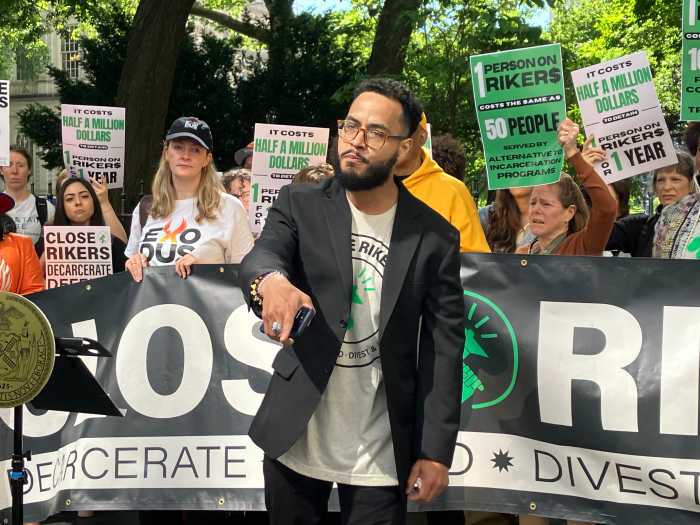 Advocates speak in support of more city budget funding for prison diversion programs.Photo by Isabella Gallo
When asked on Tuesday what steps the Department of Correction is taking to safely reduce the jail population by council members, Correction Commissioner Stanley Richards said that doing so was largely out of his hands, but he was committed to doing everything within his power to decrease the number of people imprisoned on Rikers.
“Unfortunately, we don’t have control over who comes in the front door or when people leave, other than those who are sentenced to city time,” said Richards. “What we’ve been doing is working with our partners to make sure that they’re engaging with our population and leveraging the resources … to try to get cases processed faster, trying to get people who are appropriate for diversions diverted.”
“Every opportunity I get, I say, ‘We need to work together on population reduction,’” added Richards, who himself served time in Rikers as a young man and has spent his career advocating for alternatives to incarceration. “I hope it motivates people, engages people to seize this moment to reduce the population.”
It’s critical for the jail population to drop before the borough-based jails are completed, advocates say, otherwise they fear the city feeling emboldened to imprison people across Rikers and the four borough-based jails simultaneously, which they’re concerned would result in the incarcerated population further ballooning.
Restler said the city urgently needed “an all-hands-on-deck approach to driving down unnecessary incarceration” via diversion and alternative to prison programs, pointing out that there were currently twice as many people from Brooklyn and Staten Island detained on Rikers as would be able to fit in the Brooklyn borough jail, once it’s built.
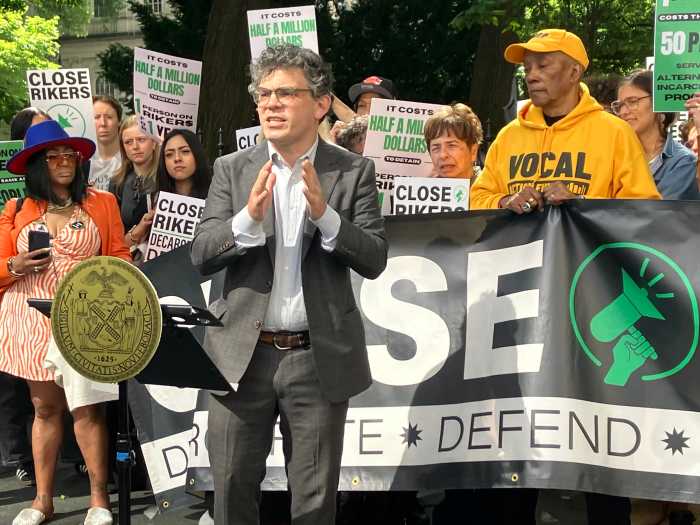 Restler rallies outside City Hall to push Mamdani to invest more in alternatives to incarceration.Photo by Isabella Gallo
“We need to start investing in evidence-based, effective policies … that can reduce incarceration and shorten the length of time that people are spending in Rikers Island,” Restler said. “We need to deepen investments immediately in these programs … so that we can actually shutter Rikers Island and achieve a smaller, safer, and fairer jail system.”
When asked whether Mamdani would consider including these investments in the city’s final budget, City Hall spokesperson Sam Raskin told amNewYork the mayor’s team “looked forward to conversations with the City Council on this critical work as we head toward adoption of the budget.”
In a statement to amNewYork after Tuesday’s hearing, Cabán suggested the money DOC’s spending on filling staff vacancies could be used to fund these programs.
“DOC has the highest staffing ratios in the country, and still, Rikers is a human rights disaster,” Cabán said. “We are legally mandated to close Rikers and reduce the number of people incarcerated. We should be cutting all DOC vacancies, not staffing up.”
The city’s final budget is due June 30.