
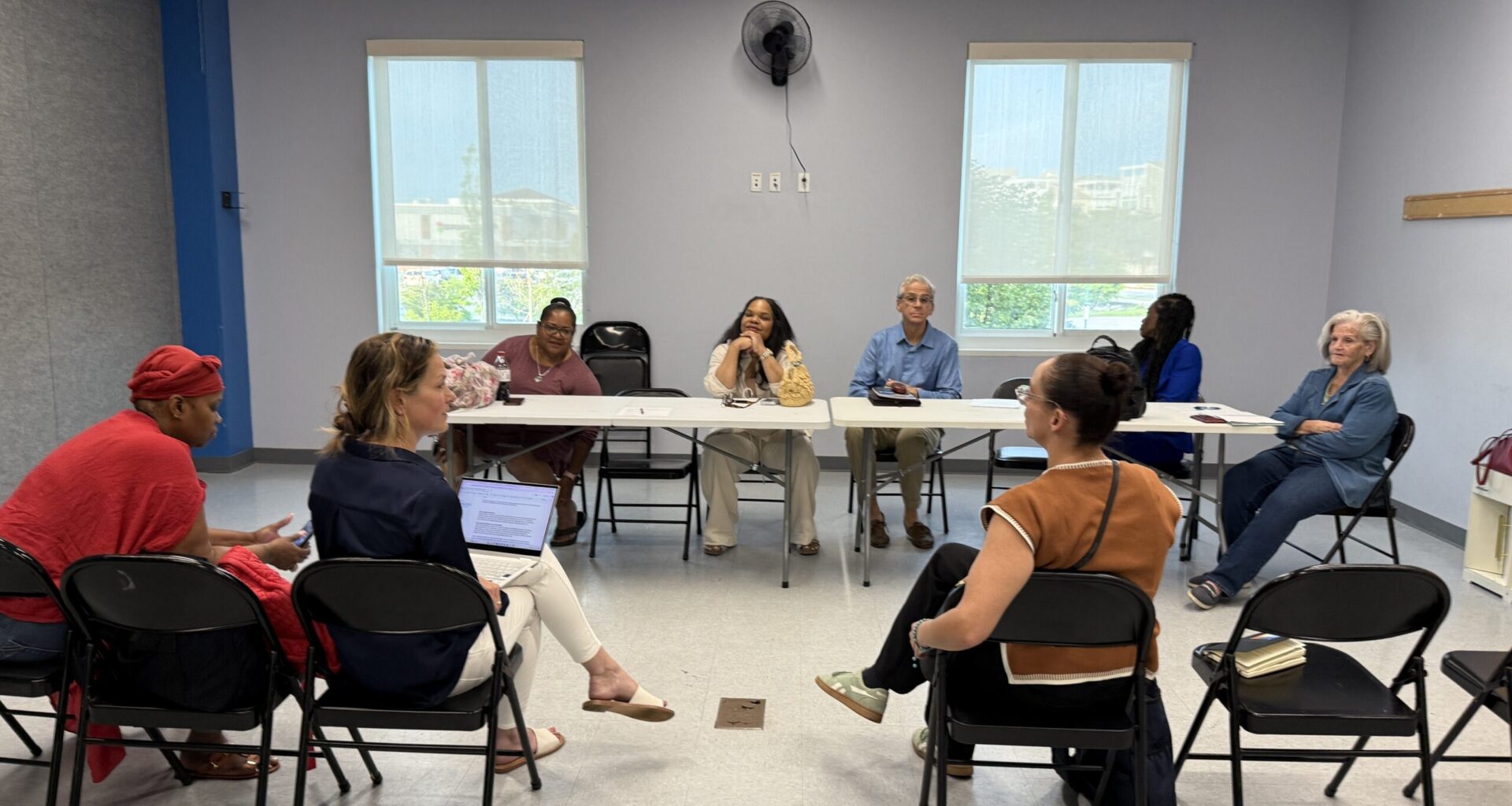
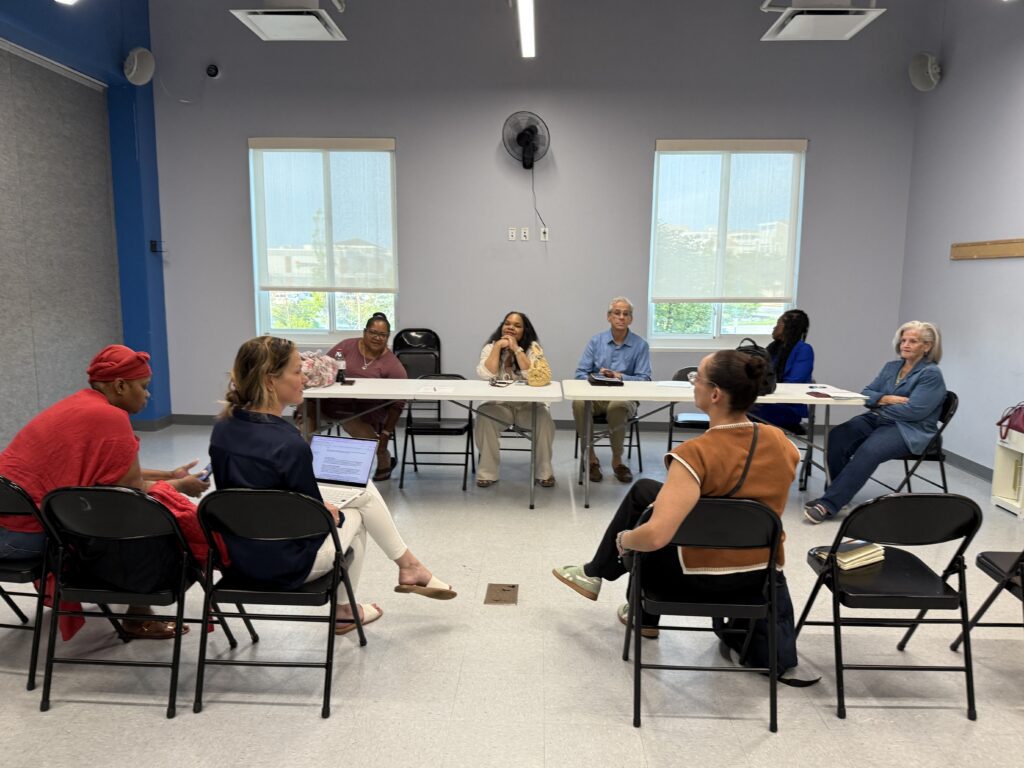
CB 14’s Youth Services/Education Committee convened at the Rockaway YMCA to discuss the ROCK School project proposal. Photo by Gabriela Flores
A team of Rockaway mothers are advocating for a new elementary school in the Edgemere-Arverne area that will bring children hands-on environmental lessons with the peninsula’s surrounding Atlantic Ocean and Jamaica Bay as an extension of their classroom.
ROCK School is a project proposal that its designers say will bring young students the emotional and learning support they need tuition-free.
“We’re looking to integrate our whole ecosystem here – that is so rare and wonderful– into a school system,” said Corinne Sommer, an engineer and Rockaway local who first conceived the idea for ROCK School.
ROCK School stands for “Respecting Oceans, Culture and Knowledge.” Its goals include outdoor learning, Spanish-English programing, swim training for students and full-time behavioral specialists on standby to support students’ non-academic needs. The end goal is to create a school that’s designed by the community for the community.
Currently the project is in its early stages, with Sommer and her project partner Amira Beatty looking to secure more community support for elected officials and the Department of Education to take notice. The duo presented their proposal in front of five Community Board 14 leaders during a Youth Services/Education Committee meeting on Tuesday, June 2, in hopes of getting a letter of support.
“We really want to see who really wants to engage and have their child exposed to this particular kind of program,” said Beatty, a special education educator, while addressing CB14 leaders. “It’s not regular, it is going to be state curriculum aligned, but we’re developing our own peninsula specific [school].”
The board asked about the proposal’s budget, specific location, financial commitments from elected officials, and who they’re “going to target” in terms of teachers and students.
Though those specifics are still being ironed out, Sommer and her team have secured written letters of support from business owners, peninsula locals, and the Rockaway East Merchant Association 4 United Synergy. Notably, there are no written letters of support from public school officials, which is part of the challenges the ROCK School project is facing.
Another challenge lies in securing a viable route for the school to be built. Ideally, the ROCK School would open shop as a charter school, and though some have suggested making the school private to avoid dealing with the “monopoly on charter schools,” the goal is to keep the institution tuition-free, according to Sommer.
“Our problem with that is that it leaves out a large amount of kids. We want to make this school accessible to everyone, and we don’t want it to be just for kids who have the money,” said Sommer during the committee meeting. “So there are some gaps right now, and really it’s like, how do we get approval for the school itself.”
For advocates of ROCK, the school would offer students the much needed community space they need as well as the behavioral support that’s lacking in most New York City public schools. Beatty envisions having Applied Behavior Analysis (ABA) and Registered Behavior Technicians built into ROCK’s programming. If students suddenly exhibit problems in the classroom, data could be collected for their parents and teachers to intervene before conditions worsen, she explained.
“When you have ABAs and RBTs in the building, those individuals are able to target those behaviors and get to it straight. Get ready to address it. And that’s the biggest difference between the model of school that we’re introducing versus what already exists,” said Beatty.
Beatty, who is the education chairperson for the NAACP Far Rockaway branch, also noted that ROCK could offer potential partnerships with high schoolers who are interested in early childhood education and in need of training to become RBTs by the time they turn 18-years-old.
During Tuesday’s committee meeting with CB14, Sommer and Beatty received suggestions from leaders on how to sharpen their pitch for elected officials and what steps to take to secure the board’s letter of support on Tuesday, June 9, where the full board will decide whether or not to fully support ROCK School.
Once the CB14 letter is secured, Sommer and Beatty hope to show elected officials and potential funders the importance of backing ROCK School.