
New York officially entered a new stage of artificial intelligence disclosure on June 9 with the implementation of a law regulating AI-generated performers in advertising.
It’s one of several laws the state is working on to significantly strengthen the regulation of AI in media. The state legislature also passed a bill on June 5 that would require news publications to include clear disclaimers on anything produced “substantially or wholly generated” by AI.
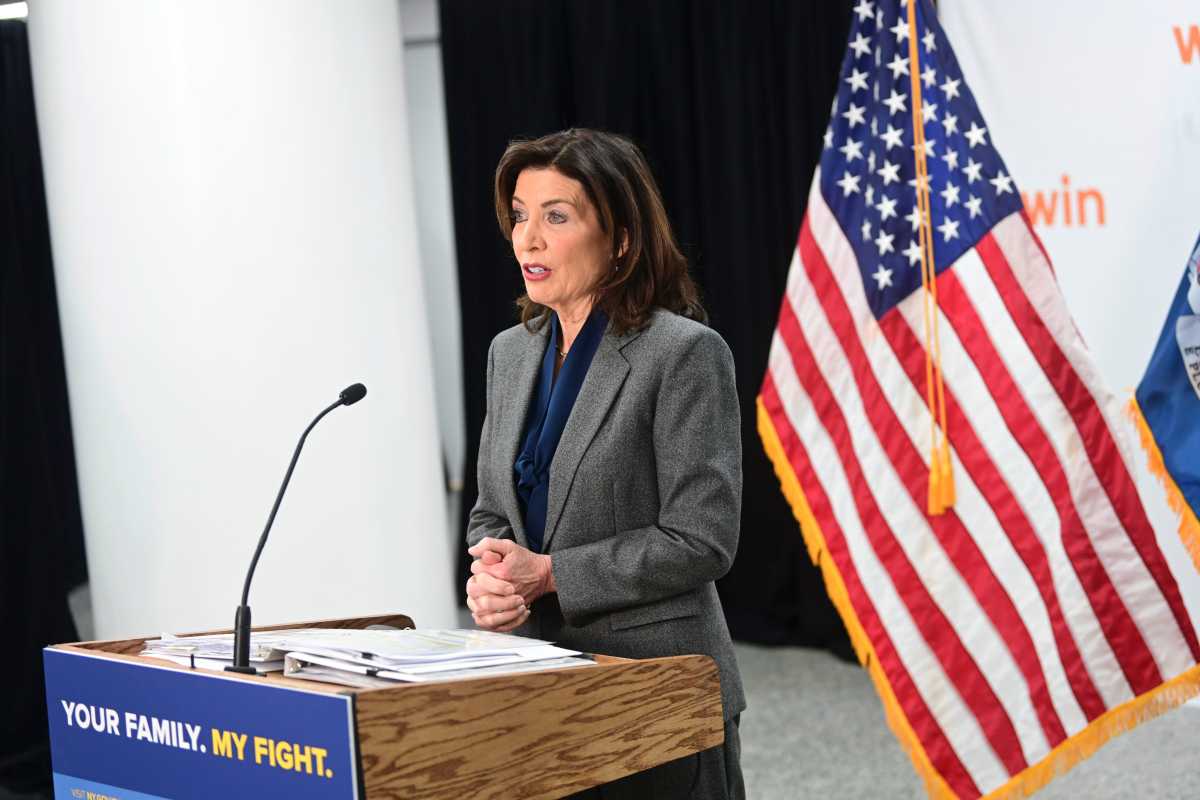
Gov. Kathy Hochul is still reviewing the latter bill before signing it into law, but both new policies are aimed at making the public more aware when AI is used to generate images or news content and at limiting its impact on the workforce.
They serve as examples of how New York is pushing a more cautious approach to the vanguard of AI, while the Trump administration has taken a more hands-off regulatory approach and pushed for a singular federal legislative framework.
“In New York, we are setting the rules of the road instead of letting AI run the show,” Hochul said of the advertising bill in a statement. “Requiring simple, honest disclosure when an ad uses synthetic performers protects consumers, respects our creative workforce, and keeps New York at the forefront of responsible innovation.”
A “synthetic performer” might sound like a phrase from a sci-fi novel, but it’s akin to the types of computer-generated images that we see in movies and TV. In the statute, it is defined as a “digitally created asset” that was created through AI or a software algorithm to create the impression that you’re watching “a human performer.”
The new law requires advertisers to openly disclose the use of the AI-created images of humans in advertisements. Enforcement will result in civil penalties of $1,000 for a first offense and $5,000 for subsequent violations.
With the new rules in effect, advertisers will have to review their practices, including those of any third parties that create ads for them, to ensure compliance.
Gonzalo E. Mon, a marketing attorney with Kelley Drye & Warren, wrote that one gray area businesses will have to contend with is whether it concerns primary performers in an advertisement or extras in the background. The statute does not make an explicit distinction between the two categories, so businesses may need to operate conservatively at first, Mon wrote.
In addition to helping consumers avoid being manipulated by AI, the new law was drafted to address the concerns raised by TV and film actor unions around the economic impacts of AI usage in their industries. SAG-AFTRA has said they hope the policy will mitigate the replacement of human actors with AI.
“Film and television production remains an integral part of New York’s economy, and that is why New York will continue to lead in protecting the workers who power this industry,” said state Senator Michael Gianaris, the legislation’s prime sponsor.
Similarly, the bill in the news, dubbed the NY FAIR NEWS Act, aims to prevent misleading information and preserve journalists’ jobs from being replaced by new technology.
The bill also has garnered strong labor support from the Writers Guild of America East, SAG-AFTRA, and the NewsGuild of New York, and will result in civil penalties of $1,000 for a first offense and $5,000 for subsequent violations.
“Perhaps one of the industries at most risk from the use of artificial intelligence is journalism, and as a result, the public’s trust and confidence in accurate news reporting,” said state Senator Patricia Fahy, the bill’s prime sponsor.