
Disabled Brooklyn tenants are taking their notoriously bad landlord to federal court after years of unreliable elevators and wheelchair lifts and months without cooking gas have made it nearly impossible for them to reliably prepare food and get out of their apartments to go to school, work and shopping for necessities.
Tenants of 1933 Union St. in Brownsville, many of whom moved into the building specifically because it was equipped with a wheelchair lift and elevators, say that the lift has not worked for over a year, and the elevators are frequently out of service — sometimes for weeks at a time.
That leaves them dependent on family members or at the mercy of the building superintendent, who they’ve been instructed to text for help, to carry their wheelchairs, belongings and bodies up flights of stairs.
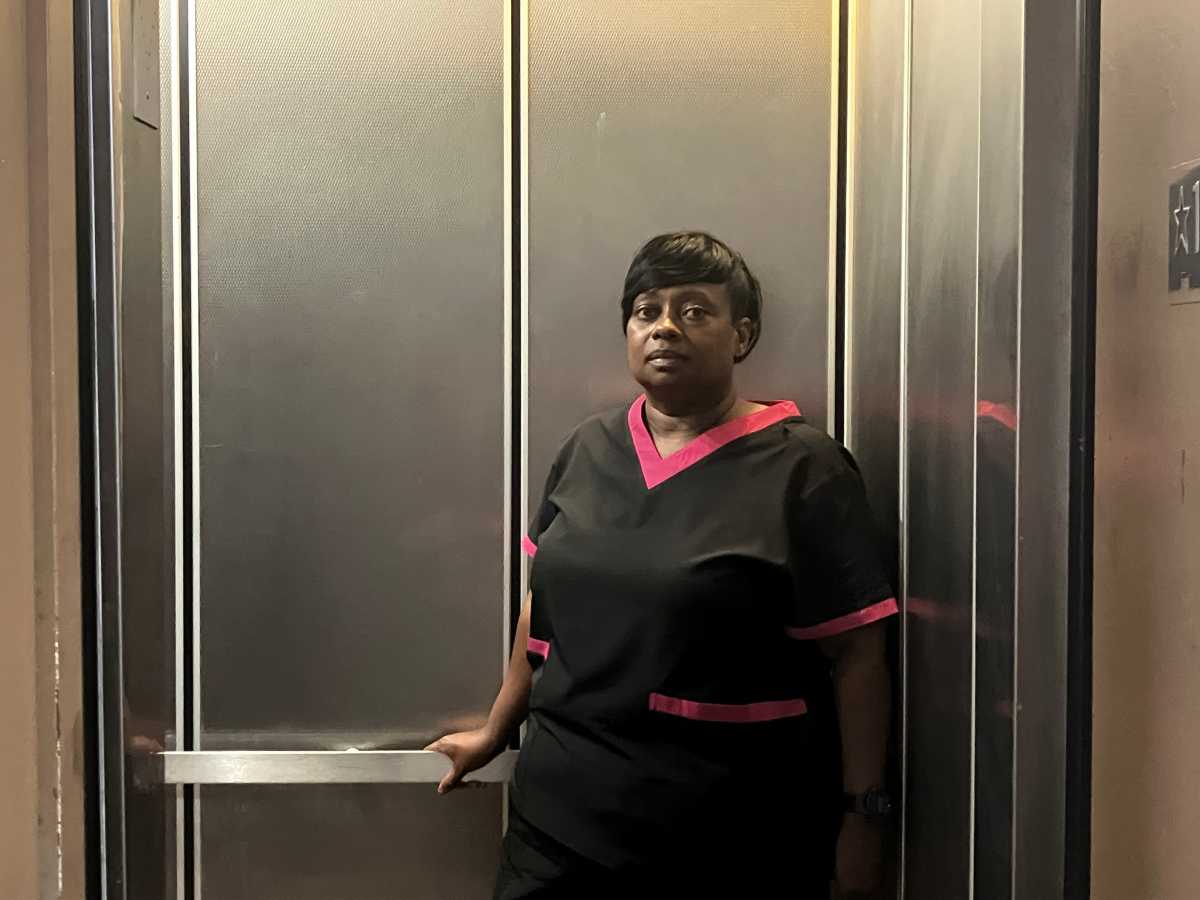
Charlene McDuffy, who has severe arthritis and neck and back issues that make it difficult for her to use stairs, has lived in the building for 35 years. Her daily decision of whether to go out is “greatly” impacted by whether the elevators are in working order, or if family or the superintendent is able to help her carry her belongings up the initial steps served by the dysfunctional wheelchair lift.
“To be confined to one place, it puts you in a state of depression. You really can’t function the way you normally function,” McDuffy told amNewYork. “You become a prisoner of your own apartment.”
McDuffy, 55, is suing landlord Claudette Henry, who’s made the city’s list of Top 10 Worst Landlords, and management company SHINDA. Fellow tenants Habibulahi Olowu, 21, and a minor child going by the initials M.V.D. in court papers, both of whom use wheelchairs, signed onto the lawsuit with McDuffy.
In suits filed this week, they accuse the building’s management of violating city, state and federal human rights law in U.S. District Court in Brooklyn; and, in Brooklyn Housing Court, they further allege the building’s lack of cooking gas since late last year is unlawful.
Additionally, water leaks into the apartment when it rains, there’s been cockroach infestations and pipes have burst — all problems they say management has neglected.
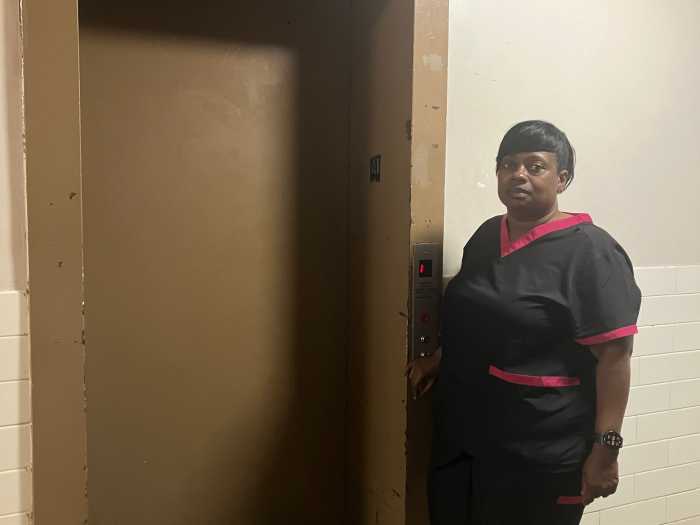 McDuffy stands near the elevator, which she says breaks nearly every week.
Attempts to reach the landlord and management company for comment were unavailing.
Brooklyn tenants left frustrated by elevator, lift failures
A lack of response from those in charge of the building is an all too familiar experience for the tenants, who say the non-answers they received to their questions of when the cooking gas, wheelchair lift, and elevator would be in working order were what drove them to contact the Legal Aid Society to file suit.
“Whenever we call management, we never could speak to management,” McDuffy said. “We always have to leave a message. They don’t call you back. If they do call you back, they just say, ‘We are working on the problem.’”
McDuffy said not having cooking gas for roughly eight months has made it difficult for her to eat properly and has forced her to spend money on takeout and purchase various cooking appliances she otherwise wouldn’t have, just to feed herself. Despite this, tenants would never get updates or explanations, regardless of how often they called, she said.
After she was dismissed by management representatives in person earlier this year, she called up Legal Aid to start building her case.
“Regardless of the fact that we’re disabled, we’re still human, we still have needs and wants,” McDuffy said. “Maybe we can’t do things like we used to … but we do have feelings, and, bottom line, I just don’t want to be ignored or just pushed under the table like I’m a nobody.”
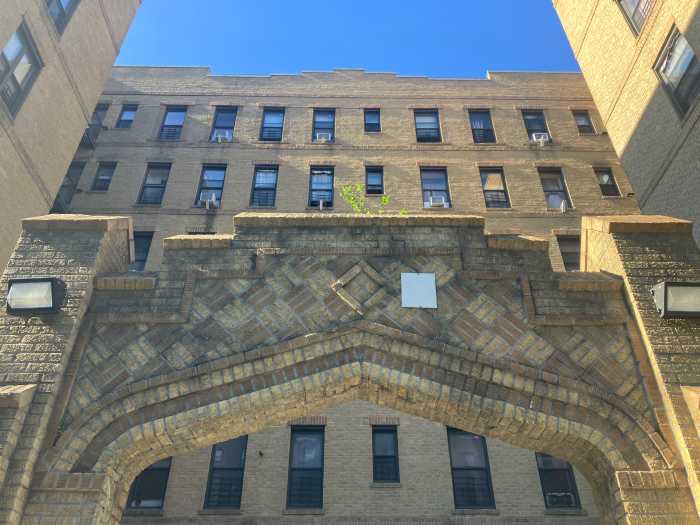 1933 Union St., where tenants are suing over a slew of conditions they call unlawful.
Olowu, a CUNY student whose spinal disability requires him to use a wheelchair, echoed McDuffy’s sentiment. Not having a reliable way to leave his second-floor apartment has caused him to miss class and made him feel dependent on others in a way he thought he wouldn’t need to be, since he’s renting an apartment with a wheelchair lift and elevators.
“It is incredibly frustrating,” said Olowu. “I believed that this was a building that could help me with my independence, but I don’t have a choice but to call the super [for help] … It’s a huge problem when it comes to my independence as a disabled person living in that building.”
Olowu isn’t alone in his frustrations with being reliant on the building’s super to lift him and his wheelchair up and down stairs. M.V.D., the child suing the Union Street building’s management via her parents, has also missed school because the super wasn’t available to help her mother carry her 150-pound wheelchair.
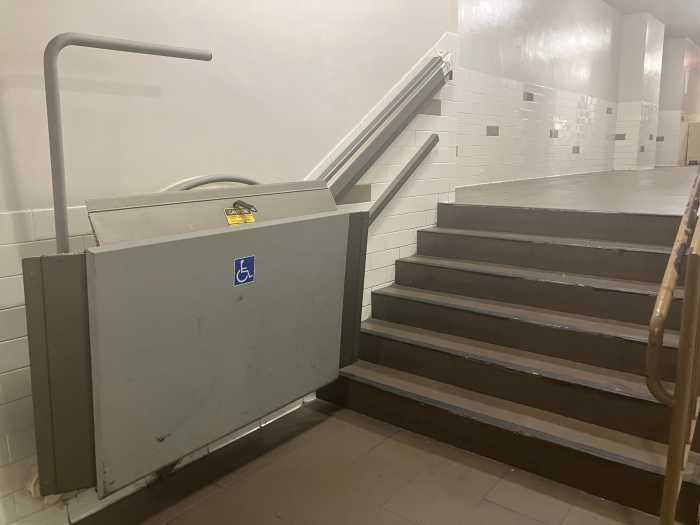 The building’s wheelchair lift, which has been out of service for over a year.Isabella Gallo
“To have her be dependent on, essentially, some random person, who may or may not be available to lift her up and down really limits her and her family’s ability to do what they need to do on a daily basis,” said Maddie Reichman, the Legal Aid attorney representing the tenants in federal court. “And, on a safety level, it’s very dangerous for her to be carried up and down, since she could fall. That could be really devastating for her, based on her medical condition.”
Reichman said suits like this one are important because they are one of the few avenues to force landlords to provide legally required disability accommodations in a tight housing market that can make them feel they don’t need to follow the law.
“Housing is in such low supply that people are really desperate to find a place to live, and if they finally find an apartment, people take what they are able to,” Reichman said. “It’s just really unfortunate that landlords don’t respect their tenants’ rights.”
Taking legal action in situations like this is critical, she said, both to promote the independence of individuals with disabilities and to support the broader movement that pressures landlords to focus on accessibility rather than cheaping out and letting their older buildings fall into disrepair.
“It’s a tool to force landlords to invest more in their buildings to make them habitable for people with disabilities,” Reichman said. “It’s really important to put pressure on landlords to be thinking about and accommodating tenants with disabilities, and making sure that their voices are heard and that their needs are being met.”