
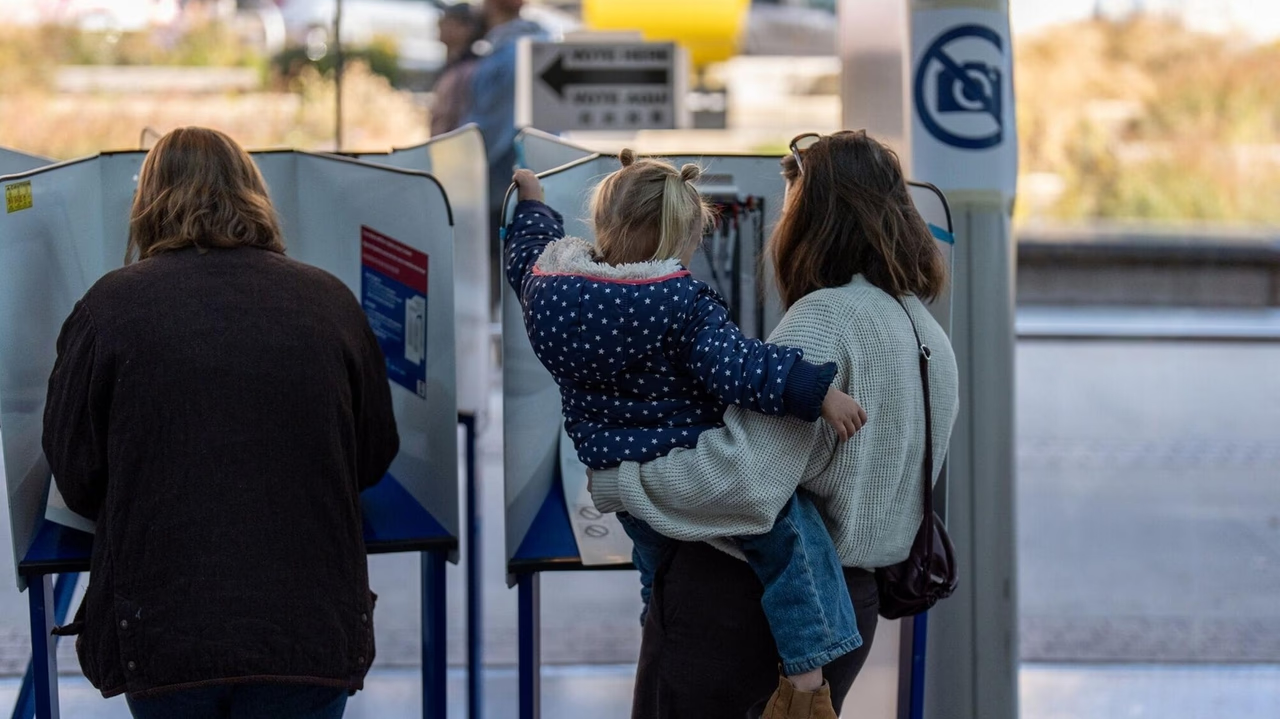
Nearly 750,000 voters came out to cast early ballots this year in the New York City mayoral race’s general election — more than four times the number of 2021, according to the city Board of Elections.
The board posted Sunday night that in 2025, 735,317 people had checked in at poll sites to vote to replace incumbent Eric Adams, whether for front-runner Zohran Mamdani, the Democratic nominee and a state assemblyman; Andrew M. Cuomo, a third-party candidate and the state’s ex-governor; or Republican nominee Curtis Sliwa, founder of the Guardian Angels crime patrol.
In 2021, a total 169,879 people showed up to vote early, according to tallies posted then. This year, that total was eclipsed by Day 3 by the cumulative total of 223,268 voters.
Election Day is Nov. 4, and for months every public poll has shown Mamdani — who stunned the political establishment by beating Cuomo in the Democratic primary — defeating Cuomo yet again to become the 111th mayor.
The candidates spent the final weekend of the race barnstorming across the five boroughs and encouraging their voters to turn up at the polls: Mamdani rallied with the activist preacher Al Sharpton in Harlem, spoke at a Seventh-day Adventist Church and amped up young, would-be voters at clubs in the middle of the night. Cuomo too spoke at churches and also met voters outside a supermarket, and was a parade grand marshal.
Sliwa hit up a kosher bakery, went to a car parade and delivered a speech at a park.
In early voting this year, every borough saw big gains compared to 2021, the election that Adams won to become New York City’s 110th mayor. Beset by scandal and resulting low poll numbers, Adams dropped out of the race Sept. 28 after months of speculation, and most of his support went to Cuomo.
This year, Manhattan’s total was 212,679; the Bronx, 58,661; Brooklyn, 243,737; Queens, 166,519; and Staten Island, 53,721.
In 2021, Manhattan’s total was 47,928; the Bronx, 19,855; Brooklyn, 47,547; Queens, 36,546; and Staten Island, 18,003.
Jerry Skurnik, a senior consultant with Engage Voters U.S., a “one-stop shop for voter data,” cautioned against drawing any definitive conclusions based on early voting totals, about who will ultimately win the race. New York has allowed early voting only since 2019 — with just one prior mayoral election, in 2021, which took place during the immediate aftermath of the pandemic.
“We just don’t have enough history of early voting in New York,” Skurnik said. Still, he noted, a higher rate of younger voters in the primary did foretell Mamdani’s victory, particularly in hindsight.
Last weekend, a higher number of older voters and those on Manhattan’s Upper East and West Sides — areas that Cuomo carried in the primary over Mamdani — showed up to vote early. But over the course of the nine days of early voting, the age and neighborhood breakdowns stabilized to typical turnout, Skurnik said.
Evan Roth Smith, a pollster and founder of Slingshot Strategies, said turnout was “mostly a wash,” with “better stuff for Mamdani” in the last few days. There will probably be an electorate of close to 2 million, he said, “and I expect the polls to be mostly correct.”
“The first few days of early voting suggested a pretty typical electorate composition in terms of age, meaning it skewed older (which is normal). The last few days have seen young voter turnout surge, and that’s good news for Zohran because he’s so dominant with voters under 40,” Smith said.

Matthew Chayes, a Newsday reporter since 2007, covers New York City.