
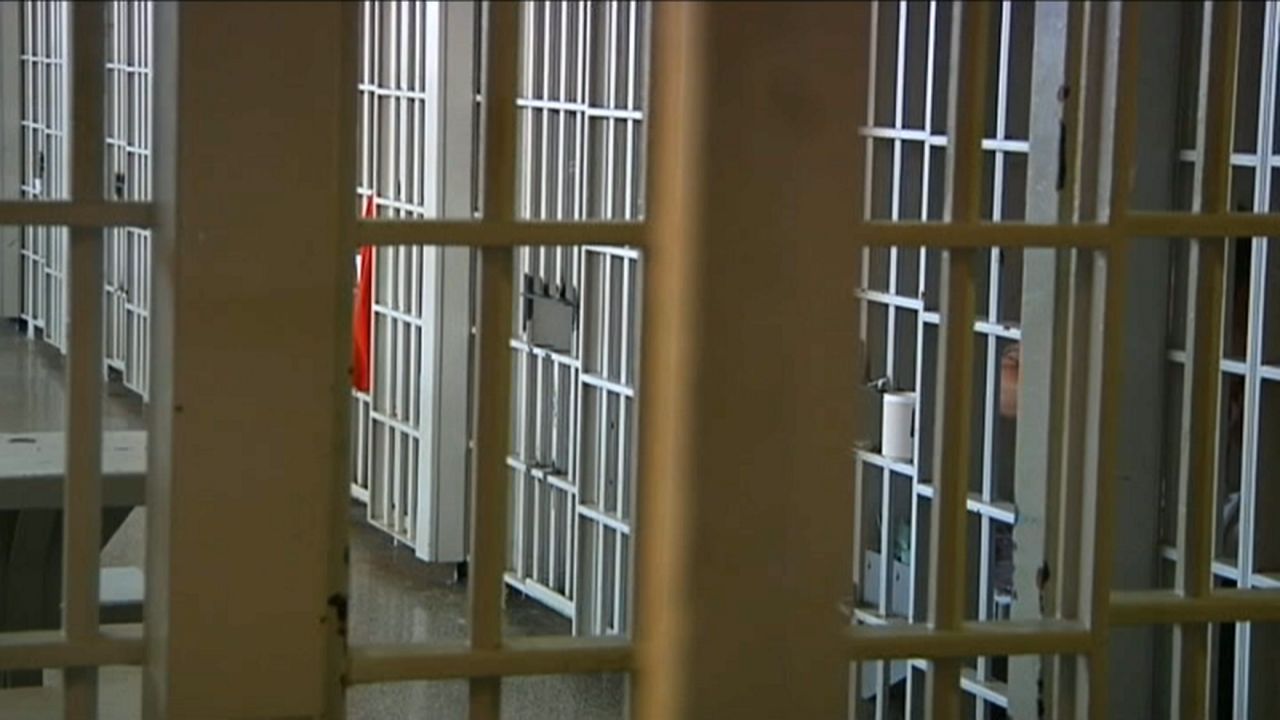
With sweltering temperatures taking over New York state Thursday and Friday, some lawmakers and advocates are taking the opportunity to urge the New York State Department of Corrections and Community Supervision (DOCCS) to go further in its effort to combat extreme heat in correctional facilities.
While a state law that went into effect last year requires DOCCS to develop an annual heat mitigation plan and establish a working group to come up with comprehensive solutions, the massive price tag of actually retrofitting a diverse and aging stock of facilities means heat continues to be a significant health concern.
State Sen. Pete Harckham, whose district includes multiple facilities, was behind much of the legislative effort and said there is a significant gap between what DOCCS is currently able to move forward with and what is actually needed to address the problem.
“DOCCS did a report on some of the things they could do short-term and long-term. ” Some of the things they’re doing short-term are personal fans, cooling towels,” he said. “Larger fans, misting stations, putting air conditioning in common areas.”
Harckham, who is working on the effort with Assemblymember Chris Burdick, said the ideal solution would be to construct new facilities, but even the less extreme remedy of air conditioning existing ones is not guaranteed at this point.
“Really, the long-term solution to all of this is air conditioning,” he said. “Unfortunately, our correctional facilities and the buildings are over 100 years old. Sing Sing in my district would cost hundreds of millions of dollars to fully air condition.”
Advocates stress that the heat isn’t just a comfort issue for incarcerated individuals; it can be a matter of life and death if not properly addressed.
Serena Martin, founding executive director of New Hour for Women and Children, told Spectrum News 1 that during extreme heat, old facilities with less-than-top-notch ventilation and a lack of operable windows create risks for individuals with heart and respiratory conditions in particular.
“When we think about incarceration, we talk about accountability and the need for people to be accountable for anything they have done wrong, but jails and prisons are not supposed to be places where people are dying because of excessive heat,” she said. “That is a humanitarian crisis.”
Martin, who was herself incarcerated two decades ago and experienced the issue firsthand, said it’s also a safety issue as any scenario that can escalate conflict within the facility can endanger both staff and incarcerated people.
“Even in terms of creating a safe environment where people aren’t getting agitated, heat plays into that,” she said.
The measures pushed by Harckham passed in bipartisan fashion and were signed into law by Gov. Kathy Hochul, and advocates insist that creating a long-term solution to the heat issue will benefit everyone involved, including staff and correction officers, as quality of life in the state’s correctional facilities has taken center stage in recent years.
“I recently visited Bedford Hills. I was there last summer during a heat wave and I watched officers dripping with sweat and laboring to walk. This is an issue impacting not just incarcerated people, but people who work there too — these are nurses, doctors, administrators and corrections officers,” she said. “I think the truth is that we should believe in basic decent working conditions for all people.”
More than a year after a high-profile, multi-week correctional officer strike, DOCCS told Spectrum News 1 that a lack of air conditioning in facilities does not appear to be having any impact on recruitment.
DOCCS told Spectrum News 1 that, as for this hot stretch, it has not received any reports of poor air quality but is monitoring conditions. DOCCS laid out the current protocol in a statement to Spectrum News 1.
“Historically, when some or all of New York State’s correctional facilities fall under a heat warning or advisory, the Department recommends that those susceptible to heat-related illnesses take the necessary steps to stay cool as temperatures rise; that staff and incarcerated individuals remain hydrated; that staff be cognizant of the signs and symptoms of heat illness in themselves and others; that outside assignments be evaluated to reduce exposure when necessary; and that special attention be paid to all vulnerable populations. All incarcerated individuals are monitored for any signs or symptoms of heat-related illnesses and medical attention is provided as necessary,” DOCCS said.
DOCCS also said there are additional remedies in place for those at the facilities.
“Air conditioning is provided in medical areas, as well as the housing unit and dayroom of the nursery at Bedford Hills Correctional Facility. All other housing units in DOCCS facilities are properly ventilated in accordance with national standards set by the American Correctional Association. Fans are used on the galleries and personal fans are available in the commissary,” the agency said.
Incarcerated individuals are also allowed one fan as part of their personal property, but advocates are critical of DOCCS for requiring that they be purchased at the commissary rather than handed out.
The 2026 annual heat mitigation plan offered cost estimates and feasibility analyses around installing air conditioning in common areas, including gymnasiums and mess halls, using models for multiple different types of facilities.
DOCCS estimated it would cost $159.6 million to install air conditioning in mess halls in all facilities and $235.2 million to install air conditioning in gymnasiums across facilities.
Harckham said efforts will continue to secure more money as part of the upcoming state budgets.
“We will stay on top of this,” Harckham said. “We will talk to the administration; we’re in contact with the commissioner as he rolls this out. We have an aging prison infrastructure and it’s impacting not just climate control and health but safety.”
Sumeet Sharma, director of policy and communications for the Correctional Association of New York — the body authorized to provide independent oversight of the state’s prisons — said with the state’s massive budget, policymakers should be able to find a way to prioritize the necessary infrastructure work.
“What is needed for all of those plans to come to fruition is an investment from the state to provide funding to install air conditioning systems in the common areas,” he said. “We’d like to see more. We’d like to see it where people are living, where they’re working. Housing areas and program areas. What DOCCS outlined would start the process.”