
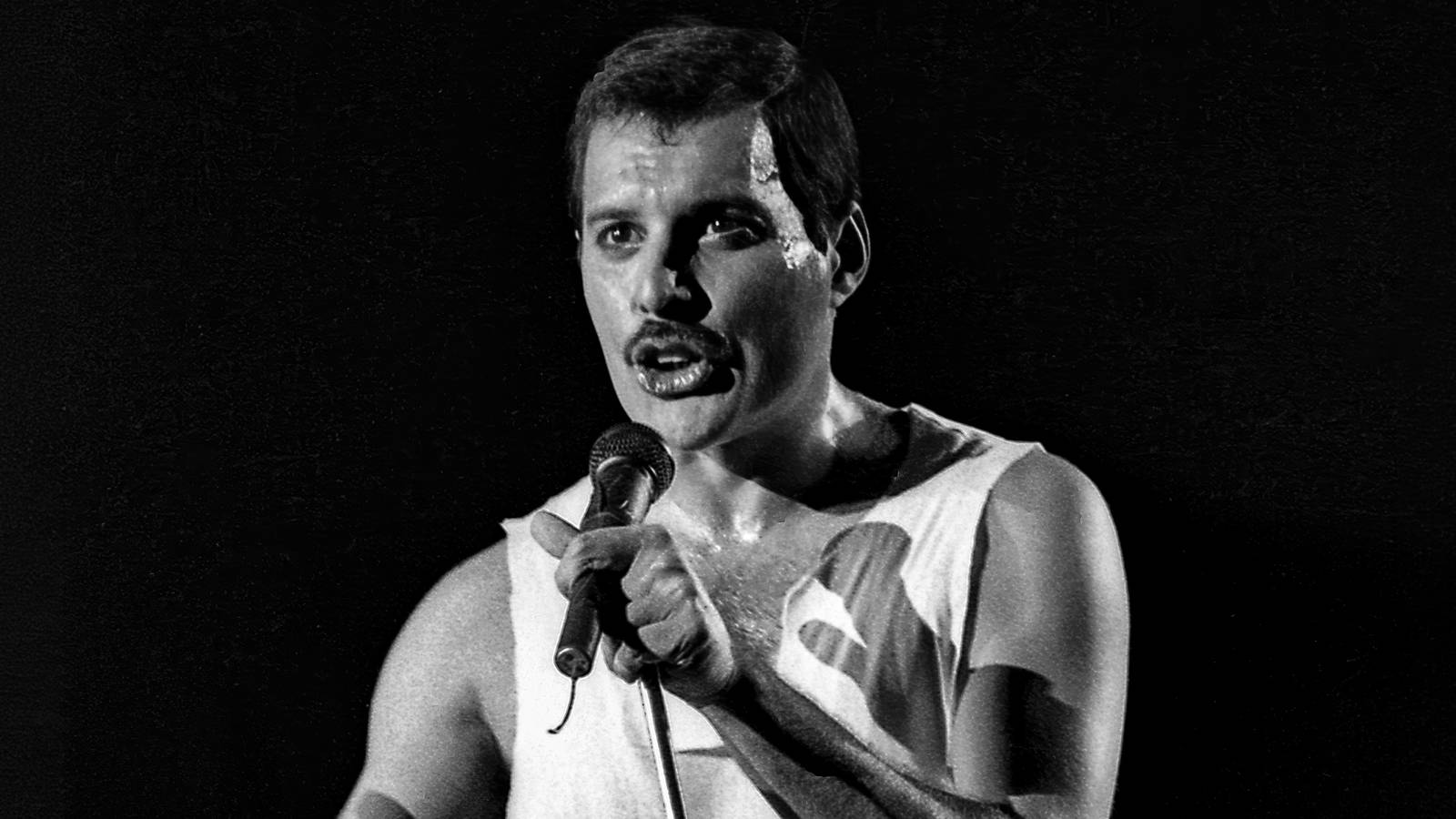
Queen is one of the most beloved bands in rock history. The RIAA has certified 13 Queen singles as platinum (one million) and one as diamond (10 million units). The band has 54 million monthly listeners on Spotify, with eight songs having over a billion streams. They’re Rock & Roll Hall of Famers, Grammy Lifetime Achievement Award Winners, and have been the subject of a successful musical and biopic. So how on earth could Queen possibly deserve more recognition?
Unlike their contemporaries, such as The Beatles, The Rolling Stones, or other classic rock acts, the general public seems to be less aware of Queen’s albums, but instead just their singles. In a way, this makes sense. Why seek out Queen albums when you already hear five plus Queen songs on the radio every week? However, by reducing the band to their greatest hits, fans are missing out on some of the greatest, underappreciated music in classic rock history.
Queen’s Early Work is a Near Flawless Set of Albums
Queen has a near flawless discography in their early stages, from 1973 to 1980. They released 8 albums in this time, with a consistent quality and iconic tracks that definitely marked Queen’s classic period. To top it all, is their most famous record: A Night at the Opera, probably the one Queen record casual rock fans know by name. Not only does it have “Bohemian Rhapsody,” but its making was a sizable portion of the Bohemian Rhapsody biopic starring Rami Malek. Aside from “Bohemian Rhapsody,” the album has some incredible standouts, such as the ridiculous muscle-rock of “I’m in Love with my Car”, the viscous “Death on Two Legs,” and the whimsical “Lazing on a Sunday Afternoon” and “Seaside Rendezvous.” The record also features an incredible eight-minute epic, “The Prophets’ Song.” While in a lot of ways, this record represents Queen hitting the apex of their powers, the versatility has been present since day one.
Their debut record Queen I showcases similar diversity, with upbeat, bouncy tracks like “Doing Alright” and “Keep Yourself Alive” alongside harder, grittier songs, like “Son and Daughter” or “Great King Rat.” Not only are these tracks diverse, but they’re at the same level of quality as any Queen radio staple. The great group harmonies, Brian May’s distinct guitar playing, and well-structured compositions are all front and center. This only gets better as Queen hone their skills through Queen II and Sheer Heart Attack. Some of the band’s best, harsher tracks, such as “Flick of the Wrist” and “Ogre Battle,” are on these albums and boarder on full blown metal. Meanwhile, “Father and Son” and “March of the Black Queen” show Queen honing their more progressive side that eventually will climax with “Bohemian Rhapsody.”
Related
Was Queen’s Live Aid Performance Really the Greatest of All Time?
An Unforgettable Night When Queen Conquered Wembley.
Post-‘A Night at the Opera’ Still Garners Hidden Gems
After A Night at the Opera, Queen kept the momentum up, with albums like A Day at the Races and News of the World. The latter record is well known due to its one-two punch opening of “We Will Rock You” and “We Are the Champions.” However, tracks like “Sheer Heart Attack,” “Get Down, Make Love,” and “Sleeping on the Sidewalk” are some of Queen’s tightest classic rock smashes to date. The record also features another all-time ballad with “All Dead, All Dead.” While the record that preceded it, A Day At The Races, is overshadowed by A Night at the Opera, it still keeps a consistent level of quality throughout.
Even as Queen’s quality begins to peter out in the early 80’s, the band doesn’t release a disappointing record until Hot Space in 1982. Before that, more great deep cuts emerge, like “Dragon Attack,” “Don’t Try Suicide,” and “Dreamer’s Ball.” Queen also continues to take some swings with tracks such as “Mustapha” and their soundtrack for Flash Gordon. Even when Hot Space arrives, and is the worst album in Queen’s discography, it’s an undeniably ambitious change of sound, and its club-y, dance-focused tracks can certainly be appreciated for what they are, especially if you don’t take them too seriously.
Queen’s Triumphant End and Overshadowing Legacy
Queen then course corrects on The Works and stays in a similar lane through their final full album as a complete band, Innuendo. That final album in particular is a fantastic send-off note for Queen. Its most iconic single, “The Show Must Go On,” is one of the most emotionally packed songs in classic rock, as Freddie Mercury defiantly stares death in the face amidst his battle with AIDS. Beyond that track, Queen is still putting together some really interesting songs here. The opening two tracks, “Innuendo” and “I’m Going Slightly Mad,” are incredible showcases of the band’s progressive attitude towards songwriting and Mercury’s untouchable emotional delivery. “Bijou” is a mostly instrumental track that allows May to flex everything he’s developed over the last nearly two decades. Every song on this album has a level of bombast to it that makes Innuendo one of Queen’s best projects, and a fantastic, complete send-off for the band.
Through the roughly two decades Queen was active, they gave the world 15 studio albums, ranging from disappointing at worst, to an untouchable classic at best, and most lean towards the latter. The legacy of Queen, centered around Freddie Mercury’s tragic death, and their omnipresent radio hits, is certainly well earned. However, there’s much more to Queen than that. Expanding beyond the hits allows fans to see the band at its oddest, most diverse, and its best. Every now and again, Queen re-enters the cultural zeitgeist, with a new tour with Adam Lambert or a project like Bohemian Rhapsody. However, these projects are often created to allow fans to celebrate the big highlights. Queen + Adam Lambert’s 2020 Live Around the World has some fun deep cuts, but it’s primarily the band playing the hits. This is even more so for Bohemian Rhapsody. There’s nothing wrong with that. Queen is one of the few bands that can fill a headline set list or movie with all hits. However, it’s far more interesting when they take the approach of We Will Rock You, the Queen musical, that does give time for some of these slightly obscure hits.
Queen is a cultural monolith, as they rightfully deserve to be. But as a monolith, they’re taken for granted, and often not inspected further. For fans that do, what they’ll find is one of the consistently great discographies in rock history, featuring songs that are both similar to the hits and ones that are completely left-field. So next time “We Will Rock You” starts to feel a little overdone, go back to the deep cuts. They’re just as good as the classics, and because they haven’t been overplayed, they feel even fresher.