
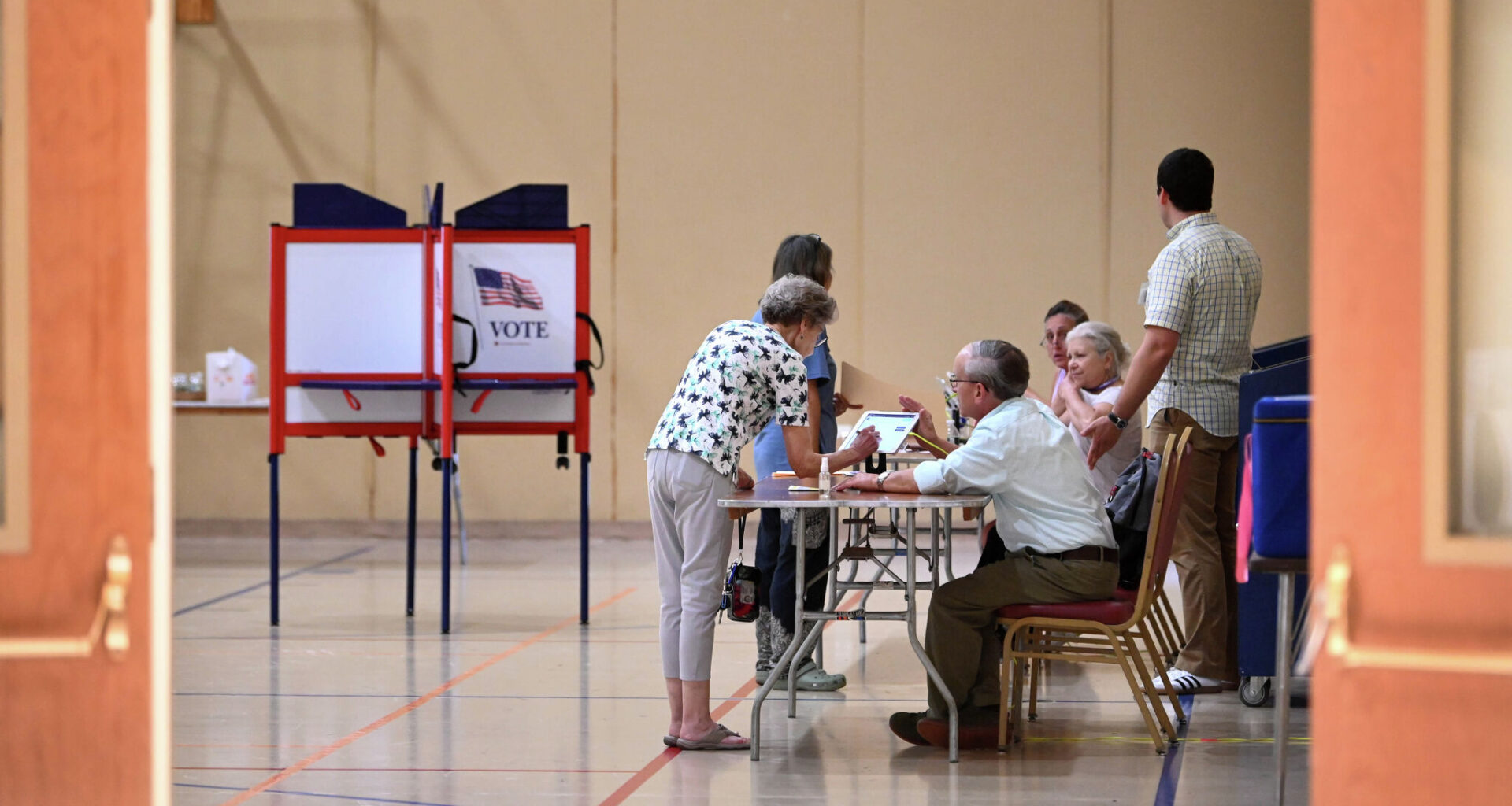
New ethics regulations that took effect in May prohibit boards of elections employees from holding financial interests in vendors who do business with their offices, part of a broader effort to strengthen public confidence in how elections are administered in the Empire State.
Lori Van Buren/Times Union
ALBANY — For years, New York elections officials could help oversee contracts for voting equipment while maintaining financial relationships with the companies selling it.

One incident surfaced in 2018, when Michael Ryan, executive director of New York City’s Board of Elections, resigned from a paid advisory position with a major voting-machine vendor that did business with the agency he helped run.
Article continues below this ad
Now, state officials are attempting to close that loophole.
New regulations that took effect in May prohibit boards of elections employees from holding financial interests in elections vendors, part of a broader effort to strengthen public confidence in how elections are administered in the Empire State.
The regulations, adopted by the state Board of Elections on an emergency basis ahead of the June 23 primaries and published by the Department of State on Wednesday, establish a uniform code of conduct for local election employees across the state.
Make the Times Union a Preferred Source on Google to see more of our journalism when you search.
Add Preferred Source
The rules implement a 2024 state law and are intended to prevent conflicts of interest and the appearances of impropriety in election administration.
Article continues below this ad
Assemblyman Jonathan Jacobson, who represents parts of Newburgh and Poughkeepsie, sponsored the bill in an effort to restore public confidence.
“For our democracy to work, the public must have faith that boards of elections are acting in the best interest of the public and are fairly administering elections,” Jacobson said in a statement last year.
The rules were adopted as an emergency measure “because time is of the essence and to adopt the regulation in the normal course of business would be contrary to the general welfare,” the state said in its regulatory filings.
The new rules apply to all full- and part-time boards of elections employees and excludes contracted workers the state uses to help with general, primary and special elections.
Article continues below this ad
Under the new standards, boards of elections employees are prohibited from having direct financial interests in companies that sell voting machines, tabulation equipment, election-management software and other election technology.
Employees also may not work for vendors who do business with boards of elections.
Elections officials are also barred from holding financial interests in companies that provide campaign services to candidates whose elections are overseen by an elections board, including consulting firms, printers, direct-mail vendors and digital marketing companies.
The new regulations create a uniform set of ethics standards for local boards of elections employees across New York. Among them are new restrictions for elections employees who run for office.
Article continues below this ad
Workers who become candidates in races administered by their own boards generally must obtain written approval from local elections commissioners to remain employed.
If approved, they must be removed from election-related duties connected to that race or political subdivision, including petition review and poll-worker assignments. They also cannot solicit campaign contributions from coworkers.
Employees who don’t seek approval, or whose requests are denied, must be placed on unpaid leave until their candidacy ends or election results are certified.
Violators could face suspension, termination or, in some cases, referral to law enforcement.
Article continues below this ad
State elections officials say the new ethics standards are intended to reduce opportunities for such abuses and reassure voters that administrative decisions are being made free from personal, financial or political conflicts.
Last year, Nicole Torres, a former New York City Board of Elections employee and Bronx district leader, was sentenced to two years in prison after federal prosecutors said she participated in extortion and mail fraud schemes involving poll-worker assignments.
Prosecutors said that Torres used her position overseeing poll-worker payroll to demand payments from Bronx residents or local organizations in exchange for selecting individuals to work elections.
Article continues below this ad