
As red states rush to dilute Black and Latino voting majorities since the recent Supreme Court decision in Louisiana vs. Callais, it’s almost impossible not to see parallels to the brutal and systematic disenfranchisement of Blacks in the Jim Crow South of old.
Dismantling white supremacy required the Voting Rights Act of 1965, passed by Congress and signed by President Lyndon Johnson after state troopers and local police attacked peaceful marchers on the Edmund Pettus Bridge in Selma, Ala., where voter rolls were kept 99% white.
Yet some 20 states — including New York — used English-literacy tests to suppress minority votes, and had for decades. This peculiarly stubborn barrier to the franchise held strong until Puerto Rican citizens took it to court, finally succeeding 60 years ago today, June 13, 1966.
New York’s English-literacy test dates back to the intense U.S. isolationism that followed WWI. In 1921, the Republican majorities in the Legislature and governor’s office required a demonstration of fifth-grade English reading and writing proficiency to register to vote. At the time, three-quarters of the state were foreign-born or first-generation citizens.
The xenophobic law meant that Yiddish-speaking Jews and Italians seeking to vote could be required to recite and write passages from the state Constitution, regardless of their level of education in their native tongues or whether their conduct as new Americans was exemplary.
By 1960, as Black voters and office-seekers continued to endure poll taxes and brutal violence in the Jim Crow South, the English-literacy test in New York affected mainly Puerto Ricans, then the city’s poorest ethnic group.
The first legal test came in 1959, a challenge brought by a Puerto Rican grocer in the Bronx named Jose Camacho, 58. Camacho was literate in Spanish but not English.
In a terse decision, the state Court of Appeals upheld the law’s constitutionality.
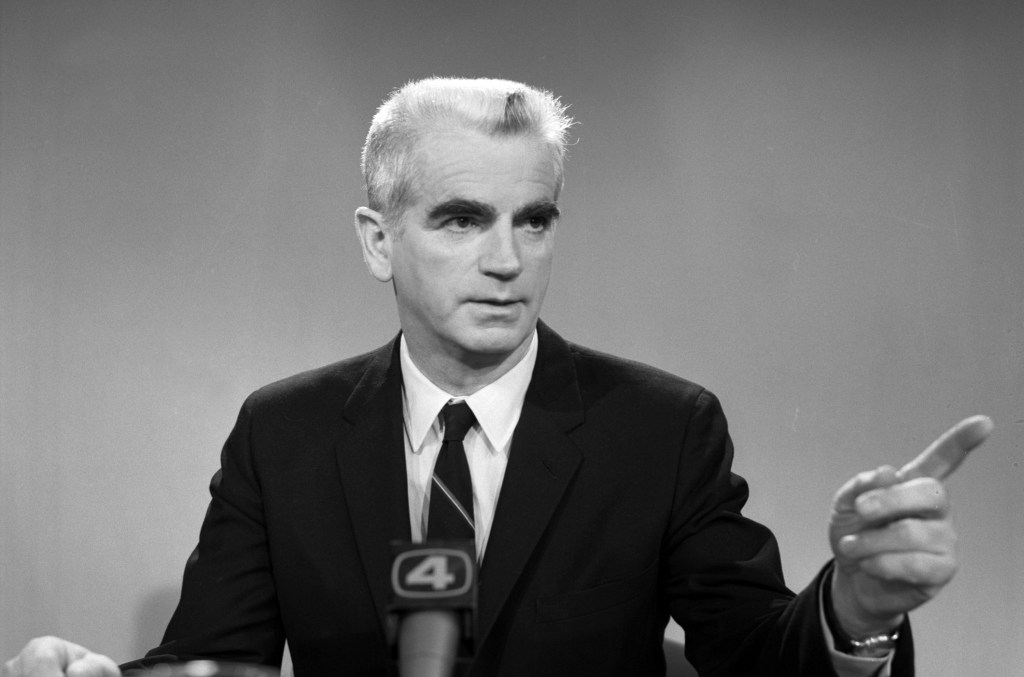
Camacho brought the issue to the U.S. Commission on Civil Rights, alleging a violation of the 14th Amendment’s Equal Protection Clause, and handed the appeal to Paul O’Dwyer. The case dangled a bit of poetic justice for the Irish-born attorney and Democratic activist: Irish immigrants had been the targets of the earliest state voter-literacy test before the Civil War in Connecticut.
The case also offered Democratic recognition to much-slighted Puerto Ricans. In those years, neighborhood bosses used the literacy test and English-only ballots to hold onto their power and keep Puerto Ricans from voting for minority candidates.
The O’Dwyer-led appeal in federal court was unsuccessful. Only when a bipartisan amendment to the Voting Right Act aimed at ensuring the franchise for Puerto Ricans — cosponsored by Sens. Robert Kennedy and Jacob Javits — was the literacy test ruled unlawful.
O’Dwyer brought the battle to a vastly different U.S. Supreme Court than that of today, representing Martha Cardona, a 42-year-old Puerto Rican mother of three. That case, Cardona vs. Power, and its companion case, Katzenbach vs. Morgan, were decided by the U.S. Supreme Court 60 years ago today, ending literacy tests.
Gone, then, was the deeply regressive spirit of the literacy test. And so it remained, at least until the equally regressive decision in Louisiana vs. Callais and a new flurry of laws making it harder for citizens in many states, though not New York, to cast their ballots.
Polner and Tubridy are the co-authors of “An Irish Passion for Justice: The Life of Rebel New York Attorney Paul O’Dwyer” (Three Hills/Cornell University Press).