
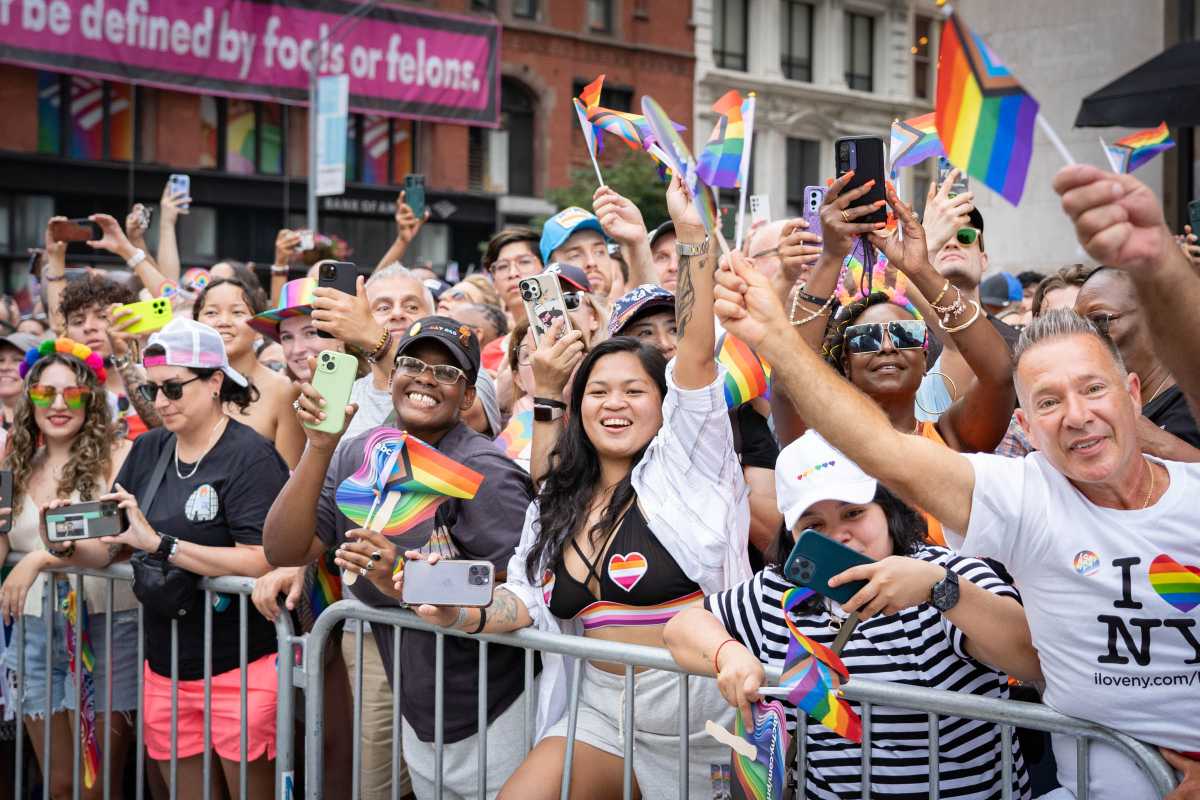
Thousands line the streets during NYC’s Pride.
Photo by Qianshan Weng
In honor of Pride Month, Legal Services NYC launched a new survey of LGBTQIA+ New Yorkers on Monday aimed at better understanding their socioeconomic challenges.
Studies show that roughly one in five LGBTQIA+ people nationwide lives in poverty. The causes are varied, ranging from disproportionate barriers to housing, healthcare, and employment, or threats to safety. Legal Services NYC hopes that it can use the results to better respond to those challenges.
“In a moment when LGBTQIA+ communities are facing growing legal and political challenges, this survey will help ensure that resources, services, and advocacy efforts are driven by community voices and focused where they can have the greatest impact,” said Sonja Shield, a senior staff attorney in the LGBTQ+ Advocacy Project in Legal Services’ Bronx office.
The survey will gather information on legal challenges, discrimination, barriers to services, and unmet needs facing low-income LGBTQIA+ New Yorkers, use the data to plan future legal services, community education and policy campaigns.
“Data is one of the most powerful tools communities have to identify needs, improve access to services, and strengthen evidence-based solutions,” said Jennifer Lee, a senior public health advisor at CAI Global, the firm partnering with Legal Services to interpret the results.
The 10-minute survey will be anonymous for those taking it, but its results will be published in an upcoming public report. Participants who complete the survey may enter a random drawing to win one of 100 $25 gift cards.
For decades, Legal Services has been establishing and operating LGBTQIA+ Rights and HIV Advocacy programs throughout the city. They run programs in all five boroughs and established one of the nation’s first HIV/AIDS legal units in 1989
The survey project builds off of a 2016 report that the legal provider undertook, which recommended expanding services for low-income LGBT people and concluded that legal services organizations must take certain precautions to serve those communities.
New York City residents can take the survey here at legalservicesnyc.org/research-reports-and-commentary/9736.