
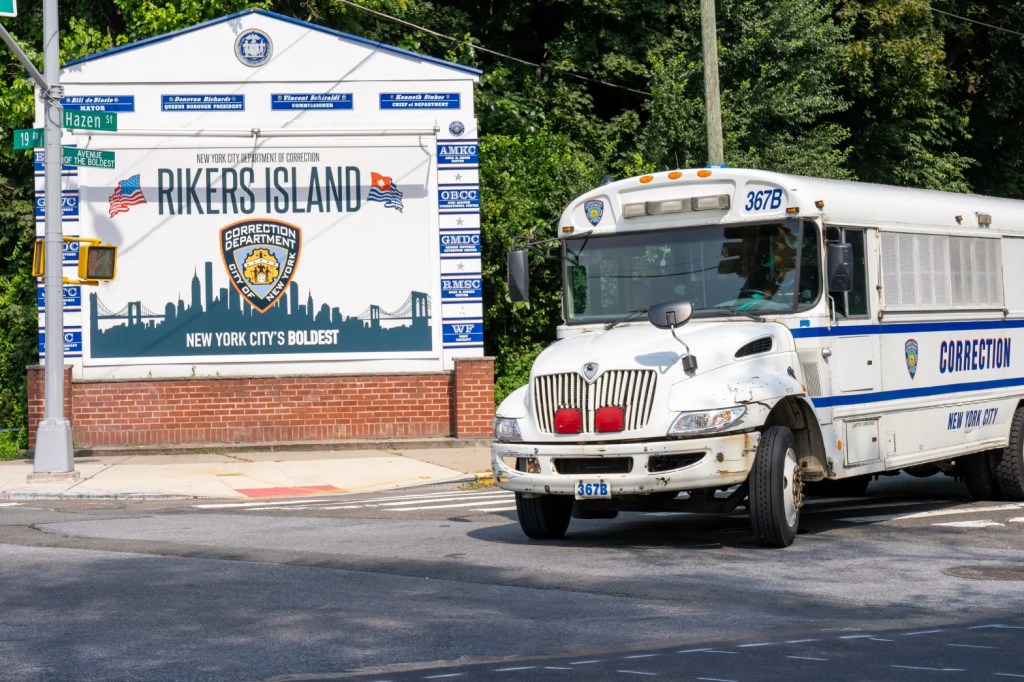
When I chose to speak publicly to the Daily News about conditions in the mental health units on Rikers Island, I expected criticism and scrutiny. What I did not expect was learning, as I walked into my Ph.D. graduation last month, that the Department of Investigation had deemed my allegations of “deadlocking” unsubstantiated.
I know what I witnessed. As a forensic social worker working with individuals with severe mental illness in city jails, I saw people confined for prolonged periods, experiencing profound psychological deterioration, hopelessness, suicidality, and emotional distress.
The DOI report turns on whether documentation could prove that people were intentionally kept in their cells without movement or services. Yet some of the most harmful practices inside correctional facilities do not neatly appear in policies or records.
The report acknowledged that people were held in their cells for prolonged periods but noted that cell doors were periodically opened. That is not the same as meaningful freedom of movement. People experiencing severe mental illness, trauma, intimidation, or fear may not feel safe enough to leave even when a door is briefly unlocked.
I remember one man whose cell I helped open. Inside were flies, feces, flooding, and a torn mattress. He would not speak, sitting on the bed staring blankly ahead. That moment revealed profound psychiatric deterioration and human suffering.
The report also acknowledged significant limitations. DOI stated that missing video footage and a lack of cooperation or response from potential witnesses constrained the probe and limited its ability to conduct a meaningful inquiry. Investigators also struggled to get current staff to speak openly. Fear of retaliation is real, and silence should not be mistaken for evidence that harm did not occur.
While DOI reviewed records and interviewed staff, the report does not indicate that investigators sought input from justice-impacted individuals or grassroots organizations led by formerly incarcerated people who have spent years documenting conditions on Rikers. These perspectives are critical when evaluating practices not reflected in official records.
Victor M. Herrera experienced pretrial detention on Rikers Island in the 1990s and is now a leader with the Freedom Agenda and Close Rikers campaign. He noted that practices such as prolonged lock-ins, food deprivation, and denial of basic hygiene have often been dismissed as unsubstantiated despite persistent reports.
An “unsubstantiated” finding should not be mistaken for proof that no harm occurred. People with serious mental illness continue to suffer in jails repeatedly criticized for violence, neglect, isolation, staffing shortages, and inadequate mental health care.
This is why the Treatment Court Expansion Act must be passed. Too many people with mental illness and substance use disorders are incarcerated when treatment would be more effective. Expanding treatment courts would increase access to care, reduce unnecessary incarceration, and create pathways to recovery and stability.
The End Health Professionals’ Complicity in the Torture of Detained or Incarcerated Individuals Act is equally critical. Health professionals are often among the few who witness harmful conditions firsthand. They must be protected when reporting abuse or practices that cause harm.
I think often about the people incarcerated on Rikers. Their suffering should not be dismissed simply because it occurs behind jail walls. An unsubstantiated report does not erase what I witnessed, nor does it erase the experiences of those living through these conditions every day.
Rzewinski, a licensed clinical social worker, was a clinical supervisor on Rikers Island from December 2023 to September 2024.