
Newly passed legislation is aimed toward strengthening safety protections when it comes to some of New York’s most vulnerable residents.
“I had the opportunity to breastfeed and I did both, but I had to depend on infant formula, and unfortunately, it’s the thing that many moms and many families have to depend on,” said Democratic state Assemblymember Emérita Torres.
Torres’ sponsored the Baby Food and Infant Formula Safety and Transparency Act, which passed the New York State Legislature this session. As a mother of two young children under four years old, she feels it’s important to get it signed into law.
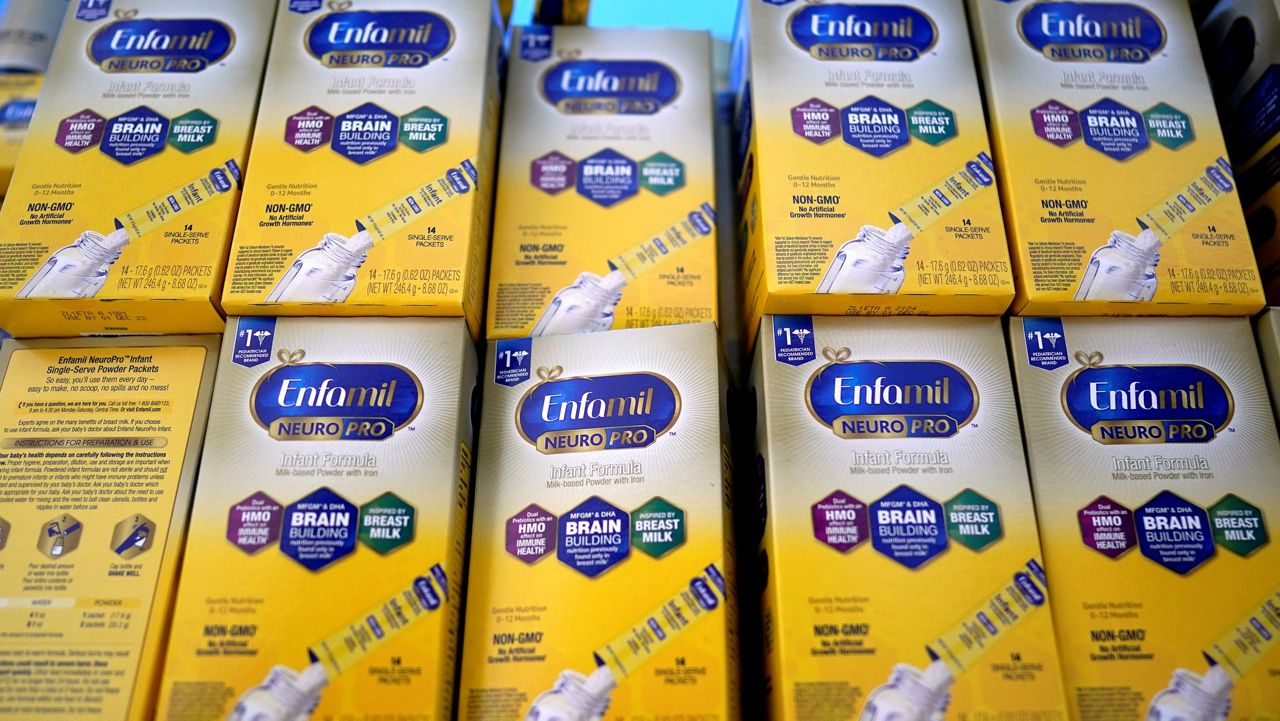
The legislation requires manufacturers to test baby food and infant formula for heavy metals and toxic chemicals like lead, mercury and arsenic, and then post the results to their website.
“It requires manufacturers to put a label on both the baby food and infant formula with a QR code, where families can look and see okay, this has been tested what’s the level of toxic chemicals in this baby food or formula as well as guidance around those issues,” said Torres.
With this legislation, New York is joining the ranks of other states like California, Vermont, Illinois and Maryland who have all taken action to try and set state standards on how heavy metals are tested in baby food. Currently, Torres says “right now, there is no federal requirement. There’s no standard to be met. So, it’s up to states to step up.”
While heavy metals in food can be naturally occurring, consistent ingested exposure to heavy metals can cause cancer and other non-cancerous adverse effects, according to the National Library of Medicine. Infants and young children are especially vulnerable because they eat often and have developing bodies.
Brian Ronholm, the director of food policy at Consumer Reports, says a key distinction in New York’s bill is that it includes “infant formula testing.”
When it comes to the legislative process, Ronholm says New York’s bill has advanced the “furthest in terms of the potential of providing more immediate results.”
“In our testing over the past several years on both baby food and infant formula, we often find concerning levels of lead and arsenic and mercury and other elements,” he said.
Ronholm worked on passing the bill. He says parents don’t need to panic, and education is key when selecting the safest products.
“It’s just a matter of being able to access the information to allow them to make that kind of choice,” said Ronholm.
If this measure is signed into law, there’s still a process that needs to happen before it’s fully enacted.
“The [state] Department of Health and the Department of Agriculture will come together and develop a standard,” said Torres. “The full impact of the law will be felt in about two years.”
Spectrum News 1 reached out to some popular manufacturers of baby food and infant formula including Similac, Gerner, and Beechnut for this report.
In response, Beechnut said in part: “At Beech-Nut, our highest purpose is the production of quality-tested, nutritious food for babies and toddler. Beech-Nut has long implemented rigorous quality and safety practices, including ingredient sourcing standards, supplier controls, and finished product testing. We remain committed to transparency, continuous improvement, and helping provide safe, nutritious foods for babies and toddlers.”