
Colby Chamberlain
Fluxus Administration: George Maciunas and the Art of Paperwork
The University of Chicago Press, 2024
In order to develop his well-known poétique de la relation, and the politics escorted by a subversion of monolingualism, Édouard Glissant had first to distinguish between one’s langue (as fixed system) and langage (as creative relation), a negotiation that could allow the flowering of an expression that was inherently composite, reflecting, in camouflage, the colonial language back to empire in order to remake its departments of identification and transparency under the de/sign of our “right to opacity.” Although they never encountered one another except on the page, among Glissant’s contemporary accomplices in the project of destabilizing (m)other tongues to understand multilingualism as inherent and translation as its first form was Pierre Joris, the nomadic polylingual poet, editor, anthologist, and translator born in Luxembourg, who lived and wrote across borders: France, Germany, England, the Maghreb, and the United States, exchanging, as Glissant did, standardization for polyphony and polysemy in the production of a new English, not just his adopted language but his language of adoption, through which he would fashion another American English.
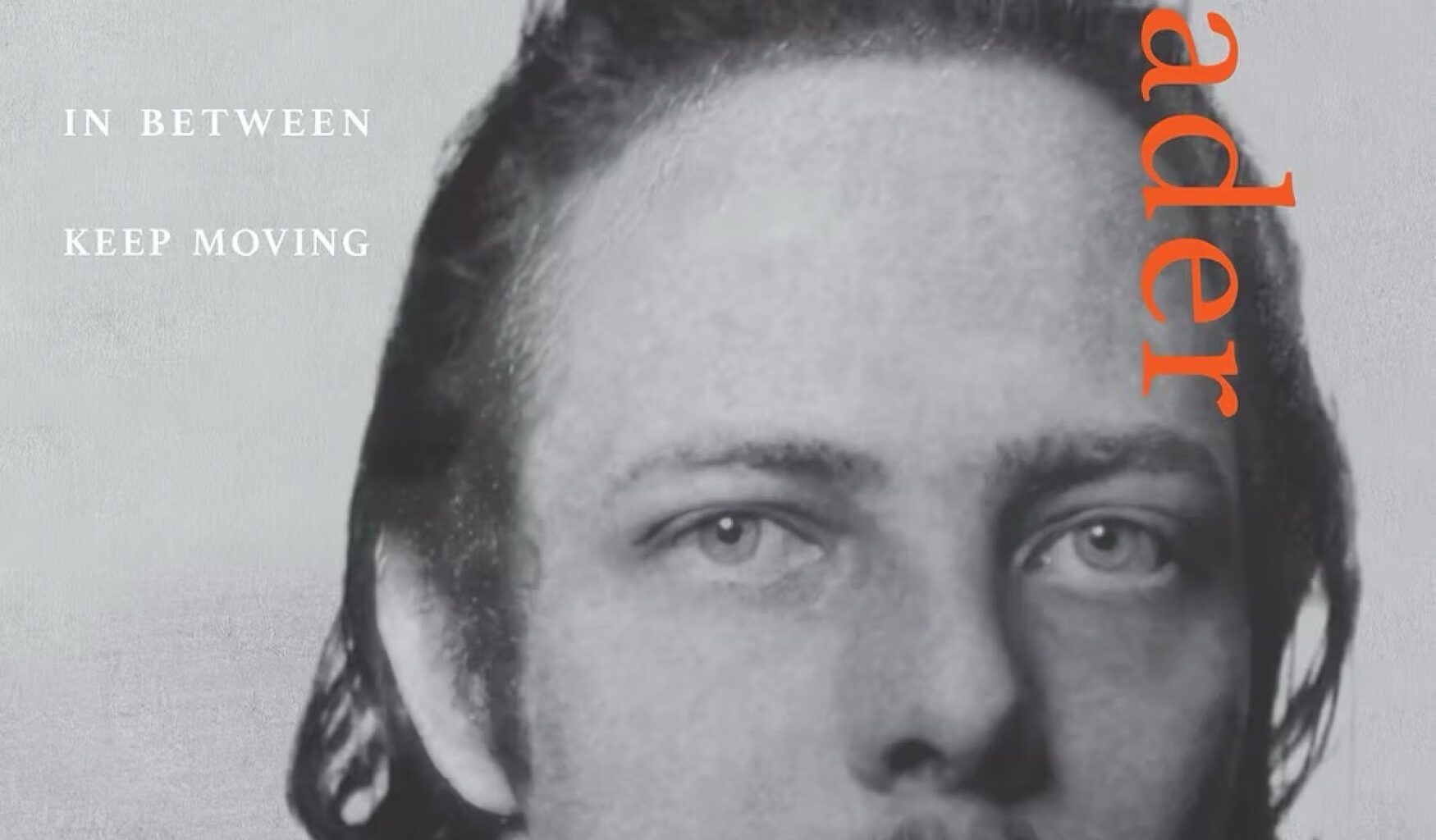
In Between Keep Moving: A Pierre Joris Reader, edited by Ariel Resnikoff and Joris and published on the anniversary of Joris’s death in February of last year, collects for the first time poems, interviews, notebook extracts, philosophical manifestos, translator introductions, dedications and commemorations of poetic forebearers, performance scores, and the forewords of other books—a dense, promiscuous, and rewarding tome spanning more than half a century that demonstrates Joris’s lifelong commitment to and astute awareness of the aural discrepancies and adjustments between languages, each of which are redeemed, in verse, as uncontaminated originals through the poet’s characteristic open structure and playful enjambment. How did he learn to write in this listening manner—hearing or mishearing—his new American poetics as nomadic and panoramic as his person, against site/sight specificity and representation? One of the many merits of this book is the opportunity for readers to witness Joris’s development as a thinker and reader and writer across six “diwans,” or what we might think of as chambers of flight between spaces and time, beginning with the hypnotically arresting prologue—what Joris will later refer to as his “memoir,” unfinished at the time of his death—in which he immediately enmeshes reading, childhood, and dreaming as the origins of sentient experience—“Is there,” he asks in the opening page, “life before reading?”
You are not certain—& grow less certain as time passes, as you grow old & memory, like nostalgia, isn’t what it used to be. So if you ask what it was like to be a child, you will have a hard time answering—and not just because you do not remember it as being the best time of your life. Not that you wouldn’t be interested in finding out for yourself. But how to be a historian of one’s own past, if istorin—the Greek word for history—means for the one historian you trust (because you love to read him) to find out for oneself. How can you go there from now? Maybe you can write yourself there, i.e. activate dreaming and reading and come back forward.
Even in this introductory passage, we see Joris’s affinity for etymological tracing and wordplay, foundations of the poet’s oeuvre as both writer and theorist, reader and translator, and Joris’s larger endeavor to undermine logocentric assumptions of Western philosophy typical of deconstruction and its preeminent theorist, Jacques Derrida, whose De la grammatologie Joris intended to translate, having sent ten pages to several publishers in New York while at Bard. (“I am still, half a century later,” he writes, “waiting for an answer.”) Of course, most readers are familiar with Pierre Joris by way of Paul Celan, whose “untranslatable” Atemwende [Breathturn] Joris ferried, alongside many other works by Celan, into English. If translation can be considered, in the Benjaminian sense, as both liberation and expansion of the original, Celan’s original served Joris, too, as a gateway to poetry, of learning to become a poet, and tuning one’s life to unsettlement, a resistance to familiarity and complacency and certitude. Joris writes:
If lucky enough, something will happen that opens you, or the world, a door, into the one of the other, between the two, maybe just a small opening, a slit you can slip through, maybe not as narrow as the birth canal that gave you first entrance, but possibly as blinding when you or it opens your eyes.
Hearing Celan’s “Todesfuge” recited by a classroom guest when he was fourteen years old was Joris’s epiphanic moment:
Without knowing anything more about the poem or the poet, I suddenly realized that there was something else, an other language, or use of language that had nothing to do with the so-called language of communication, of everyday usage, nor with what we had been taught under the name of “literature”—something that did not pass through the mediation of what I later learned to call “representation.”