
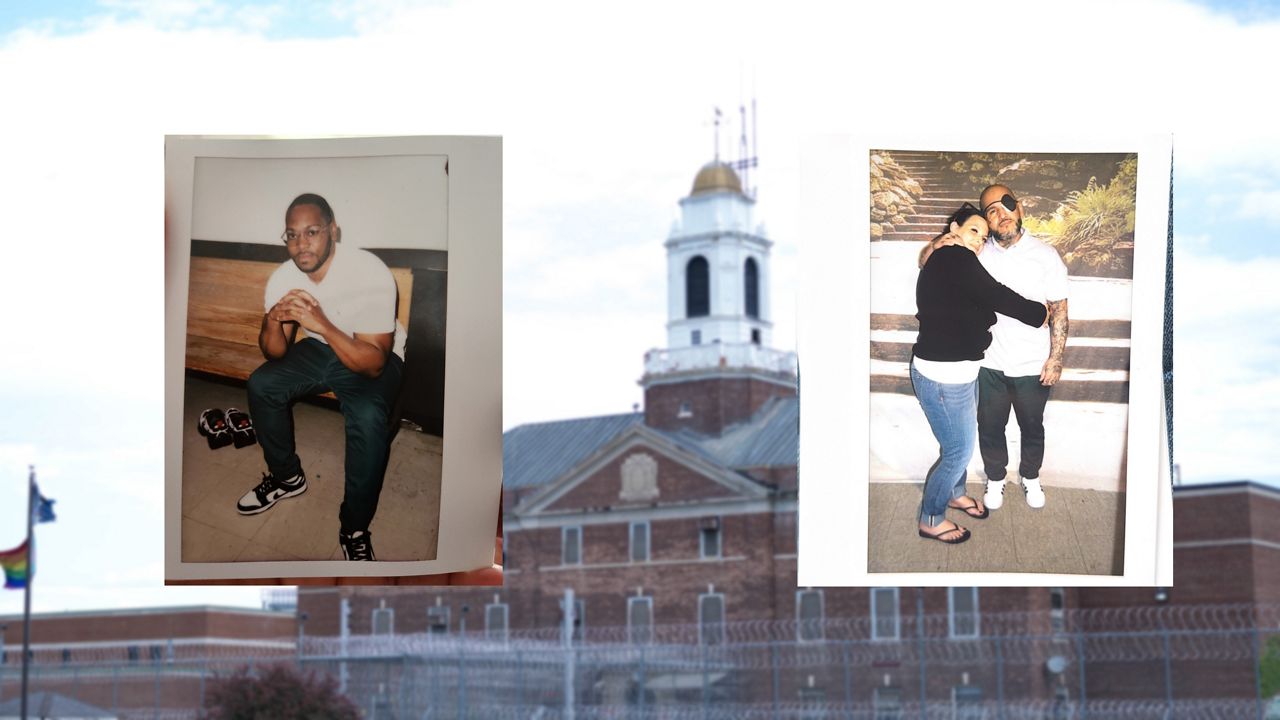
The last time Barbara Holmes visited her son Justus at Coxsackie Correctional in Greene County, she didn’t recognize him. He’d lost 30 pounds, she says, from an alarming gastrointestinal issue he’s had for a year.
Despite repeated pleas for an appointment to see a doctor, he still hasn’t seen one.
While on the phone with his mother and a friend on April 13, Justus stopped responding, and his mother began to record what she could hear on the other side. She shared that recording with Spectrum News 1.
About five minutes after he stopped responding, another voice was heard on the recording. “Holmes!” someone said, then beats on a door. “Oh s—, he’s lying in his own puke.”
“It was a three-way call and [correction officers] Narcaned him seven times and he had three seizures,” Barbara Holmes said in a recent interview, relaying information guards passed onto her. “And I was like, ‘What would you Narcan him for? He’s not a drug addict. He’s sick.’ And he said he wasn’t aware of that.”
Inmates are required to follow the sick call process to initiate requests for medical services by filling out Form 3160.
Jennifer Scaife, executive director of the Correctional Association of New York, an organization tasked with overseeing the state prison system, said medical concerns are the number one thing they hear about from individuals who are incarcerated.
“Staffing for individuals to be transported to an outside hospital — any visit with a specialist — is going to require special transport, which is staff intensive,” Scaife said. “A number of people are complaining that they have been waiting very long to get specialty care,” Scaife said.
Healthcare for the prison population comes with challenges involving a number of factors, she said.
“People in prisons have higher rates of chronic conditions than members of the general public. All of these things combined make for a very difficult situation for people with medical needs in prisons and people are very concerned about not getting enough timely, quality medical attention,” Scaife said.
Since experiencing what he said were seizures, Holmes was taken to an outside hospital to be examined by a doctor but wasn’t given treatment for his gastrointestinal issues, his mother said.
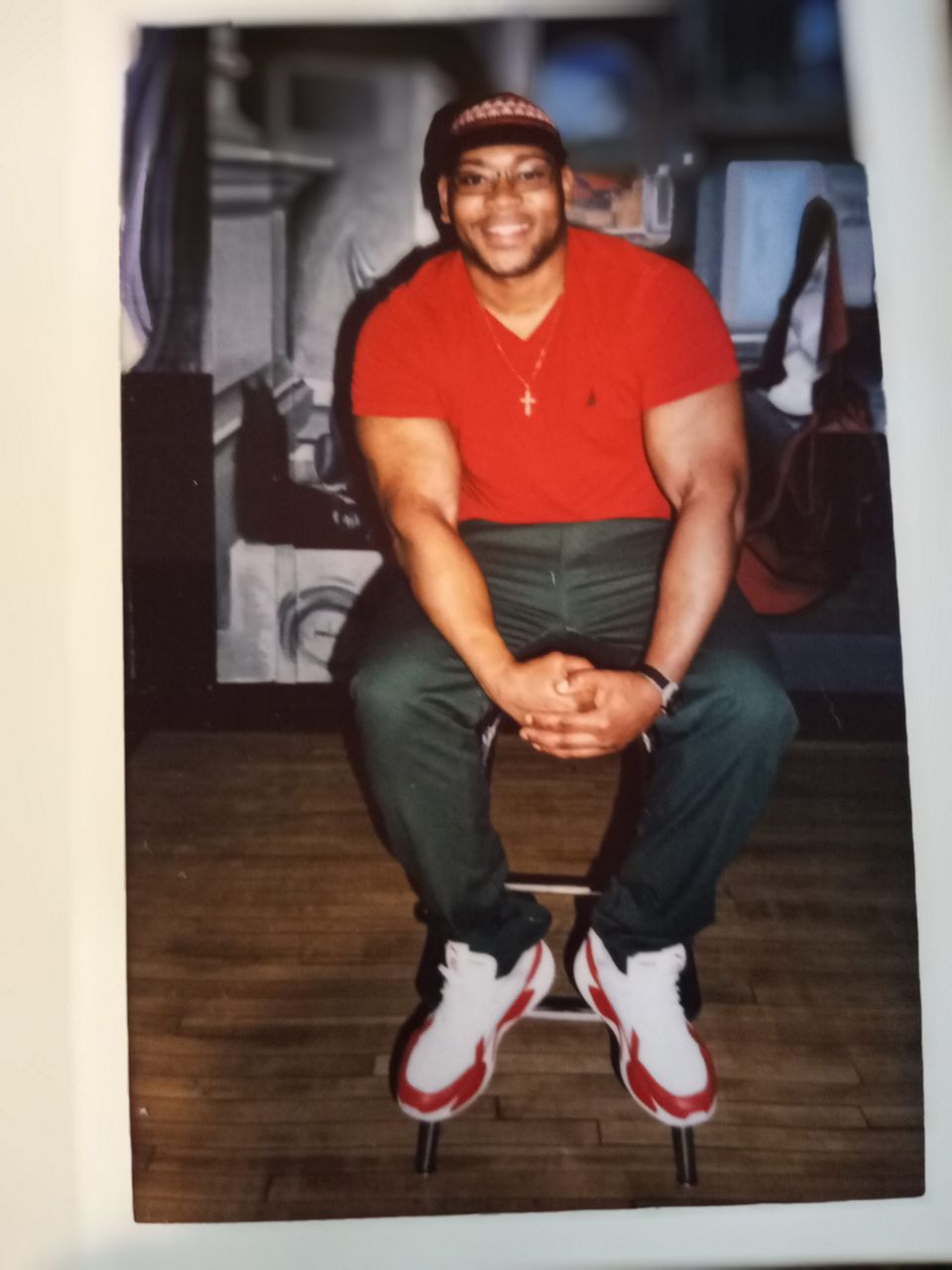
Justus Holmes prior to when he began experiencing symptoms. (Photo courtesy of Barbara Holmes)
On May 26, a similar event happened where facility staff gave him naloxone five times.
According to the Centers for Disease Control, there are no negative effects from giving naloxone to someone not suffering from an overdose.
Justus, 32 of Syracuse, has been incarcerated since 2020, sentenced to 15 years for a non-fatal shooting in 2019.
“He was given a sentence to do his time and come back to be a productive citizen like he was before he went in,” his mother said.
Holmes still has not seen a doctor regarding his symptoms and sometimes is too weak to see his mother when she gets to come for visits. It has been stressful for her and the rest of their family, she said.
“We don’t want him to go through that. No family wants their relative to go through nothing like that in there. It’s hard enough. You have to get them a package and commissary money and then you have to worry about their health on top of their well-being. No, it’s too much,” Holmes said.
Last week, Holmes was reportedly scheduled to see a doctor but never did because a nurse told his mother that there were “insufficient escort officers available to transport him to the appointments.”

The entrance to Coxsackie Correctional Facility. (Emily Kenny/Spectrum News 1)
Spectrum News visited Holmes at Coxsackie Correctional, and he said since his mother visited him last, he has lost 15 more pounds for a total of 45 pounds. Since February, he has put in 20 sick calls and still has yet to be seen by a provider.
“Some days are more difficult than others,” Holmes said.
He said whenever he eats or drinks his stomach hurts so prior to the visit, he did not eat or drink anything. The pain can sometimes be a “ten out of ten,” Holmes said.
“What if it was happening to you? It’s judgement on them to see us as less than human, it’s not right. I’m still a human,” he said.
Holmes said his biggest concern is that this will cause long-term damage to his body and that he will continue to deal with this even after his release.
The New York Department of Corrections and Community Supervision said they cannot comment on incarcerated individuals’ medical treatment but provided the following statement.
“All incarcerated individuals receive the community standard of care, have the opportunity to see a medical professional through the facility’s sick-call procedure, and are transported to a local hospital when their medical needs are beyond the scope of what can be provided in the facility. DOCCS has agreements with healthcare providers and specialists at major hospitals across the state, as well as agreements with several smaller hospitals in close proximity to its facilities to ensure the medical needs of incarcerated individuals are met,” a spokesperson said.
In the department’s Health Care Services policy manual, it requires on-site medical services to be available to incarcerated individuals at least five days per week. It does not specify how quickly medical providers should respond to sick calls.
“Routine sick call requests are triaged seven days per week and are addressed and scheduled based on priority,” the policy manual reads. “A qualified health care professional will evaluate incarcerated individuals at sick call in accordance with a standardized, problem-oriented method of nursing evaluation.”
The New York state Commission of Corrections provides reports on every death that occurs in the prison system and shares them publicly on its website. Of the reports posted as of June 9, 14 deaths point to a problem with the medical care provided that contributed to the inmates’ deaths.
Data from the CANY said that deaths in the New York prison system have reached a six-year high in 2026. Between Jan. 1 and April 30, 57 inmates have died. Green Haven Correctional Facility increased from seven deaths in 2024 to 19 deaths for the period May 2025 to April 2026. Updated data through June 1 from DOCCS says 77 inmates have died in 2026.
A representative of CANY said it’s difficult to draw a correlation between a rise in the number of deaths and a lack of medical care because of the extended wait times it takes for medical examiners to determine the cause of death. According to DOCCS, the cause of 53 of the 77 deaths that have occurred this year are still classified as “unknown.”
In 2022, CANY visited Coxsackie Correctional Facility, where Holmes is currently being held, for a monitoring visit. In response to a conducted survey, 41.7% of inmates said it took longer than one month to get a response to their medical requests. Data from CANY shows that Marcy Correctional has the highest rate of reported unaddressed medical problems at 87%, followed by Collins Correctional at 73%, Woodbourne Correctional at 67% and Washington and Mid-State Correctional at 57% of inmates reporting this concern.
A brother with cancer
General medical care can be a challenge for the prison population, but Scaife said getting specialty care is even more difficult.
Jose ‘Jay’ Rodriguez, 44 of Suffolk County, is currently being held at Green Haven Correctional Facility. In 2022, he reported what he believed was a cyst on his eyelid.
He didn’t know that four years later, the small mass would lead to doctors removing his left eye after finally discovering squamous cell carcinoma, a common skin cancer, had spread.
“On my way to lose my eye, I was a city kid, so on that drive to Sloan Kettering, the one thing I did was I covered my right eye, my good eye,” he said in a phone interview. “I said the last thing I’m gonna see with this eye is the Hudson River. Even though it was blurry.”
Late last month, four years after the mass appeared, Rodriguez was taken from Green Haven Correctional Facility to Sloan Kettering, a hospital in New York City, where they removed his left eye. The operation happened after years of advocating for himself to get treatment.
“It started off with just a little lump in the eye and then it just kind of continued to progressively get worse, and as it got worse, I kept on complaining and complaining and complaining. Nothing was ever done,” Rodriguez said.
He has been incarcerated since 2016 and said he has seen many individuals go through delays in medical care.
“I like to call it medical genocide. That’s what happens in the living facilities. Not only do they deny us adequate medical care, but they restrict our access to things that keep us healthy,” Rodriguez said.
According to his medical records that his sister provided to Spectrum News 1, Rodriguez was seen in March 2025 with irritation in his eye because when the mass “popped,” his eyelid turned inward and his eyelashes rubbed against his eyeball. The doctor removed his eyelashes, but he returned twice more last year for continued irritation, including in October, when doctors took a biopsy that confirmed he had cancer.
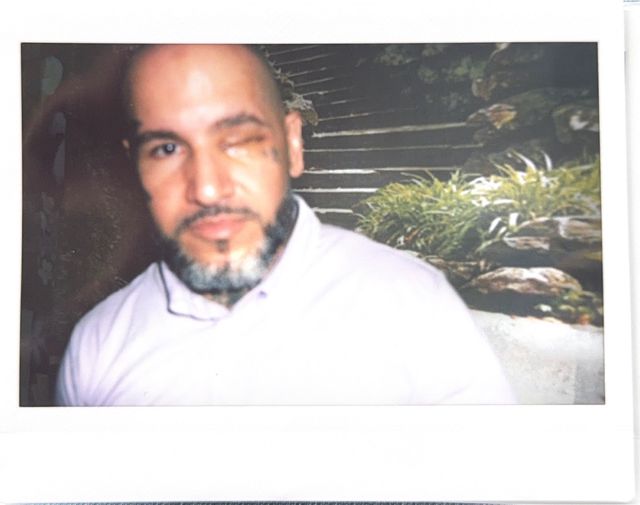
Jose Rodriguez after his eye was removed. (Photo courtesy Stephanie Harris)
Jessica Kruger, a professor of public health at University at Buffalo, said there are many factors that lead to the increase in chronic conditions among this population of people.
“First is the stress people are under when they’re incarcerated, and we know stress is directly related to many chronic diseases and also reduces people’s immunity. Secondly, you’re in a pretty confined area, so infectious disease can spread,” Kruger said.
Kruger said another concern is that the rate of cancer screenings in prisons is much lower than the general public. A report from the Journal of Correctional Health Care found that only 20% of men who are incarcerated had up to date colorectal cancer screenings, despite that population being at high risk for cancer.
While prioritizing the care of inmates might not be a priority for all, Kruger said it’s important to think of how the issue impacts the community at large.
“Most people will be released. There’s very few who are incarcerated for the rest of their lives and so we have to think how this is actually a community health issue and how we need to be more inclusive of people who are incarcerated within our health care system,” Kruger said. “We need to get away from this individualistic view of a person should or should not receive this health care.”
Stephanie Harris, Rodriguez’s sister, who started a nonprofit after experiencing this issue alongside him, works with families whose loved ones are incarcerated and go through the same thing as Rodriguez.
“I started the Jay Act Advocacy and Legal Reform Initiative because my brother was just neglected and filing grievances and sick calls. My mom calling Albany, getting nothing, no response for years,” Harris said.
She began to notice that other families were experiencing the same thing, and so she now advocates on their behalf.
Since his surgery, Harris said Rodriguez spent less than a day in the hospital and was taken to the infirmary at Green Haven Correctional, which she worries could lead to an infection.
“Now, instead of ensuring strict compliance with his surgeon’s orders, staff are attempting to shift responsibility onto him by implying that he can simply be discharged back into general housing – a setting that is neither medically appropriate nor safe given his condition and ongoing recovery needs,” Harris wrote in an email to DOCCS administrators, which she provided a copy to Spectrum News.
Harris said her brother described unsanitary conditions in the infirmary including bugs, broken and missing tiles on the floor and ceiling and a lack of hot water. Rodriguez told her he is worried about getting an infection.
“You let the cancer spread. You delayed treatment. You ignored warning signs. You failed him repeatedly and even now – after irreversible damage has already been done – the incompetence and neglect continue,” Harris said in the email.
Rodriguez is incarcerated for second-degree murder, and he knows how that shapes the perception people have of him, but he said he or other inmates shouldn’t be denied adequate medical care.
“I’ve never denied responsibility for what I’ve done, and I get that society deems me, you know, whatever they want to call me, but I wasn’t sentenced to this. I was sentenced to serve time, and that’s what I’ve been doing, and I’ve been doing the best I can to be positive in my own incarceration,” he said. “I wasn’t sentenced to medical torture.”