
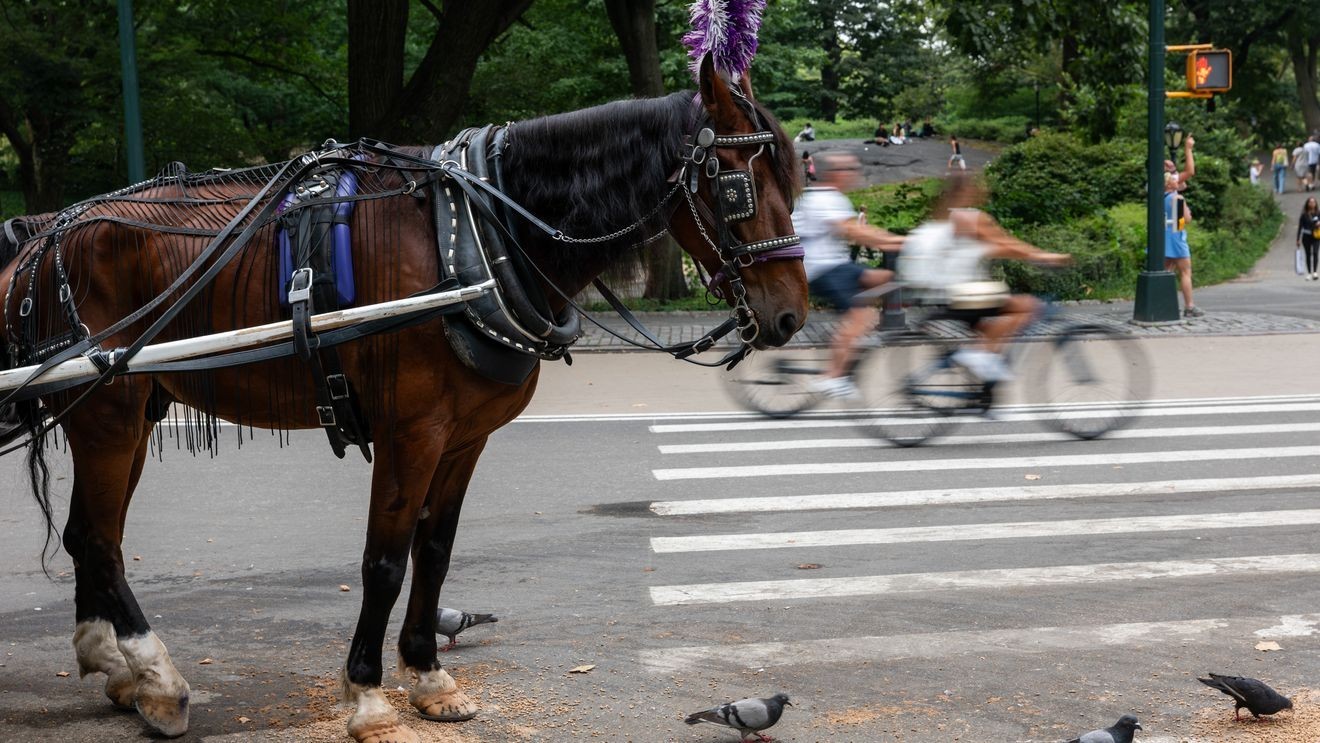
NEW YORK (TNND) — A carriage horse that died in New York City reportedly ingested a highly toxic yew plant before the animal collapsed and took its last breath.
The 16-year-old horse, Deniz, died on June 9 in Central Park, igniting an intense blame game between park management and the union that represents carriage drivers.
Leaders of Transport Workers Union (TWU) Local 100 cited what it described as a necropsy conducted by a pathologist at Cornell University’s College of Veterinary Medicine.
Based on the alleged findings, TWU said the Central Park Conservancy is at fault for failing to warn horse handlers about the presence of toxic plants.
“Poor Deniz died because the people running the Park Conservancy never warned anyone that there were deadly yew plants in the park,” Alexander Kemp, who is the administrative vice president of Transport Workers Union Local 100, said during a news conference on Tuesday, as well as in a statement shared on X.
Kemp appeared alongside carriage driver Christina Hansen, who defended the treatment and care of the horses. She said the animals receive extensive daily attention and veterinary care.
TWU called for a comprehensive review of potentially toxic plants throughout Central Park, saying such an assessment could help protect both animals and visitors.
“The health and well-being of these horses will always remain our top priority,” TWU said in the statement.
The horse’s death has renewed scrutiny of New York City’s horse-drawn carriage industry, which has long been the subject of debate between supporters who view it as a historic tradition and critics who argue the practice endangers animal welfare.
Animal rights organizations pointed to the animal’s death as evidence that horses should no longer be used to pull carriages through busy Manhattan streets and parks.
In wake of what it described as of “unverified claims” about the horse’s cause of death, the Central Park Conservancy accused the TWU of “negligence.” A spokesperson noted that “NYC Parks rules plainly forbid horses from eating vegetation anywhere across our 843 acres.”
“TWU has now demonstrated how their own negligence has resulted in this unfortunate incident, since NYC Parks rules plainly forbid horses from eating vegetation anywhere across our 843 acres. The same rule requires carriage drivers and operators to attend to their horses at all times in order to keep them safe and healthy. Perhaps if they had, Deniz would not have suffered as he did, and died,” according to the statement.”This tragedy underscores something larger: it’s time for New York City to join other major cities around the world and ban horse carriages from our city. Today’s Park is busier and more crowded than ever. For the safety of visitors, other animals, and the horses themselves, we continue to support a ban on carriage horse rides in the Park,” the statement noted.
The Central Park Conservancy also said there have been seven horse-related incidents in the park over the last 13 months.
In a post on X, New Yorkers for Clean, Livable, and Safe Streets (NYCLASS), a nonprofit organization, said the horse “struggled in agony and took his final breaths after collapsing while pulling a carriage with passengers” in Central Park.
“Parkgoers watched in horror,” NYCLASS wrote on June 9. “Many were sobbing, hugging one another, and left devastated by what they had just witnessed.”
Witnesses and activists shared images and videos of the incident on social media, expressing concern about the conditions faced by carriage horses. The popular tourist attraction has operated for more than a century, but has faced repeated calls for reform or elimination.
Yew plants contain compounds that can cause severe cardiac and respiratory problems in animals and can be fatal if consumed in sufficient quantities.
It remains unclear how Deniz gained access to the plant or whether additional safety measures will be implemented following the horse’s death.