
Photo-Illustration: Intelligencer; Photo: Getty Images
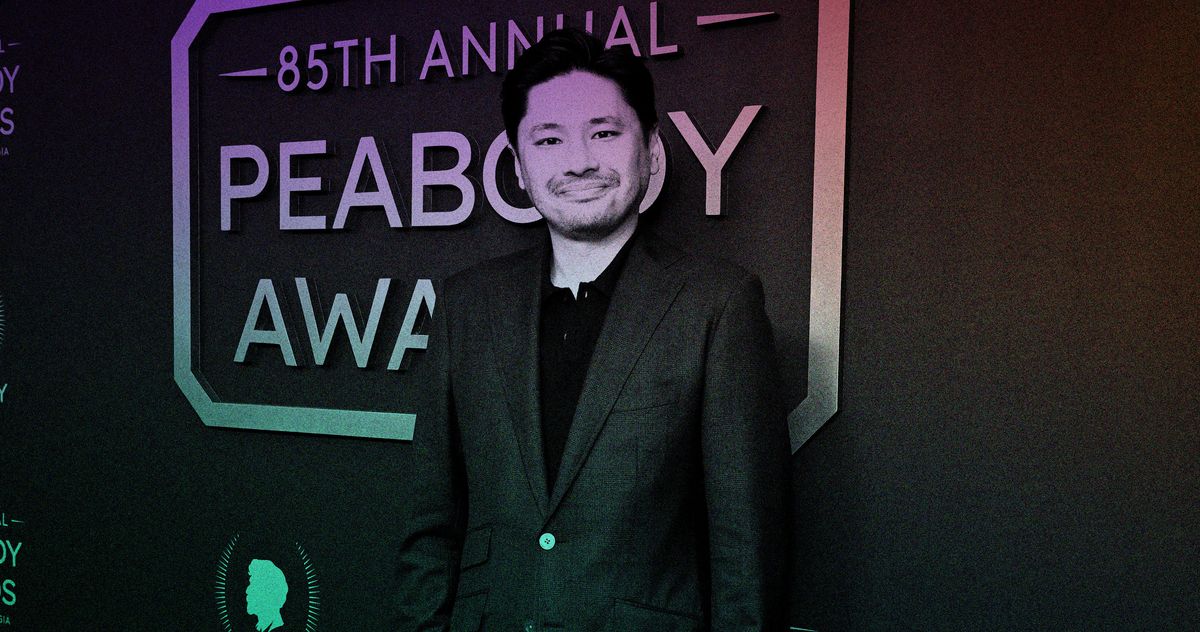
The jubilation has yet to die down. Knicks gear is everywhere. And a million people are expected to hit the parade route today for the ultimate celebration of the NBA champs. “I’ve lived here for 40 years,” says Pablo Torre, a Pulitzer Prize–winning podcast host and native New Yorker, and “nothing feels like this.” The Knicks’ electrifying playoff run not only satisfied diehard fans but also, says Torre, “radicalized” people “who did not give a shit about the Knicks or sports in general.”
Torre speaks reverentially about the communal nature of sports but also doesn’t let his own Knicks fandom get in the way of, say, dissecting owner James Dolan’s sophisticated surveillance operation inside Madison Square Garden on Pablo Torre Finds Out. “Exploring the underbelly is essential to my ability to enjoy what’s happening onscreen, on the court, in any given tournament,” he says. In this interview, Torre talks about a recent confluence of sports and spectacle — from the NBA Finals to the World Cup to a UFC fight at the White House — and why accountability journalism is more vital than ever in covering powerful leagues and wealthy owners.
You’re a born-and-bred New Yorker. Tell me how you feel the city is right now, and does this compare to anything that you’ve experienced?
Nothing feels like this. I’ve lived here for 40 years. I grew up in Murray Hill, which used to be a place for families before it became a place where young consultants went to vomit. Walking distance to Madison Square Garden.
The thing that New York gets to feel here, which is the greatest feeling in all of sports, is that you are both David and Goliath. You are the underdog but also the greatest city in the world. It’s the whole thing that I have regarded as a cliché forever, which is what does it mean when you say unironically, “If you can make it here, you can make it anywhere.” It means you’re an underdog, but also, by the way, you’re the best.
You get casuals, you get people who have been radicalized, and that’s been astonishing to watch — the way in which people who did not give a shit about the Knicks or sports in general have now just gotten addicted to the best version of sports. And they will be crushed at some point soon to learn that it is not ever really like this. But that is also the glory of the whole enterprise.
I’m a lifelong Mets fan, so one of my earliest memories is winning a World Series — and then it never happening again.
Now we get to be our parents. We get to be the people who say, “Remember when Jalen Brunson put a knife in his teeth and scored 45 against the tallest man in the world, while his teammates scored a total of 49 points in a clincher, in one of the greatest NBA finals that anyone had ever dreamed?”
It also feels, frankly, like we are still thawing out of what the pandemic did to us. As someone who grew up in New York City, I only later realized during the pandemic how if you self-select into living here, you’re doing it because you realize that you want to be around a fuck-ton of people. And so the whole thing of what happened when Trump came to town and they took away the watch parties outside the Garden, what did that really mean? Of course there are all the political sorts of analyses around it, but really what it did was it threatened the best version of this experience for people, which wasn’t even being inside the building, which of course was too expensive. It was getting to watch it with others.
The only game the Knicks lost since late April was the Trump game — game three. There was a grimness, and maybe just seeing Trump in the box with James Dolan, casting a sort of a pall where otherwise it was jubilation in the city.
The dude was brought into the Garden by the commissioner of the NBA and the owner of the Knicks as a lifelong Knicks fan who just wanted to support the team. And then not only does he disrupt the entire glorious ritual of this city coalescing around this team, he — I can’t stress this enough — literally falls asleep and then leaves with seven minutes left in the fourth quarter. And so of course the Knicks lost that game. Of course, the Knicks had to overcome that loss. That’s all part of the very on-the-nose theatrical performance that these playoffs had become for the city.
And then you get to game four, an incredible comeback, and a very dramatic one in game five. Where were you watching some of these games?
I was in my parents’ apartment building in the community room, where my dad had hauled his projector and we bought pizza for our neighbors. It was like this whole thing. By the way, I had never met many of these neighbors before. It is the activation of the potential of New York City: What if you actually got to know the people you were around all the time? We were going crazy.
I was with my friends from high school, people I’ve been watching the Knicks with for 25 years, and I’ve had a tortured relationship with the team because of Dolan and because of course I cover the team and investigate things about the team that I think are worthy of accountability. My friend Juan, who I’ve known for almost three decades, wore four Knicks jerseys on top of each other because that was the ritual that he needed to do that has now, by the way, been scientifically validated, because the Knicks had the greatest comeback in the history of the NBA playoffs.
He just now needs to wear those four jerseys indefinitely.
Absolutely. By the way, it’s like the saddest jerseys. There’s an RJ Barrett jersey in there. There was a Tracy McGrady in there with the D so worn away that it was just Tracy McGray.
I want Juan and his four jerseys in the negotiating room with Iran. We should try this now. What can the Knicks solve? What else can they help us with?
You mentioned covering James Dolan, and you did a great episode a few months back with Noah Shachtman on the MSG surveillance state. Dolan has been kind of a villain of New York sports. Does the championship change his legacy in any way?
I think there is a dynamic familiar to anybody who’s followed politics to what’s happening to James Dolan now, which is the thing you’ve long heard about the president. It’s like, “Today James Dolan became president.” It’s like, “Guys, we have decades of track record that we should be weighing here.”
He should get credit for proving that you can in fact win a championship with James Dolan as your owner, which is admittedly something that I had never foreseen. He gets credit for that. But what he does and how he behaves, constructing a private surveillance state that is collecting biometric information and serving, effectively, one of the pettiest agendas in the history of sports — not only banning lawyers but their co-workers and random moms trying to take their daughters to Radio City. Throwing out people and trailing them with your private security force, people who dare to say, “Sell the team” or “Fire Dolan.” We need to stay on top of that.
The reason why sports is being used by this administration as well as this owner in this way, it’s because you get to lure people in with a thing they love and then charge them later in ways they don’t realize, whether it’s public money or asset consent to surveillance. You get to charge them a bill that they don’t realize they’re paying. We need to be absolutely vigilant about what the true costs of this joy can tend to be.
Politicians have always wanted to align themselves with star athletes, and President Trump has done this throughout his second term. He’s gone to the Daytona 500 and the U.S. Open, was the first president at the Super Bowl, first at the NBA Finals. There feels like a difference, though, between how Trump has tried to align himself with the Knicks and the Mamdani heart-on-sleeve fandom. You recently interviewed Mayor Mamdani as well about this moment in sports in New York. Can you tell me about what you’ve noticed about how he has demonstrated his fandom and also kind of whipped up the city behind the team even more?
Look, I think the notion of a politician using sports to become more popular and to achieve his agenda is something that is bipartisan in its incentive structure. I will say that what’s refreshing about the mayor at this moment is that the Democratic Party in general has face-planted at what feels like an obvious tactic. And that’s not to say that in contrast the president has been good at it. I think the president has been almost transparently fraudulent in terms of wearing sports as a skin suit, as if he’s actually a fan, but instead is using it to further his own self-interest. The UFC thing, it’s just funny. He shows up, and because it’s sports, he gets to wear the costume of populism. But in the process, of course it is transactionality, it is crony capitalism, it is all of those things.
The mayor, by contrast — I’m not here to say that this is what it looks like for a fan to be truly pure, absent of political incentive — I am merely saying that the dude knows how to talk about sports such that normal people who might be fans of their teams can relate.
And to talk about the sports affordability crisis during a time of actual affordability crises throughout American life, if that’s your message, and that is the mayor’s message, sports is an excellent case study to accomplish some of that persuasion.
The mayor is also going all in on a parade. They’re expecting a million people. What’s your plan?
I plan to cover it. I plan to be there and to hopefully get close enough to see anything. Although I think part of what we’ve learned throughout this playoff run is that you’re mostly there to see your fellow New Yorkers.
I think that’s something about sports that I’ve underestimated until this playoff run, too, which is that the most refreshing thing can be a reaction video — not a video of the game, but a video of people watching the game. Because there is something like the authentic firing of a mirror neuron where it’s like, that person feels this way, and now my brain is asking itself, Do I feel this way? And then giving me permission to feel that way.
So my friend Desus said it in a way that I cannot improve upon, but he said, “This is like reverse 9/11.” And there is of course a tongue-in-cheekness and a farcical nature to that declaration. But it’s also quite real in that the thing that typically does this to people, in which you’re all talking about the same thing in a city like this, is tragedy. And now we’re running the experiment of what if it was the opposite? I just want to be around for that.
You see it everywhere. If somebody is wearing a Knicks hat or shirt, there’s a nod of acknowledgement or even striking up a conversation. I literally saw that on the subway last night with people. We’re now days after the Finals, but it’s still there, this kind of harmony.
I welcome people who have never watched a second of a Knicks game until this playoff run to be as full-throated in their cheers and in their fandom as anyone else. One of the worst things we do in sports is we gatekeep and the whole reality of New York as both metaphor but also the locus of all of this happening in real life is that the more people that you welcome in, the better it can be. That’s what it means to be in a city. That’s what it means to be in New York specifically.
We can do purity tests sometime later. Do you know who Renaldo Balkman is? Do you remember when David Lee tipped in that ball in double overtime against Charlotte? We can do Chris Dudley references until we all pass out, but for right now, I want to welcome this sensation of spontaneous organizing, because the more people that we prove can care about something that makes everyone feel better — I think the more we’re proving that the entire thesis of New York City has made sense all along.
This past week, we have the Knicks’ first championship in 53 years, first World Cup on U.S. soil in over three decades, and a spectacle like we haven’t seen before: a UFC fight on the White House lawn. What do you make of this confluence of just big sports spectacles, transcending politics, culture?
There is no other place in modern life where you get tents that are this big where people who don’t vote the same way and worship the same way and listen to the same music or watch the same TV shows otherwise are cheering for the same thing.
In the World Cup, you have a case study in a historically corrupt governing body in FIFA extracting from its host countries whatever it wants because of that power. We’re seeing that again with the United States and the World Cup. The UFC event at the White House, a dynamic in which you can present as populist as in favor of the common American while gas prices are skyrocketing amid a war with Iran. These are the things that can be papered over because sports provides unparalleled monocultural entertainment that can feel like bread and circuses.
Sports has never been more valuable from any economic and cultural relevance perspective. It’s a green arrow going up into the right while everything else is managing decline at best. But at the same time, we need to be on guard for the people who see that green arrow and want to use it to their advantage instead of to the benefit of the customer — of the actual fan, of the actual average American.
That is the challenge sports has always faced, because bread can be delicious and circuses can be really fun. And we’ve just got to make sure that what we’re signing up for, and what we’re paying, is commensurate with something like a fair deal for the people who make it special, who are the people watching it as much as it is the people who are in charge of it.
Do you see that as your motivation as a journalist, given some of the recent episodes: the UFC and how closely it’s tied to Trump, FIFA and how they gouge host countries and cities, as well as investigating Dolan even though you’re a Knicks fan. Do you feel like that’s your driver, that you have to cover the underbelly sometimes to be able to celebrate what’s happening on the field on the court?
I think exploring the underbelly is essential to my ability to enjoy what’s happening onscreen, on the court, in any given tournament. You can feel sometimes as somebody who chooses to interrupt the normal flow of sports talk with an investigative series, which I do quite often, like the guy that they don’t want at the party. And so I also want to be very aware that sometimes I’ve got to serve vegetables to people who are here just for dessert.
If sports is an ecosystem, and if this ecosystem has never been more easily manipulated by people with money, and the gap between what those people want you to know, and what they’re doing behind the scenes has never been greater, which I believe it is at this moment, then a serious and rigorous examination of what’s really happening here is essential to the health of the ecosystem, because those people don’t have the best interests of sports or sports fans in mind.
When you won the Pulitzer Prize, people were very excited. Has it changed how you go about your job or how you feel like the show is perceived?
It’s a co-sign that is utterly surreal but is emboldening to investigate an NBA owner — the richest owner in American sports like Steve Ballmer, depending on the stock price of Microsoft, has somewhere around $145 billion — as an independent journalist who has one lawyer, it’s emboldening to know that that work is making an impact. And for me, the larger thesis of all of this is that investigative sports journalism can actually be fun, which is the whole thing about journalism to me, which is: This job can be something that people are entertained by as well as hopefully nourished by. And so I always think of, Yes, there may be vegetables hiding in this, but it’s underneath some melted cheese.
That is the thing I want to serve people. You could enjoy the taste of it while also feeling like maybe I might live a little longer as a result of this. And that sort of validation as much as external validation is largely a poison that I’m trying to make peace with. That degree from the Pulitzer jury of validation could not be more helpful to someone who is trying to continuously prove that sports and journalism can in fact go really well together.
This interview has been edited for length and clarity.
Sign Up for the Intelligencer Newsletter
Daily news about the politics, business, and technology shaping our world.
Vox Media, LLC Terms and Privacy Notice