
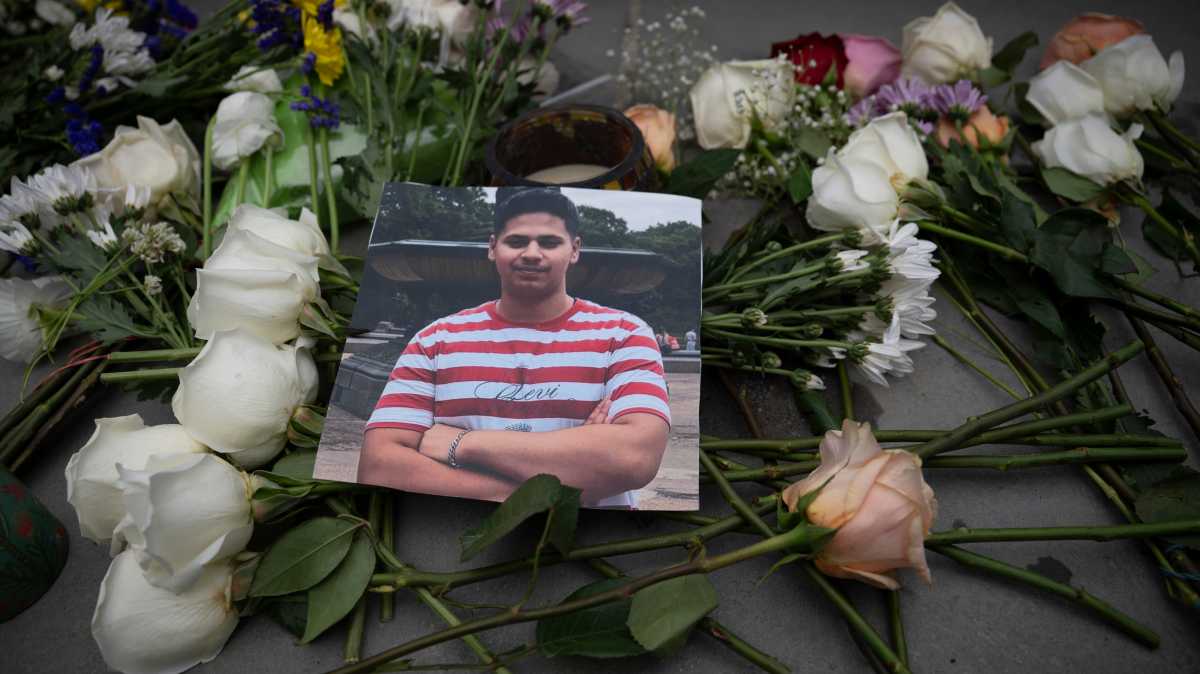
Lawmakers and advocates holding a vigil inside Central Park for Romanch Mahajan — the teenager killed in a horse carriage accident last week — argued on Monday that another such death is inevitable if the city does not move immediately to ban the industry.
City Council Member Christopher Marte (D-Manhattan), who recently re-introduced legislation to outlaw horse carriages in the city, pushed back on how the union that represents carriage drivers and owners — TWU Local 100 — responded to Mahajan’s death.
Mahajan — an 18-year-old tourist from India — was killed when the horse pulling the hansom cab he was riding in bolted and ultimately flipped its cargo over. That sent him to the ground, where he suffered severe head trauma.
It came after another incident in which a carriage horse named Deniz collapsed and died earlier this month.
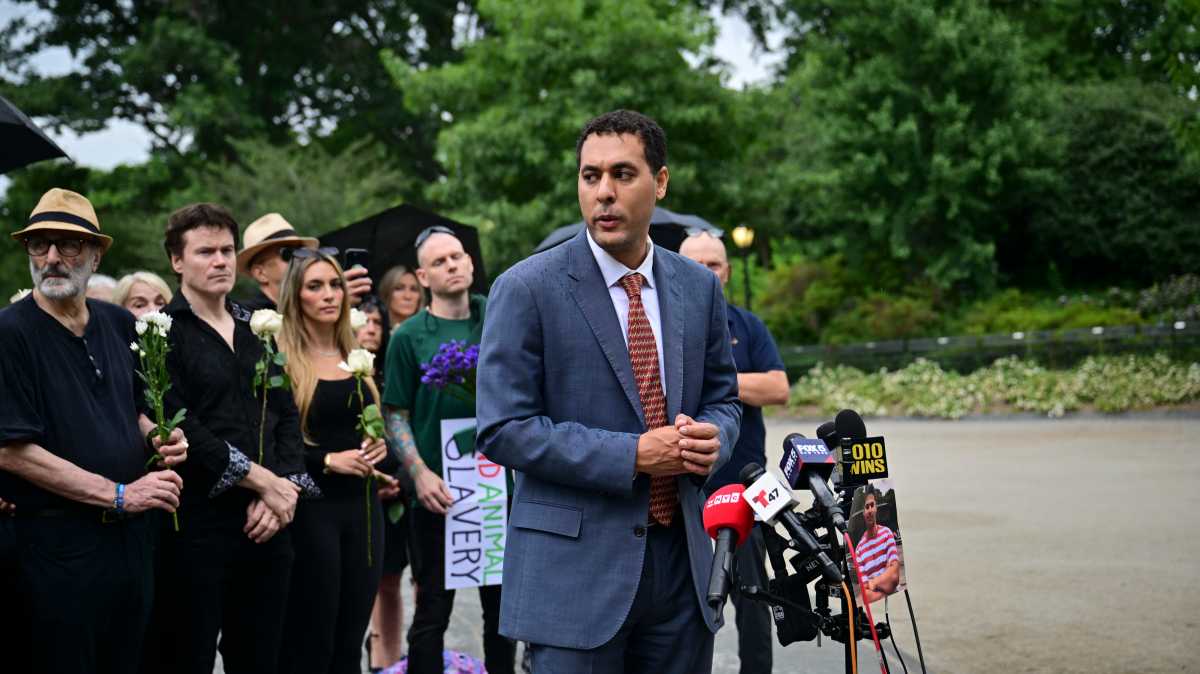 City Council Member Christopher Marte renamed ‘Ryder’s Law’ after Romanch Mahajan and he was killed in a horse carriage accident last week. Monday, June 22, 2026.Photo by Lloyd Mitchell
Marte took issue with the union’s insistence that the horse carriage industry can continue to operate as long as it takes a “Vision Zero” approach, in which it does everything possible to prevent deaths and injuries going forward.
“The only way you get Vision Zero in Central Park is by having no horse carriages here,” Marte said during the event at the Cherry Hill area inside Central Park.
TWU did not immediately respond to the remarks from the vigil.
Following Mahajan’s death last Wednesday, Local 100 leaders halted horse carriage tours from Thursday through Monday and said they were using that pause to give drivers a refresher training and come up with new protocols to ensure they keep better control of their horses. They also called on the city to work with them to install hitching posts throughout the park where drivers can tie horses to prevent them from bolting.
In a statement, Local 100 Administrative Vice President Alexander Kemp said the union has held discussions over the past four days that have centered on the importance of adding hitching posts.
“Our discussions with drivers and carriage owners over the last four days have reinforced our belief that hitching posts should be installed in the park,” Kemp said. “This is a commonsense safety upgrade that would enable drivers to tether their horses and prevent them from straying. We have suggested hitching posts as a preventative measure for years.”
But Marte said horses are just too unpredictable for any of those potential solutions to work.
“There’s no training, there’s no protocols in place that can stop a reaction from a horse in a split second,” the council member said. “It just takes one second for a horse to be shocked, lose its focus, and run off, and that’s what we’re trying to avoid.”
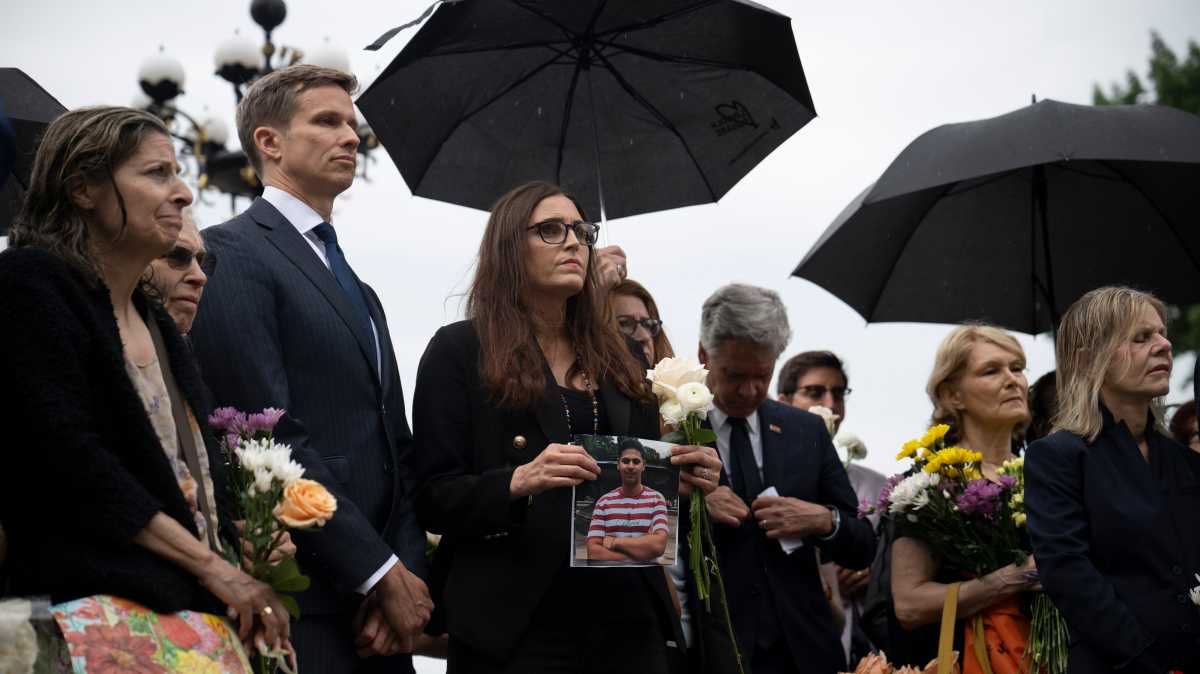 NYCLASS Excutive Director Edita said there is no way to prevent a horse from ‘spooking and killing someone.’ Monday, June 22, 2026.Photo by Lloyd Mitchell
Edita Birnkrant, executive director of the group New Yorkers for Clean, Livable, and Safe Streets (NYCLASS) echoed the same point, that theree is no amount of regulation that can prevent future dangerous incidents involving carriage horses.
“There is no way to prevent the next horse from spooking and harming or killing someone,” she said. “The hardest-wired instinct in a horse is to run when they’re frightened, and there is endless frightening stimuli.”
From Ryder’s Law to Romanch’s Law
During the event, Marte announced that he is renaming his measure to end the horse carriage industry, “Romanch’s Law,” changing it from its previous name, “Ryder’s Law.” He also read a pair of statements from Mahajan’s family, addressed to Mayor Zohran Mamdani, supporting the bill and condemning the carriage industry for planning to resume operations on Tuesday.
“We are officially calling on the New York City Council and the mayor to take immediate, decisive action, we demand an immediate action of the passage of Romanch’s Law to permanently phase-out horse-drawn carriages before another life is lost,” the family’s statement read. “Allowing horse carriages back onto the streets, while our family is planning a funeral, proves that the city values tourism over human life. We urge you to work with the City Council speaker to shut down these operations permanently before another tragedy occurs.”
Kemp said there will be “safety teams” in the park on Tuesday, when drivers return to giving tours, to offer training and provide oversight.
 A vigil for Romanch Mahajan in Central Park, where he died last week in a carriage horse accident. Monday, June 22, 2026.Photo by Lloyd Mitchell
Mamdani has previously said he supports banning horse carriages specifically within Central Park, where they primarily operate.
“The Mayor has been clear about his position: it is time to end the horse carriage industry in our parks,” Mamdani spokesperson Dora Pekec said in a statement. “We look forward to working with City Council, union partners, carriage drivers, animal welfare advocates, and community leaders to deliver a just transition that protects workers while ending horse-drawn carriages in Central Park once and for all.”
While City Council Speaker Julie Menin has yet to throw her full support behind a ban, she said last week that it is “time to act” following the incident and that she has scheduled a July 15 hearing for the bill.
Marte’s bill would phase out the industry by requiring the city to stop issuing new carriage driver licenses while simultaneously banning their operation. Additionally, it would mandate that the city Department of Consumer and Worker Protection create a program to retrain carriage drivers for other jobs.