
Origins
As is often the case with cult classics, the origins of the Reuben sandwich are fiercely disputed. One version places its birth in 1914, inspired by the silent film actress Annette Seelos, known for working with Charlie Chaplin. She supposedly asked Arnold Reuben, the German-Jewish proprietor of Reuben’s Restaurant on East 58th Street in New York City (now closed) to make her a sandwich of ham, turkey, Swiss cheese and coleslaw on rye, and the rest, as they say, is history.
Another contender for the crown is the Blackstone Hotel in Omaha (currently named the Kimpton Cottonwood Hotel) in the Midwestern state of Nebraska. During a regular poker game in the latter half of the 1920s, a player named Reuben Kulakofsky is said to have requested a late-night sandwich of corned beef — a cured and slow-cooked brisket, rather than the British version, which is minced and jellied — dressed with sauerkraut. Bernard Schimmel, the hotel’s owner, is credited with creating the masterpiece by adding Swiss cheese and Thousand Island dressing, before finishing it in a hot press. His granddaughter, Elizabeth Weil, later added weight to the story in The New York Times, noting his typewritten specifications calling for kosher dill pickles, a radish rose and potato chips on the side. The sandwich became a hit on the hotel’s menu, later winning the National Sandwich Idea Contest in 1956. Keen to embrace the local lore, Omaha has since declared 14 March as National Reuben Sandwich Day.
Whatever its origin story, by the mid-20th century, the Reuben was a firm favourite in New York’s Jewish delis. It benefited from postwar standardisation, when menus from Midtown to the outer boroughs began to echo one another and a good idea could travel quickly on rye bread alone. Repetition soon did the rest: the more it was served, the more the grilled sandwich felt as distinctly New York as the Empire State Building.
How it’s made
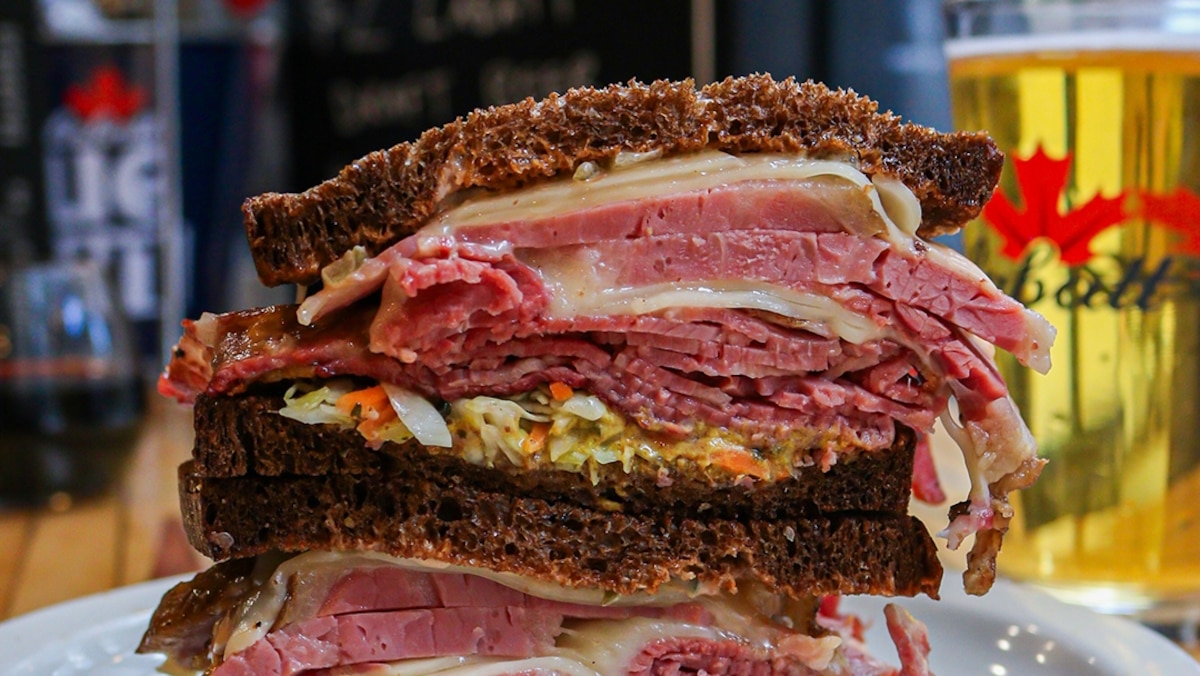
This hulking sandwich is created from a satisfyingly short list of ingredients: corned beef, Swiss cheese, sauerkraut and rye bread. For the dressing, it’s either Russian or Thousand Island, both mayonnaise-ketchup based, the former a slightly spicier version with paprika and Worcestershire sauce added.
To prepare, the bread is buttered, dressing is spread and then layers of meat, fermented cabbage sauerkraut and cheese are added before the sandwich is closed and pressed in a hot skillet. As the bread toasts, the rubbery cheese melts into the dressing, binding the whole thing together.