
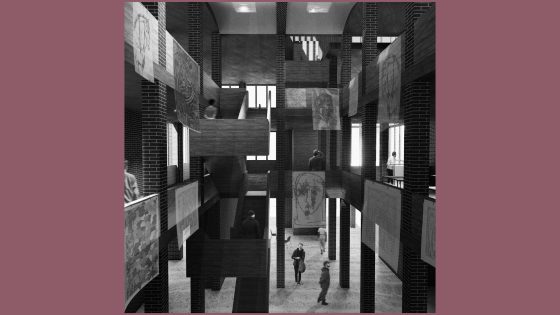
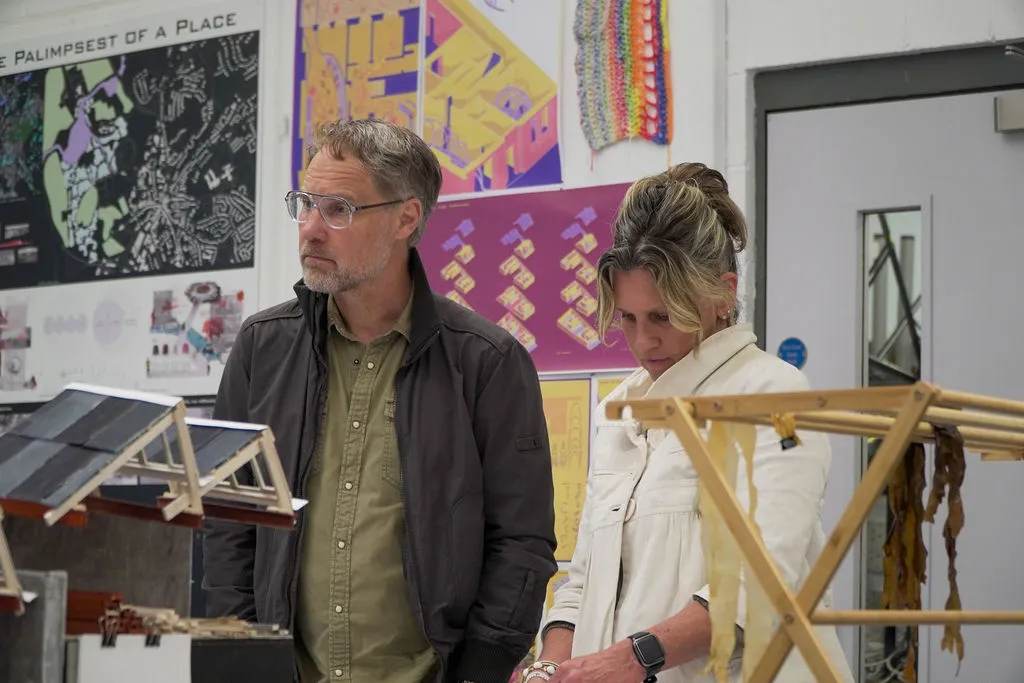
After another year of lectures, tutorials, crits and more than a few sleepless nights, the students of Queen’s University Belfast’s School of Architecture still found the energy to transform their relatively bland studio of blockwork walls, stretches of pinboard and rows of worn desks into a beautiful gallery, complete with wine bar, for their end-of-year show.
I was here a few months earlier as a guest tutor, giving undergraduates an introduction to BIM, in the name of providing a more pragmatic insight into their futures. The first thing I said in my opening lecture was that nothing I was about to teach them could help them graduate.
I was delighted to see that this tongue-in-cheek advice was taken seriously. I am sure a few techy types had modelled their projects using Revit (other modelling software is available!) but, if so, thankfully, this was drowned out by a plethora of hand-sketches and physical models on display – the preferred currency in the school. After all, architecture is the art of space, volume, light and texture, not pixels nor simulations and certainly not with the help of certain friends called Claude or Gemini.
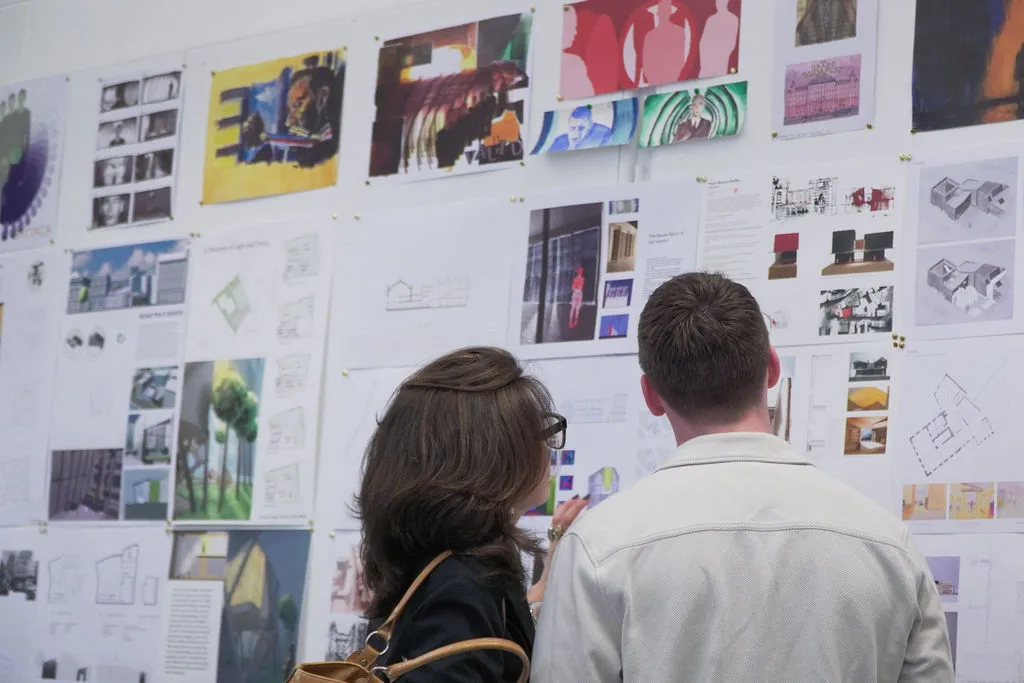
The evening was the culmination of a year of hard work by all within the school. There was a huge amount of talent on display, but two students particularly caught my attention for different reasons.
MArch student Rona Pettigrew’s final year thesis titled ‘Towards a Territory of Care’ explored a new approach to antenatal care and the birth experience by challenging the current standard of clinical, institutional spaces. The scheme centred on providing women with greater agency over their care leading up to and including labour. The project was presented using a range of media at a range of scales. The standout pieces were Smithson-inspired internal perspectives; the Smithsons being well known for making human activity integral to the architecture.
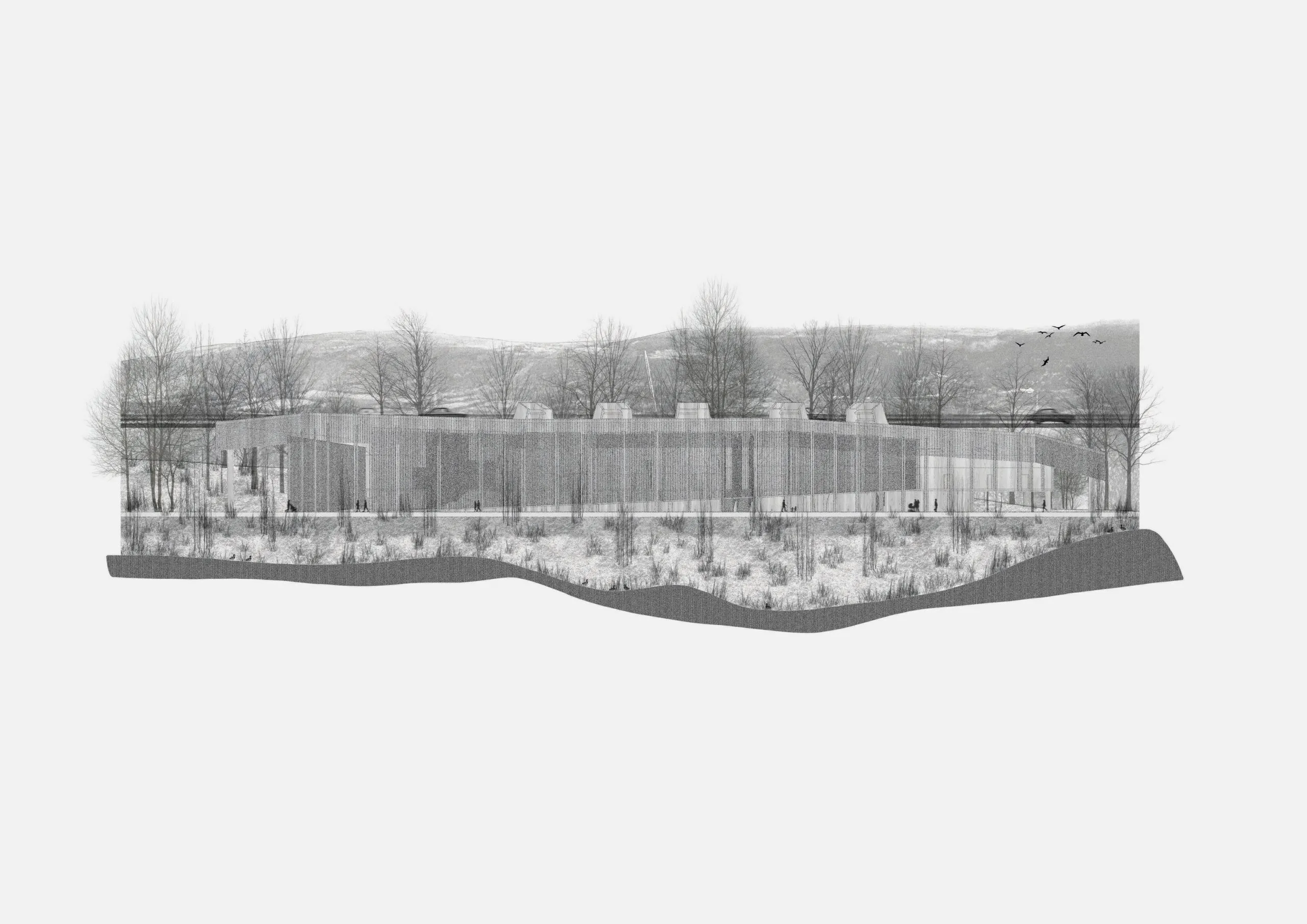
From postgraduate student Rona Pettigrew’s thesis Towards a Territory of Care
A beautifully made physical model of a suspended timber staircase that formed a continuous screened journey through the building was on display. This was an example of how good architectural design starts before putting pen to paper. Architecture of merit tends to begin with a challenging brief. Equally, a brief that seeks to disrupt, redefine or, in this case, completely overhaul the norm demands a strong architectural response. Pettigrew welcomed this challenge and succeeded in shifting the Overton window on expectations for maternity and childbirth architecture.
BSc undergraduate student Callum Walsh’s final-year thesis titled ‘Imprint’ sought a revival and celebration of one of Belfast’s many lost industries – printmaking – by contrast. The project displayed a deep understanding of cultural context that is rarely captured so accurately.
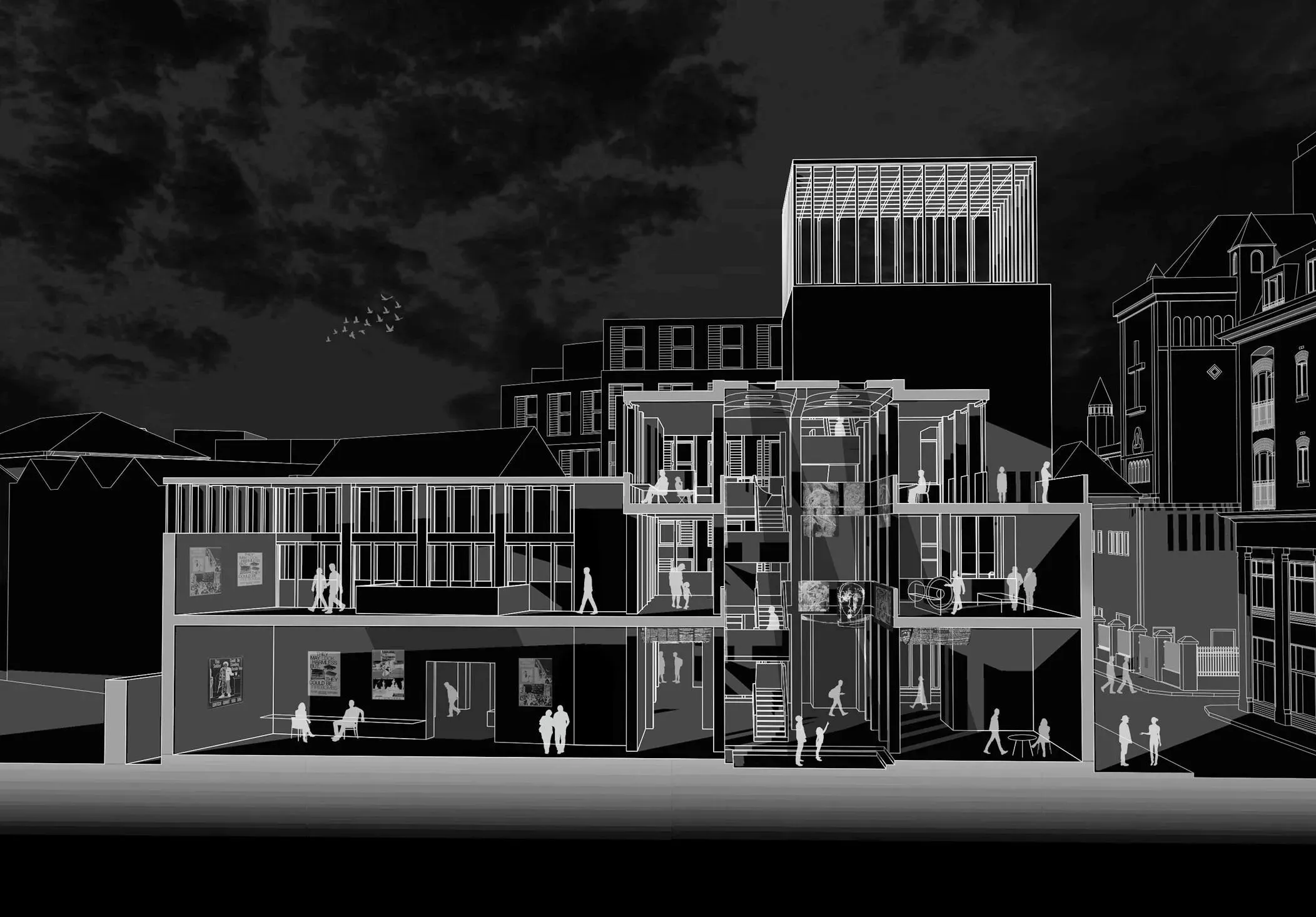
From undergraduate student Callum Walsh’s project Imprint
Belfast is a city that is more concerned with process than product. Famous for ships and linen, yes, but it is prouder of the skill and ingenuity required in the act of making. The sense of community and stories passed down generations are a by-product of this and are considered more valuable than the finished product itself. What makes Belfast special is that there is a universal understanding of the importance of this, and Walsh found a way to manifest this architecturally. The act of production was not only visible, but integral to the experience as a sequence of spaces invite public interaction, education and cultural reflection. The project stood out for its unique artistic chiaroscuro, suitable given the context and the program.
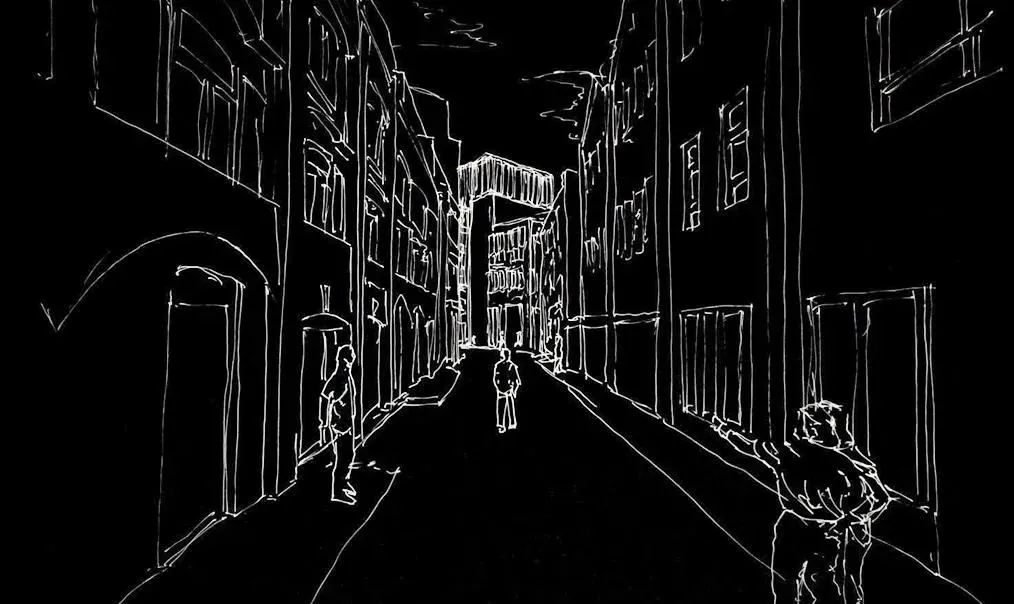
From undergraduate student Callum Walsh’s project Imprint
Overall, the standard of work was high across the board and the future of architecture looks bright against a backdrop of rhetoric centred on disillusionment. When witnessing at first hand the breadth of talent across our universities, it is clear that the perpetual argument that academia does not prepare you for the ‘real world’ of practice is nothing more than the misplaced grievance of exasperated executives who have forgotten what architecture actually is.
It is instead the real world that needs changing, not our preparation for it. The students at Queen’s University Belfast understand that the future is not an inevitability that awaits them but an opportunity for change. The work of Pettigrew and Walsh exemplified this to me.
Richard Kennedy is an architect and journalist based in Belfast
The Queen’s University Belfast Architecture Summer Show 2026 took place from 4 to 13 June at the School of the Natural and Built Environment, Belfast
Want to win a free subscription to the AJ?
We want to hear about the challenges facing architectural students and early-career architects – take the AJ’s Into Work survey today and enter our prize draw to win a free subscription