

DALLAS–(BUSINESS WIRE)–Jun 23, 2026–
Jacobs (NYSE: J) is serving as the Dormitory Authority of the State of New York’s (DASNY) technical advisor for the progressive design-build project delivering the New York State Department of Health’s new Wadsworth Center Public Health Laboratory, an advanced public health laboratory in Albany.
This press release features multimedia. View the full release here: https://www.businesswire.com/news/home/20260623964879/en/
The new 663,000 gross–square foot five-story laboratory will support highly specialized clinical, environmental and research activities. The planned new $1.7 billion Wadsworth Center will consolidate multiple laboratory sites into a single, modern campus, strengthening New York’s long-term public health readiness, research capacity and ability to respond to emerging biological and environmental threats.
Jacobs is providing consulting and technical advisory services across architectural, engineering and construction disciplines, representing DASNY and the New York State Department of Health while working with the design-build joint venture of Gilbane Building Company and Turner Construction Company, in association with HOK.
Jacobs Executive Vice President Imad Feghali said: “Large-scale public health laboratories demand rigorous technical oversight to support safety, reliability and adaptability over decades of operation. Jacobs’ independent technical advice is helping DASNY and the New York State Department of Health make informed decisions that advance regulatory compliance, operational resilience and long-term public health outcomes.”
The Wadsworth Center will fulfill a critical role in disease surveillance, outbreak response, environmental testing and newborn screening programs that protect communities in New York and beyond. The Wadsworth Center is a national reference laboratory recognized by the Centers for Disease Control and Prevention and other federal agencies. Construction is expected to be completed in 2030.
Around the world, Jacobs supports governments, healthcare providers and research institutions in planning and delivering complex health infrastructure and laboratory facilities. Engineering News-Record ranks Jacobs No. 1 in both healthcare and pharmaceuticals facilities. Jacobs has worked on more than 100 healthcare projects including the Johns Hopkins Medicine campus redevelopment in Baltimore, U.S., Christchurch Hospital in New Zealand and the Royal Prince Alfred Hospital redevelopment in Sydney.
At Jacobs, we’re challenging today to reinvent tomorrow – delivering outcomes and solutions for the world’s most complex challenges. With approximately $12 billion in annual revenue and a talent force of approximately 47,000, we provide end-to-end services in advanced manufacturing, cities & places, energy, environmental, life sciences, transportation and water. From advisory and consulting, feasibility, planning, design, program and lifecycle management, we’re creating a more connected and sustainable world. See how at jacobs.com and connect with us on LinkedIn, Instagram, X and Facebook.
Certain statements contained in this press release constitute forward-looking statements within the meaning of the Private Securities Litigation Reform Act of 1995. Forward-looking statements are statements that do not directly relate to any historical or current fact. When used herein, words such as “expects,” “anticipates,” “believes,” “seeks,” “estimates,” “plans,” “intends,” “future,” “will,” “would,” “could,” “can,” “may,” and similar words are intended to identify forward-looking statements. We base these forward-looking statements on management’s current estimates and expectations, as well as currently available competitive, financial and economic data. Forward-looking statements, however, are inherently uncertain. There are a variety of factors that could cause business results to differ materially from our forward-looking statements including, but not limited to, uncertainties as to, the timing of the award of projects and funding and potential changes to the amounts provided for under the Infrastructure Investment and Jobs Act and other legislation and executive orders related to governmental spending, including any directive to federal agencies to reduce federal spending or the size of the federal workforce, and changes in U.S. or foreign tax laws, including the tax legislation enacted in the U.S. in July 2025, statutes, rules, regulations or ordinances, including the impact of, and changes to tariffs and retaliatory tariffs or trade policies, that may adversely impact our future financial positions or results of operations, as well as general economic conditions, including inflation and the actions taken by monetary authorities in response to inflation, changes in interest rates and foreign currency exchange rates, changes in capital markets, the possibility of a recession or economic downturn, and increased uncertainty and risks, including policy risks and potential civil unrest, relating to the outcome of elections across our key markets and elevated geopolitical tension and conflicts, among others. For a description of these and additional factors that may occur that could cause actual results to differ from our forward-looking statements, see our filings with the U.S. Securities and Exchange Commission. The company is not under any duty to update any of the forward-looking statements after the date of this press release to conform to actual results, except as required by applicable law.

The new facility will support highly specialized clinical, environmental and research activities.
ISLAMABAD (AP) — Iran’s president arrived in Pakistan for talks Tuesday with officials who have been mediating negotiations between Tehran and Washington on a permanent end to the war in the Middle East, even as discrepancies emerged on what had been agreed so far and violence broke out again in Lebanon.
President Masoud Pezeshkian’s visit to Islamabad comes as technical teams were working on details of the deal following high-level negotiations in Switzerland on Monday led by U.S. Vice President JD Vance and Iran’s parliamentary speaker, Mohammad Bagher Qalibaf.
In Tehran, Iran’s capital, Foreign Ministry spokesperson Esmail Baghaei told reporters that no visits have been scheduled for the U.N. watchdog — the International Atomic Energy Agency — to examine Iranian nuclear sites bombed by the United States last year. Vance previously said the negotiations in Switzerland won an agreement for the IAEA to inspect the sites.
The IAEA has been in and out of Iran since Israel’s 12-day war in 2025, but has not been granted access to the bombed enrichment sites targeted by the U.S. at the time.
Meanwhile, violence flared again in southern Lebanon as Israeli soldiers opened fire, killing two people. The reports of violence came after two days of calm following a ceasefire brokered on Saturday. Any renewal of heavy fighting could threaten the broader diplomatic talks, since Iran has demanded that a full truce in Lebanon be part of any comprehensive deal.
President Asif Ali Zardari, Prime Minister Shehbaz Sharif and other senior officials received Pezeshkian upon his arrival in Islamabad amid tight security, according to Pakistani state media. Television footage showed Pezeshkian embracing Zardari and Sharif as they welcomed him.
This is the Iranian president’s first visit since the conflict started with the U.S. and Israeli attack on Iran on Feb. 28.
Pezeshkian and Sharif were to hold a joint news conference after their discussions.
In the initial talks, marking the start of a 60-day diplomatic process that seeks to reach a permanent deal to end the Iran war, Iran and the U.S. agreed to create a “de-confliction cell” to address the fighting in Lebanon between Israel and the Iranian-backed Hezbollah militant group. The U.S. said negotiators also discussed “mechanisms” to ensure that the Strait of Hormuz, a key waterway for oil transit that Iran had effectively blocked during the war, remains open.
Ahead of his meetings in Pakistan, Pezeshkian cautioned that “the effectiveness of the talks depends on full commitment to the agreed obligations and their precise implementation.”
“Progress on this path will be measured by practical adherence to accepted responsibilities,” he wrote on X. “Statements outside the agreed text do not help advance the negotiations.”
Iran suggested that the ongoing technical talks in Switzerland have led to the creation of specific negotiation groups, including those focused on sanctions relief, nuclear issues, reconstruction, and monitoring, according to the state-run IRNA news agency.
The report quoted Kazem Gharibabadi, a deputy foreign minister leading the technical talks, saying that the countries involved also formed a contact mechanism over ships moving through the Strait of Hormuz and over the fighting in Lebanon between Israel and Hezbollah.
It remains unclear whether the deconfliction cell being created will be enough to stop fighting between the Lebanese militant group Hezbollah and Israel, which occupies part of Lebanon and insists it must maintain a free hand to attack militants launching attacks into northern Israel.
Israeli forces opened fire and killed two men in the southern Lebanese town of Nabatiyeh al-Fawqa on Tuesday, Lebanon’s state-run National News Agency reported, adding the pair were next to a bulldozer that was clearing the road at the time.
Separately, the agency said Israeli troops fired on residents on the outskirts of the town of Hadatha as they were heading to carry out a burial in the town’s ceremony with a Lebanese army escort.
There was no immediate comment from Israel.
Following the high-level talks in Switzerland, Vance had said if Iranian financial assets were unfrozen, they would be used to buy American-grown food.
Vance said that the U.S. and Qatar would have approval over the process, but if Iranian money becomes accessible as sanctions are lifted, it “would actually go to buy American soy, American corn and American wheat for the benefit of the Iranian people.”
However, Iran has no current demand for U.S. crops and Baghaei said on Tuesday that Tehran’s decisions on what to import would be based on “prices and quality.”
“It is interesting that the philosophy and goal of the war, which was the destruction of the Iranian civilization and the collapse of Iran, has become enriching American farmers,” Baghaei said at the news conference in Tehran.
Iran’s ambassador in Geneva, Ali Bahreini, also questioned Vance’s contention that the U.S. and Qatar would have to approve how Iran uses unfrozen funds.
“Iran is the only country who decides what to do with those assets,” he told reporters.
Mediators Pakistan and Qatar said the cell would include the Lebanese government and would “ensure the adherence of the termination of military operations in Lebanon,” but Israeli Prime Minister Benjamin Netanyahu raised new questions late on Monday, saying his military still has “full freedom of action to thwart any direct or emerging threat to them or to the residents of the north.”
Neither Israel nor Hezbollah is a signatory to the U.S.-Iran deal, and Netanyahu has vowed to keep his forces in southern Lebanon until any threat to Israel is eliminated. Hezbollah has refused to halt attacks unless Israel commits to withdrawing.
When asked about Netanyahu’s comments, U.S. President Donald Trump later said “we’re going to take a look at it,” adding that he wouldn’t say what action he would take but that the situation would “get solved.”
“I’m a problem solver, I get problems solved real fast, including with Bibi,” he said, using a nickname for Netanyahu.
No Israeli airstrikes or shelling have been reported since Sunday, a day after a ceasefire was reached, and Hezbollah also has not claimed any attacks in what has been the longest halt in the fighting since the latest Israel-Hezbollah war erupted on March 2.
Lebanon and Israel planned another round of direct talks in Washington on Tuesday, which are expected to focus on developing a plan for an Israeli withdrawal.
Rising reported from Bangkok and Gambrell from Dubai, United Arab Emirates. Associated Press writers Abby Sewell in Beirut, Jamey Keaten in Geneva and Nasser Karimi in Tehran, Iran, contributed to this report.
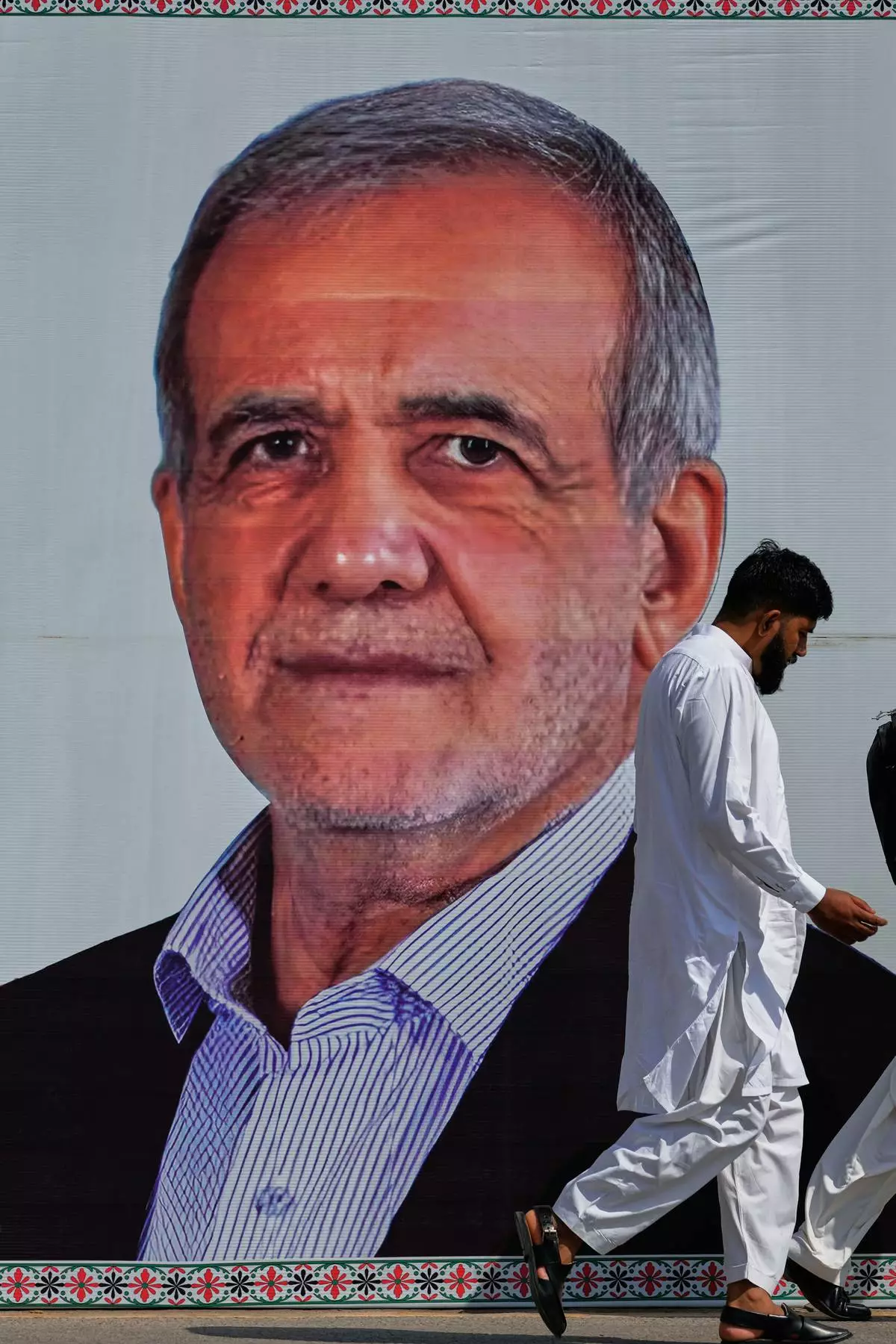
A man walks past a welcoming billboard featuring Iranian President Masoud Pezeshkian along a roadside in Islamabad, Pakistan, Tuesday, June 23, 2026. (AP Photo/Anjum Naveed)
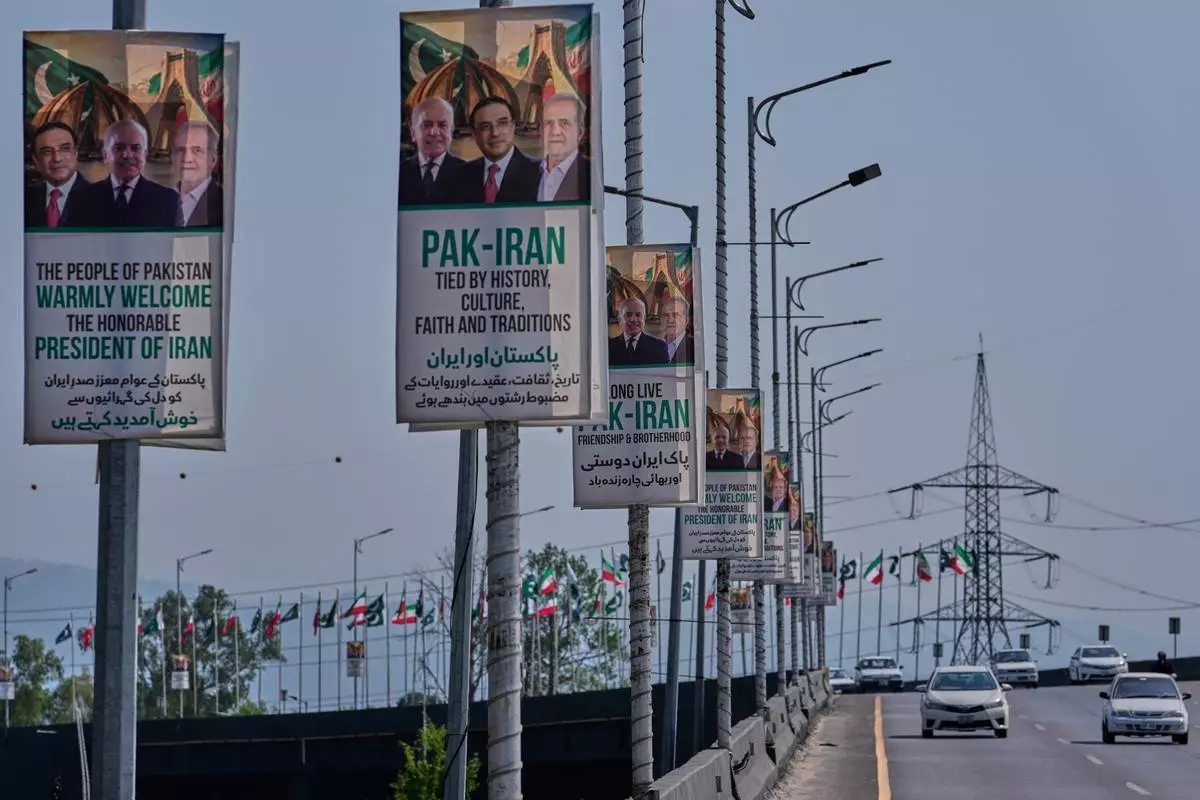
Vehicles drives past welcoming billboards featuring Iranian President Masoud Pezeshkian, right, with Pakistan President Asif Ali Zardari, center, and Shehbaz Sharif alongside an overhead bridge in Islamabad, Pakistan, Tuesday, June 23, 2026. (AP Photo/Anjum Naveed)
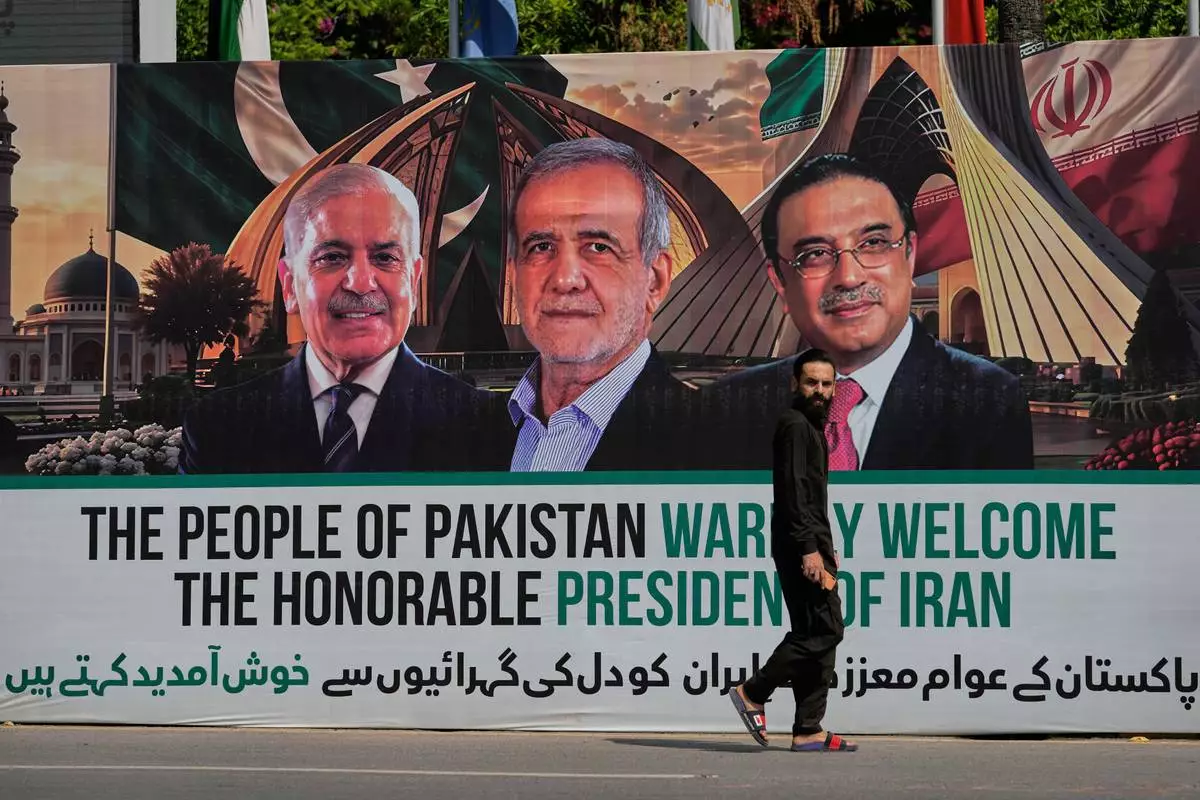
A man walks past a welcoming billboard featuring Iranian President Masoud Pezeshkian, center, with Pakistan President Asif Ali Zardari, right, and Shehbaz Sharif along a roadside in Islamabad, Pakistan, Tuesday, June 23, 2026. (AP Photo/Anjum Naveed)
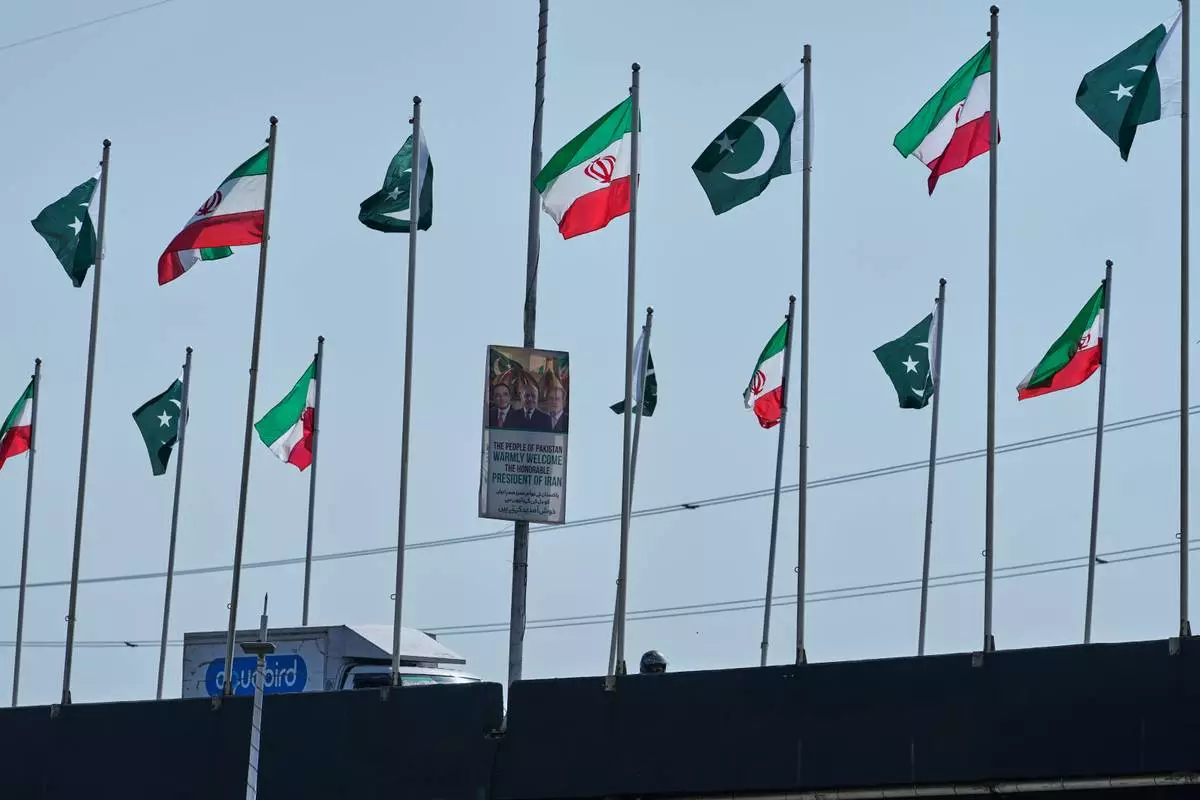
The welcoming billboard, featuring Iranian President Masoud Pezeshkian, right, with Pakistan President Asif Ali Zardari, center, and Prime Minister Shehbaz Sharif, is displayed alongside of an overhead bridge, in Islamabad, Pakistan, Tuesday, June 23, 2026. (AP Photo/Anjum Naveed)
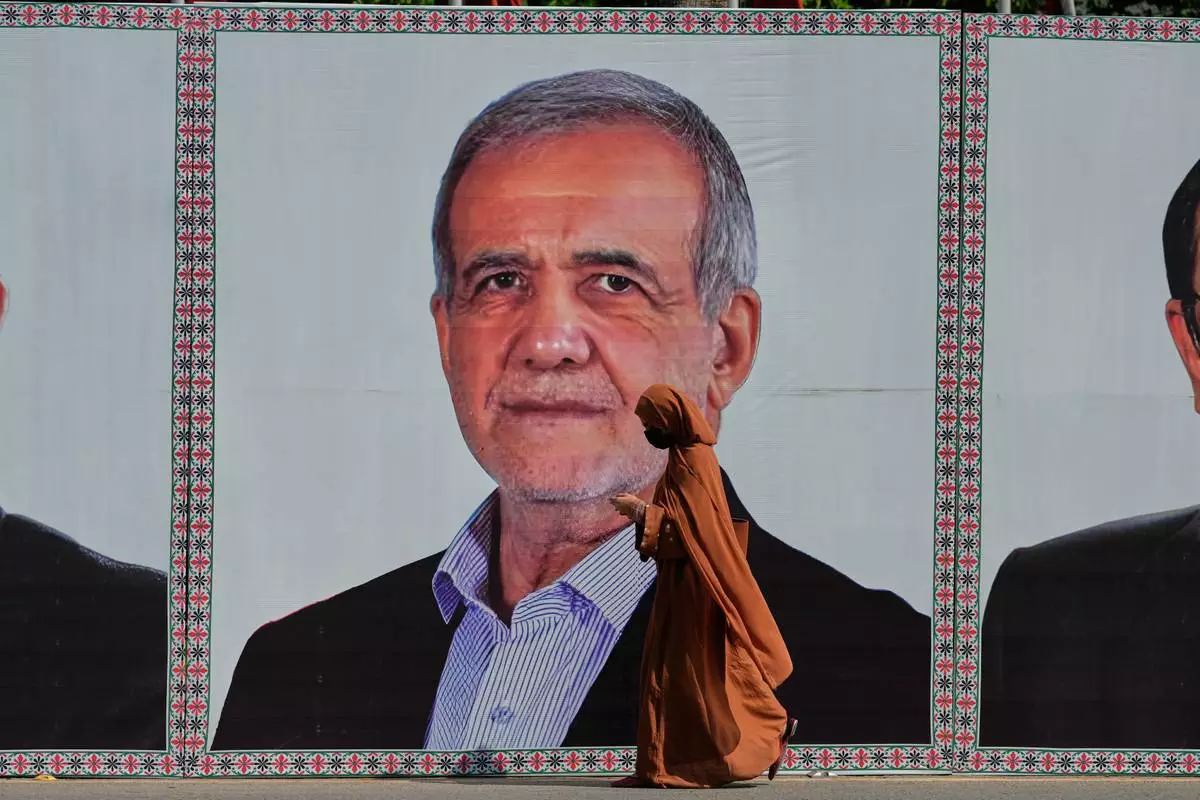
A woman walks past a welcoming billboard featuring Iranian President Masoud Pezeshkian along a roadside in Islamabad, Pakistan, Tuesday, June 23, 2026. (AP Photo/Anjum Naveed)