
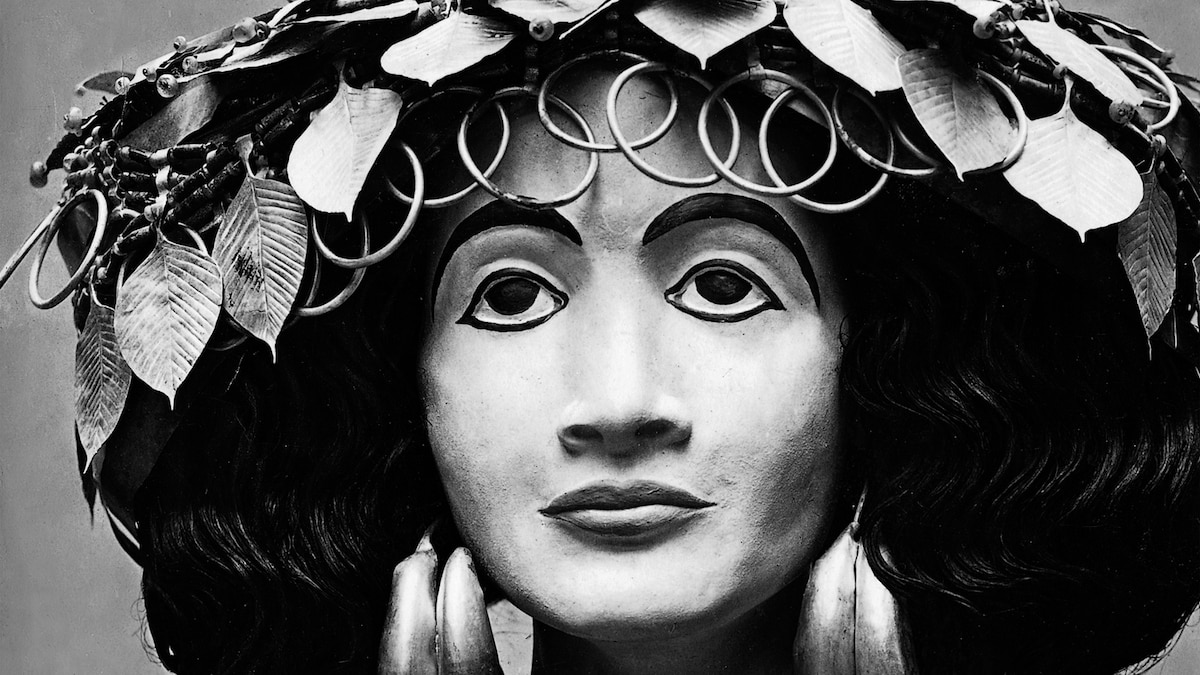
Further evidence of women in power derives from their titles: nin and en. Asher-Greve noted that “some scholars suggest women with the title nin may have governed in their own right,” a contention shared by McCaffrey. En carried both political and religious weight; it initially distinguished the earliest Sumerian rulers and later represented the high priests and priestesses of Sumer’s great temples. Sumerian language lacks grammatical gender, and en is the single word for priest/priestess regardless of gender.
These threads weave a society in which women could have been accepted as primary rulers who were backed by divine and earthly authority and buried with resources that reflected their status.
McCaffrey decided to revisit the tombs at Ur after women at the nearby Bronze Age site of Umm el Marra were unearthed with grave goods traditionally considered male, like weapons and men’s headgear. The find was a revelation, leading McCaffrey to reconsider the inconsistencies Woolley noted between the tombs of elite women and men interred in the royal cemetery. As she did so, three women stood out: Queen Puabi, an unknown queen buried in Royal Tomb 1054, and Queen A-su-sikil-am.
Queen—or King—Puabi
Puabi’s claim to power is the most visible. Though thousands of years of intrusive burials, grave robbing, and environmental wear have taken their toll on Ur’s royal cemetery, Puabi’s tomb is the most opulent one to have survived intact. Woolley described her burial chamber as arrayed with “an amazing wealth of offerings, vessels of gold, silver, copper, clay, and of such stones as white calcite, steatite, obsidian, and lapis lazuli; silver heads of lionesses from a piece of furniture, gold drinking-tubes, gold saws and chisels, an inlaid game board.”
In the burial chamber lay Puabi herself, a petite woman just under five feet tall who died around the age of 40. From the crown of her head down to her knees, Puabi was covered in gold and precious stones. Her headdress was composed of hundreds of carefully wrought pieces. Long, looping golden ribbons lay a foundation for multiple wreaths of delicate gold leaves and gemstone flowers; a diadem of overlapping gold rings shimmered just above her eyes; and an elaborate gold comb was adorned with seven gold rosettes that would have trembled with every movement. She also had an exceptional cape made entirely of beads: gold, silver, agate, carnelian, and lapis in long strings that would have sparkled and shimmered around her. Pins, earrings, bracelets, rings on each finger, a large gold and lapis lazuli belt, and even a garter of gold and precious stones tied at her knee further adorned her.