
New York filed suit in an upstate federal court Monday to defend new state laws passed to protect New Yorkers from federal immigration enforcement, saying it wanted to get ahead of the Trump administration’s expected attempts to claim the laws are unconstitutional and strike them down in court.
It didn’t quite accomplish that aim: Trump’s Department of Justice also filed a suit attacking those same laws that hit the docket a few minutes before the state’s did in a different upstate federal court — arguing, as New York officials said they expected, that the state’s laws violated provisions in the U.S. Constitution that prevent state governments from “regulating” federal government actions.
Arguably the most notable piece of legislation raised in the dueling suits is the Local Cops, Local Crimes Act, which is set to go into effect in New York this week. It prohibits local police, such as the NYPD, from working with ICE agents to carry out federal immigration enforcement and bars police from detaining people solely for federal civil immigration violations, something that’s been a major issue in the state over the past year.
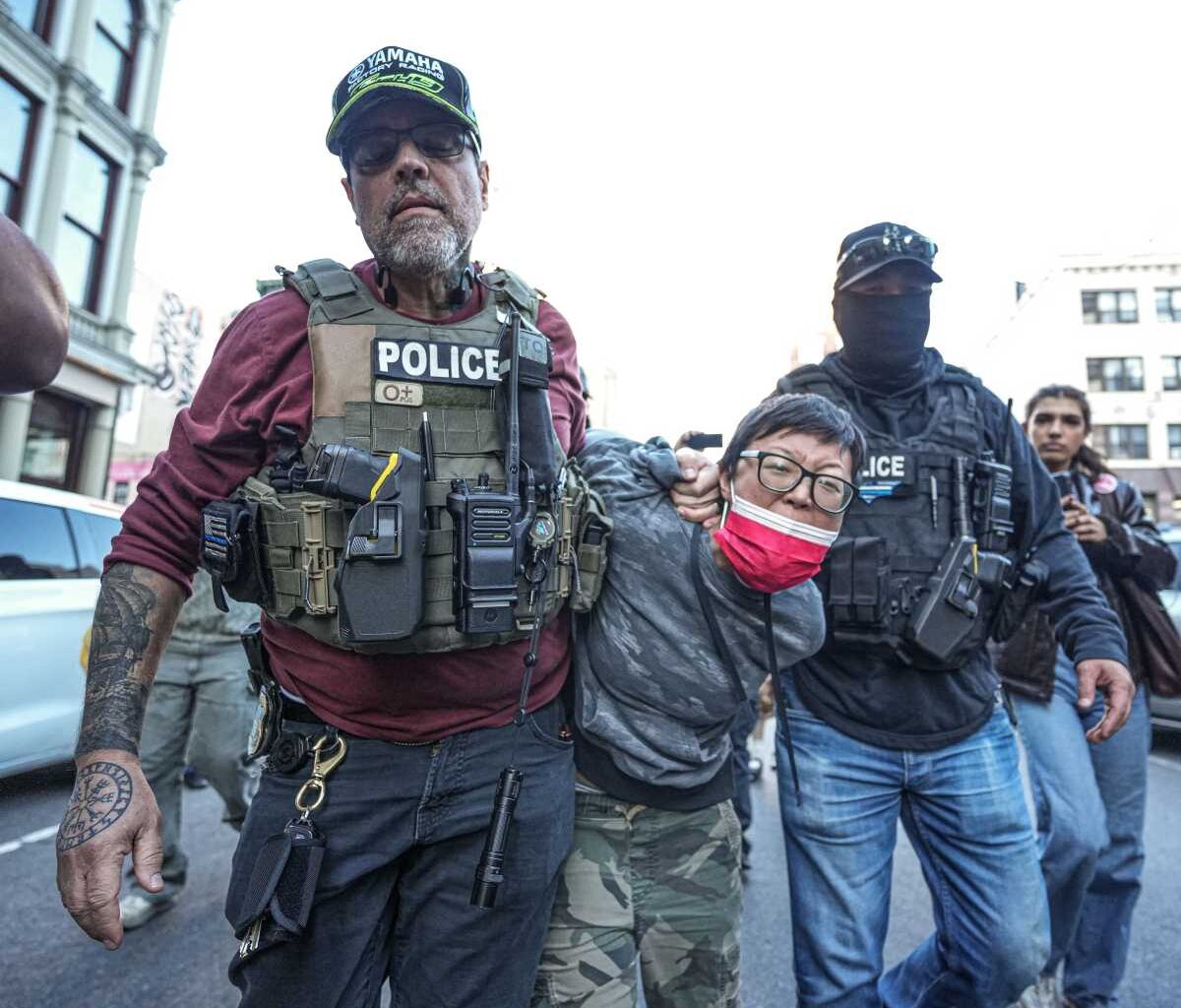
The state’s and the feds’ suits also respectively defend and attack new laws that prohibit the use of public subsidies for civil immigration detention facilities, hold the federal government can’t contract local facilities for immigration enforcement, ban local, state and federal law enforcement officers from concealing their identity with masks while interacting with the public and require all officers to display clear identification when on the job.
New York: Anti-ICE laws are within ‘every right’
New York’s legislation is clearly constitutional, the state’s suit says, as the state has a right to determine how its law enforcement resources should be used (ie, not for ICE enforcement action, yes for responding to local gun violence) and pass laws it feels are necessary for the public safety of its population.
“The State of New York has every right as a sovereign state to require law enforcement officers acting within the State’s jurisdiction to be identifiable, and to choose not to use the state’s limited law enforcement resources to assist in federal immigration enforcement,” says New York’s suit, filed by Gov. Kathy Hochul and Attorney General Letitia James in the Northern District of New York.
It’s also allowed to pass these laws, New York says, because the 10th Amendment effectively says that the federal government may not encroach on a state’s “police power,” to prescribe regulations to promote the “good order” of its people, and passing laws to secure and ensure public safety within a state’s borders has long been understood as within the province of state sovereignty.
Trump’s DOJ sharply disagrees, arguing in its suit that the legislation unconstitutionally regulates federal government action by saying what ICE agents can and can’t do in the state and preventing the federal government from entering into agreements with local police and local jails to carry out its immigration enforcement agenda.
“The federal government, not the State of New York, has the authority to control its own agents and activities,” says the feds’ suit, filed in the Western District of New York. “New York’s Act seeks to regulate the actions of federal law enforcement officers within New York by subjecting those federal officers to criminal penalties for following the federal laws and policies that govern their federal duties and actions.”
Trump’s DOJ also accuses New York’s laws of “standing as an obstacle to the accomplishment of a federal objective” and conflicting with federal law, which New York denies.
Essentially, the state says, federal officials are free to carry out their immigration agenda themselves – New York just isn’t going to help them do it because it’s not in the state’s interests to do so, and ICE can’t deploy state or city police to further their agenda. And, New York law won’t prevent federal agents from doing their work; it will just prevent them from wearing masks, so if anything goes wrong, the officer responsible can be held accountable.
The federal DOJ is looking for the laws to be struck down, while the state officials suing say they’re seeking a declaration from a federal court that the laws can stand.
It is unclear how the two dueling suits in separate courts will play out. The governments said they were uncertain whether they would be consolidated into a single case or litigated side by side. If both cases were allowed to play out, it’s also unclear what would happen if each court came to a different conclusion.
In recent weeks, the Trump administration has levied public threats against the state over the impending laws. Tom Homan, who’s been designated as a border czar within the Department of Homeland Security, promised to send a “surge” of ICE officers into New York if the state enacted the Local Cops, Local Crimes Act.
Statewide elected officials, immigrant advocacy, and legal organizations have supported the challenged state laws, saying they’re necessary to keep immigrant communities in the state safe and prevent federal officers from committing “violent acts” while wearing masks.
“By hiding their faces and refusing to wear identification, federal immigration officers endanger New Yorkers and intentionally evade accountability,” James said in a statement. “Our communities should not have to live in fear of being disappeared by unidentified masked agents. If the federal government wants to brazenly defy our laws, then we will fight tooth and nail in court to ensure transparency and keep all New Yorkers safe.”