
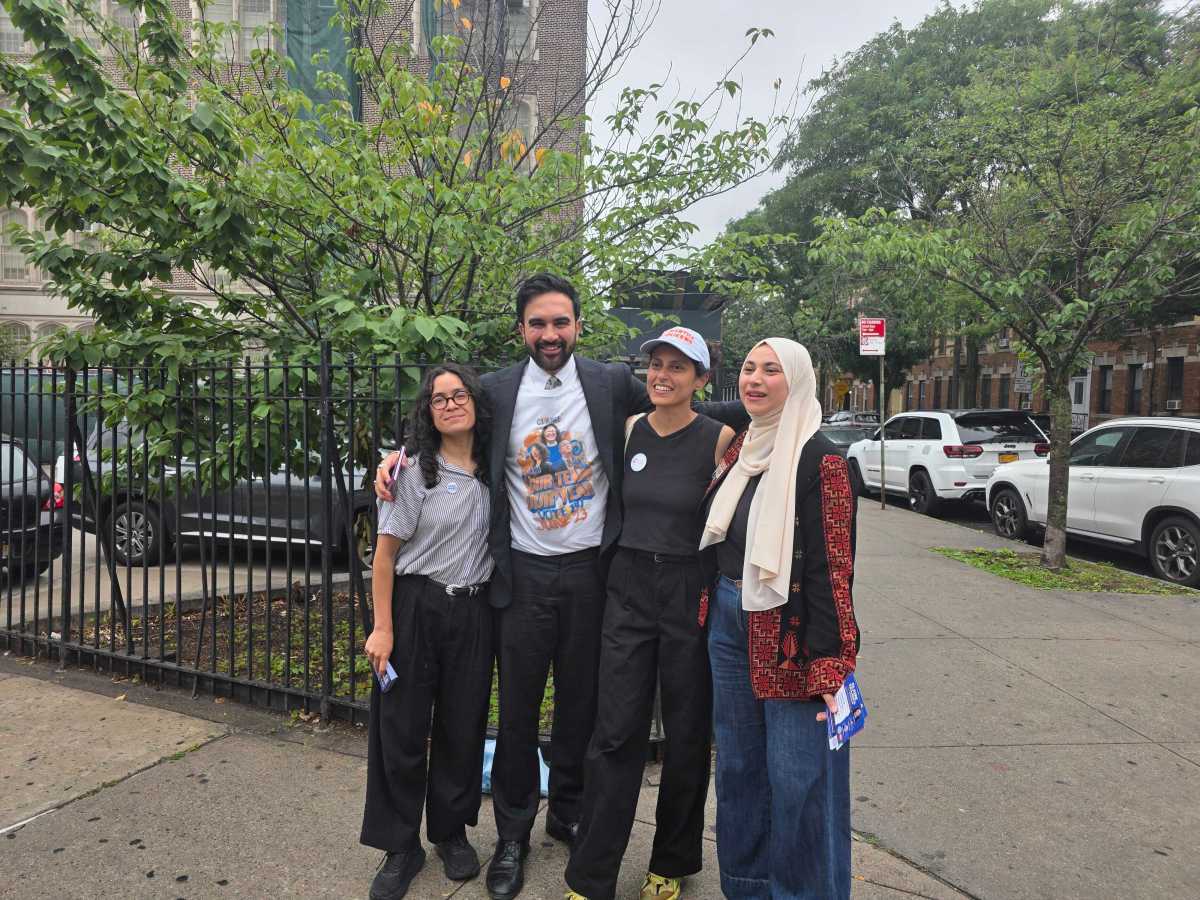
Queens Assembly Member Claire Valdez has won the Democratic primary in New York’s 7th Congressional District, defeating a crowded field and moving closer to replacing retiring Rep. Nydia Velázquez.
With about 87% of precincts reporting Tuesday night, Valdez led the four-candidate race with roughly 58% of the vote, according to unofficial Board of Elections results. Brooklyn Borough President Antonio Reynoso followed with about 33%. Queens Council Member Julie Won received nearly 7%, while political newcomer Vichal Kumar trailed with less than 2%.
The district, which covers parts of Brooklyn and Queens, leans Democrat, making Valdez the clear frontrunner in the November general election.
The primary drew significant attention and exposed divisions within the city’s progressive wing. Velázquez endorsed Reynoso, a longtime ally, while Mayor Zohran Mamdani supported Valdez, aligning with her within the Democratic Socialists of America (DSA). Her victory marks a notable gain for the DSA movement in New York City politics and a setback for Reynoso, who entered the race with stronger name recognition and establishment support.
Valdez, a one-term assembly member representing the 37th district, including parts of Sunnyside, Long Island City, Maspeth, Ridgewood and Woodside, launched her campaign in early January and was almost immediately endorsed by Mamdani, who appeared alongside her at a launch event at Maria Hernandez Park.
Mamdani’s endorsement caused significant pushback from Velázquez, who endorsed Reynoso the following week and warned the mayor against wading into local primaries.
Velázquez told the New York Times in January that she did not expect to endorse in the race because she had expected one of the lawmakers she had mentored to run unopposed. Mamdani’s endorsement of Valdez forced her hand, she said. Velázquez has since endorsed against candidates backed by either Mamdani or the DSA in six different races across the city as NY-7 became a proxy battleground for the future of the Democratic party in the city, with traditional progressives and democratic socialists jostling for power.
Valdez, unsurprisingly, picked up an endorsement from the DSA along with several other elected socialists in office, but Reynoso scooped the Working Families Party (WFP) endorsement, with the party pointing to Reynoso’s long-standing experience. The WFP’s Brooklyn and Queens chapters had voted to endorse Valdez but only make up a small number of the WFP coalition.
As the race to succeed Velázquez became a proxy battle between the WFP and the DSA and between traditional progressives and democratic socialists, it also became a test of Mamdani’s political power in a district that he won handsomely in last year’s mayoral primary, defeating Andrew Cuomo by 45% in the first round of ranked-choice voting.
The district is one of the most liberal in the city, making up part of the so-called “Commie Corridor” in a reference to a stretch of western Queens and north Brooklyn that broke heavily for Mamdani during the 2025 mayoral election. It is also home to a prominent Hispanic population, particularly to Puerto Rican and Dominican communities that provided Velázquez’s base.
Reynoso, the Brooklyn borough president, entered the race as one of the best-known candidates and the most prominent figure with citywide executive experience. A former City Council member who rose through Brooklyn politics on a progressive platform, he built his campaign around his record in local government and his relationships with labor and community organizations.
He also secured the endorsement of Velázquez, the outgoing incumbent, and positioned himself as a continuity candidate who could carry forward her long tenure representing the district. His campaign emphasized experience and coalition-building across Brooklyn neighborhoods that form a core part of the congressional seat.
Despite those advantages, Reynoso struggled to consolidate enough support in a crowded progressive field. His loss marks a setback for one of Brooklyn’s most visible elected officials and underscores the shifting alliances within New York City’s progressive wing.
This is a developing story. Check back for updates.