
New York City experienced this year a historic reduction in murders, shootings and major crimes overall, but one type of crime statistic is on the rise: rape and sex crimes. NYPD officials and advocates say that is a good sign — and indicative that efforts to increase reporting of such heinous incidents are working.
Kimberlina Kavern, the senior director of the Crime Victim Assistance Program at New York City-based victim services nonprofit Safe Horizon, told amNewYork that the increase in reported rapes and sex crimes is about more than making arrests and prosecutions.
“We see the increase as a good thing in that victims are then connected with the services that they need, both from the NYPD if they feel that a criminal justice response would give them justice, and also a connection to services like those that are also provided by Safe Horizon,” Kavern said.
Safe Horizon operates within the Special Victims Unit in each borough, providing client-centered support to survivors of sexual violence. Kavern said the organization works closely with its partners at the NYPD to find unique pathways to recovery for each person without any one “cookie-cutter” approach.
For Kavern, Safe Horizon is about meeting the client’s needs, whether or not it involves the criminal justice system.
“Many of the people that come through our doors are also dealing with food insecurity or housing instability or concerns about finances or childcare,” Kavern said. “We want to help them meet all of those needs as well. And very often, those needs are their first priority, and helping them address those issues will give them more space and capacity to deal with the victimization.”
A more victim-centered approach to reporting sex crimes
The NYPD has followed advocacy organizations’ lead and revamped the way it approaches sex crimes to take a more victim-centered approach.
In January, NYPD Commissioner Jessica Tisch launched the Gender-Based Violence Policy & Planning Unit, which centralized the command for special victims, domestic violence, human trafficking and child abuse investigations. Tisch tapped Kathleen Baer to lead the unit as its assistant commissioner.
Baer told amNewYork that the police track how many reported rapes fell under the 2024 modernized definition of rape. In 2026, the NYPD recorded about a 7% increase in reported rapes so far, totaling more than 970 incidents.
Of those reported rapes, Baer said that 19% of them can be attributed to the expanded definition of rape, which, prior to 2024, would not have qualified as a rape charge.
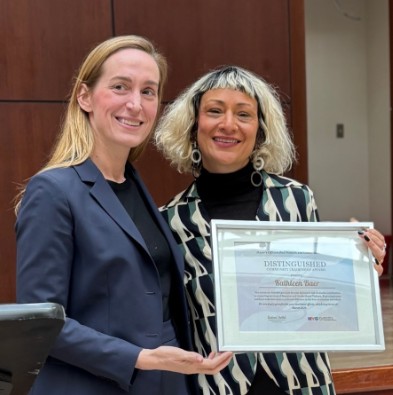 Assistant Commissioner for Gender Based Violence Policy and Planning (left) was honored at the Queens Family Justice Center for Women’s History Month as one of the top women fighting gender based violence in NYC. Photo courtesy of Queens Family Justice Center
Bear emphasized that one meaningful part of the legislation removed a stipulation that rape required penetration and instead recognizes sexual contact under the new definition.
“The removal of the penetration requirement under the Rape is Rape law really changes the landscape of how these cases are prosecuted, lessens the burden, and also makes it easier for prosecutors to bring rape prosecutions where they may not have been able to under the previous law,” Baer said.
A spokesperson for City Hall emphasized that the expanded definition also remedied language that excluded LGBTQ survivors’ experiences with rape, which often were not covered under the previous iteration of the definition.
Baer also noted that around 14% of the rapes reported in 2026 occurred years earlier, underscoring how common delayed reporting among survivors of sexual violence can be. Baer said that even with the recent uptick in reporting, she knows that the NYPD still has more work to do to encourage survivors to seek help.
“ So when we see numbers going up, we’re happy because that means people are reporting, people are trusting,” Baer said. “We’re trying to build trust in the communities that make people feel comfortable coming to the NYPD and reporting and working with our special victims unit.”
Building trust in survivors to seek justice against attackers
Part of what the new Gender-Based Violence Policy & Planning Unit aims to do is build trust and awareness with the public about reporting sex crimes. For survivors in the city’s most diverse borough, it often looks like culturally competent services. Executive Director for the Queens Family Justice Center, Susan Jacobs told amNewYork that the new unit spearheaded efforts to train officers in culturally competent responses.
She called the unit, “transformative” and said that it’s partnered with local organizations representing the diverse set of backgrounds in the borough, like the Korean American Family Service Center, Women for Afghan Women and the Arab American Family Support Center to inform police responses about the ways that sex crimes may be viewed differently in other religions or countries outside the U.S. Across the five boroughs, 51% of Family Justice Centers’ clients report being foreign born.
“I think it makes such a difference when you are working with someone from a culturally specific organization along with NYPD,” Jacobs said. “ So a lot of the culturally responsive trainings would look like basically listening to survivors in terms of finding out a little bit more about their culture.”
She said the partnership with local organizations also helped the city’s sexual violence responders strengthen the trust and with communities and survivors.
“ That’s been very different, and it’s been positive because more survivors are feeling confident to come forward because of these steps that we’ve done,” Jacobs said.
Advocates also celebrated the way the new unit has made the traumatic and difficult experience of reporting and accessing services following a sexual assault easier on the survivor. Services, counseling and NYPD response are now often centralized to a single location, whereas survivors used to be forced to go to one site to report, another to access services and yet another for counseling, the new system has fewer hoops for clients to jump through, advocates said.
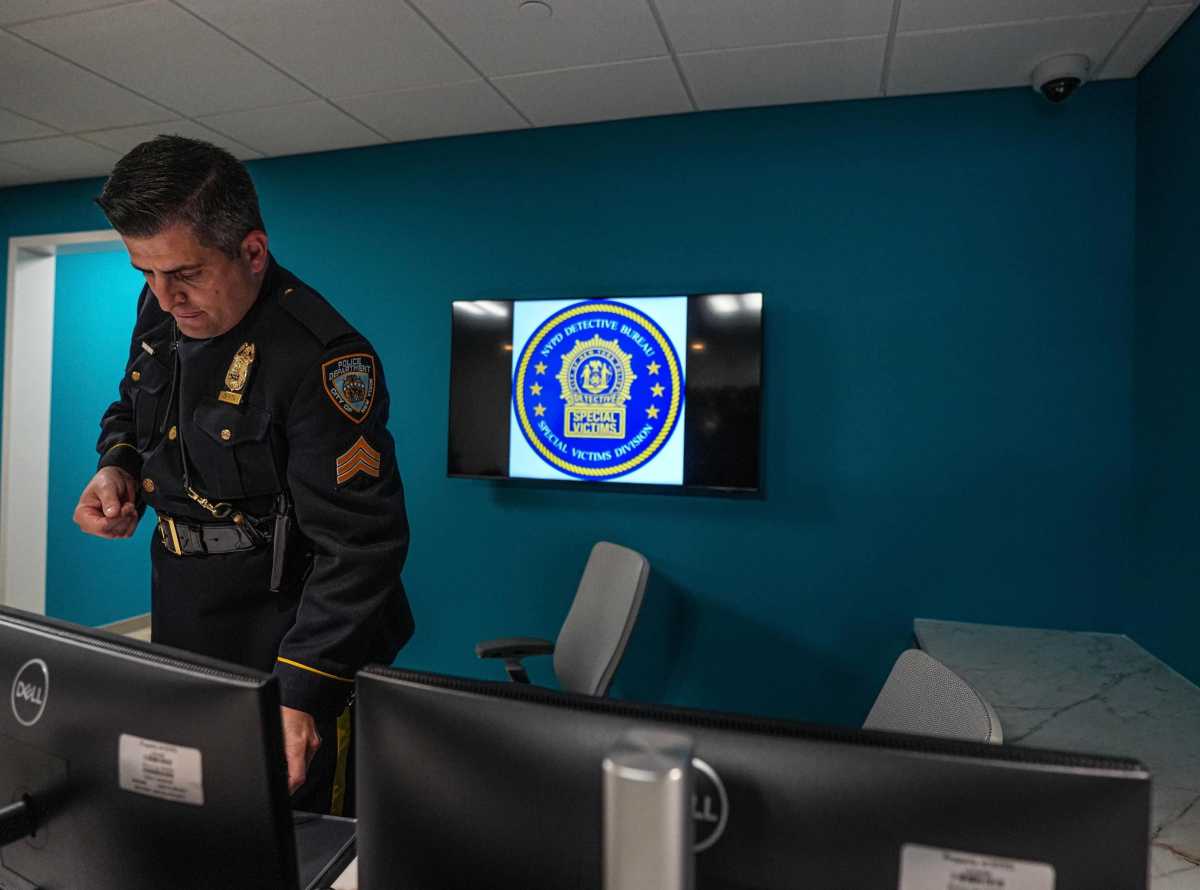
At Queens Family Justice Center, NYPD travels to the center, where survivors and their advocates are together through each step in the process. But the NYPD is also working on creating its own set of state-of-the-art facilities that will house both SVUs and wrap-around services.
The Bronx Special Victims Division, which opened in the fall of 2025, will serve as a blueprint for the reimagining of centralized care and justice for survivors of gender-based violence.
“It’s all part of this trauma-informed care and support that we’re talking about,” Baer said. “We have a multidisciplinary facility. We have our advocates co-located at the Bronx Special Victims Squad. We have a dedicated space for the prosecutor’s office for the Bronx DA to have one of their special victims attorneys right there, so they can work side by side with our investigators in the Special Victims Unit.”
 An interview room at the new Bronx SVU facility offers a calmer atmosphere than traditional NYPD precincts, with comfortable chairs and privacy for survivors to report or speak with advocates. Photo Courtesy of NYPD
Baer told amNewYork that the transformation has been long in the works. She said the NYPD was responding to a need that survivors had communicated to the department long before her time. Survivors came forward to make their voices heard about missteps in their investigations, ways they didn’t feel supported or in some cases how they didn’t feel believed. Baer said she took those concerns seriously.
“We never want a survivor to come through the doors of Special Victims or NYPD and feel that they’re not heard and feel that they’re not believed. So we had to take a real look at all of the training that we were giving to our investigators to ensure that they understand these trauma-informed principles [and] what it means to be trauma-informed.”
Sexual violence and rape survivors are encouraged to come forward and report. There are resources and counseling available. Call 1-800-621-HOPE for 24-hour assistance or online at SafeChat on.nyc.gov/hotlinechat.