
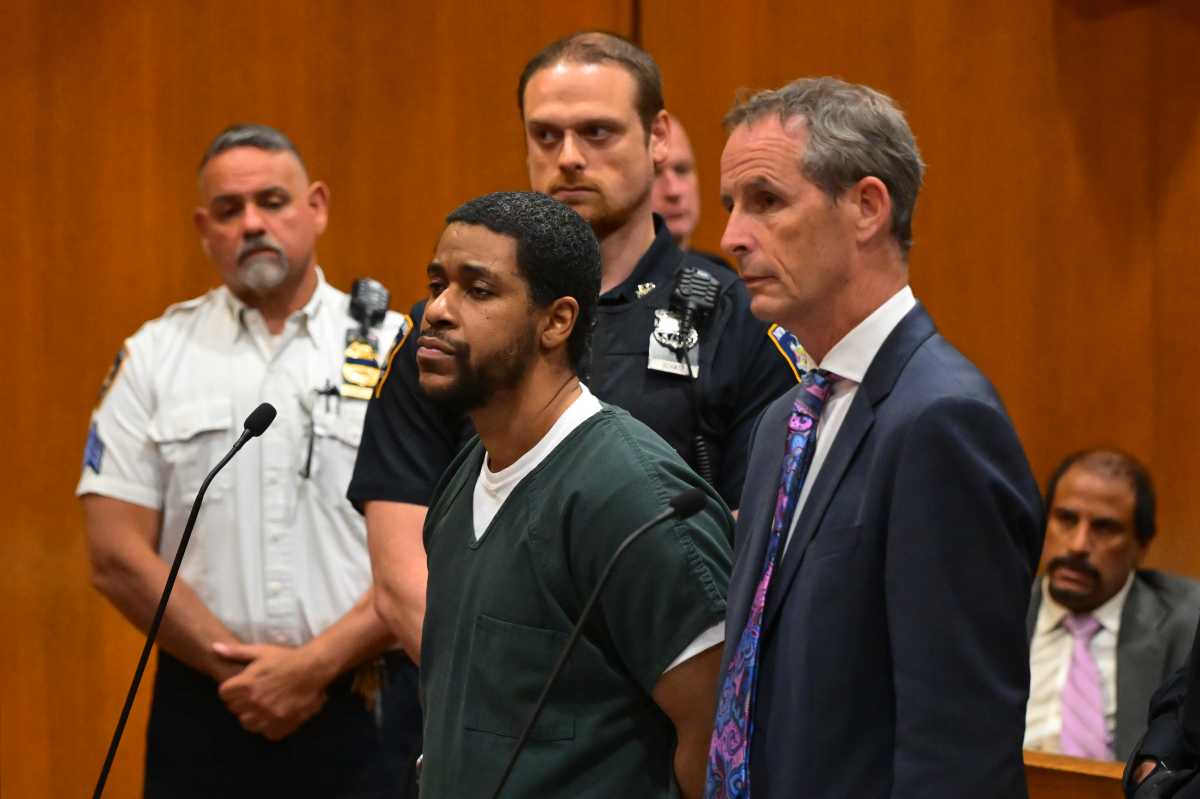
An Edgemere man pleaded guilty Wednesday to the top count of the indictment against him, a weapons possession charge, for a loaded 9 mm firearm that was found in the glove compartment of his car that he drove in Far Rockaway when his passenger shot and killed NYPD Detective Jonathan Diller in March 2024.
Lindy Jones, 43, of Rockaway Beach Boulevard, pleaded guilty before Queens Supreme Court Justice Michael Yavinsky indicated he would sentence him to a half decade in prison.
Jones’ codefendant, Guy Rivera, 36, of Woodside, was convicted of aggravated manslaughter in the first degree, attempted murder in the first degree and two counts of criminal possession of a weapon in connection with the killing of Detective Diller and the attempted killing of Sergeant Sasha Rosen and was sentenced to 115 years in prison in April.
Diller was an NYPD officer at the time of his murder and was posthumously promoted to the rank of detective.
According to the charges and investigation at 5:45 p.m. on March 25, 2024, Jones was walking alongside Rivera when a police sergeant noticed a gun-shaped bulge in the front pocket of Rivera’s sweatshirt. Jones entered the driver’s seat of a 2016 Kia Soul parked in front of 19-19 Mott Avenue in Far Rockaway and Rivera got into the passenger seat.
Diller and the other members of his team approached the vehicle. Diller issued numerous commands to Rivera to roll down his window and step out of the vehicle, which Rivera ignored. Defendant Jones also refused an order to unlock the vehicle and another officer reached into the car through an open window and unlocked the doors from the driver’s side control panel. Diller then opened the passenger side door and instructed Rivera to exit the vehicle.
Instead of stepping out from the vehicle, Rivera reached into his pocket with his right hand, ignored repeated commands to stop, drew a .380-caliber semi-automatic pistol and fired at Detective Diller, killing him. After shooting Detective Diller, Rivera pointed his gun directly at Sergeant Rosen’s chest and pulled the trigger, but the gun jammed.
Jones and Rivera were apprehended at the scene immediately following the shooting.
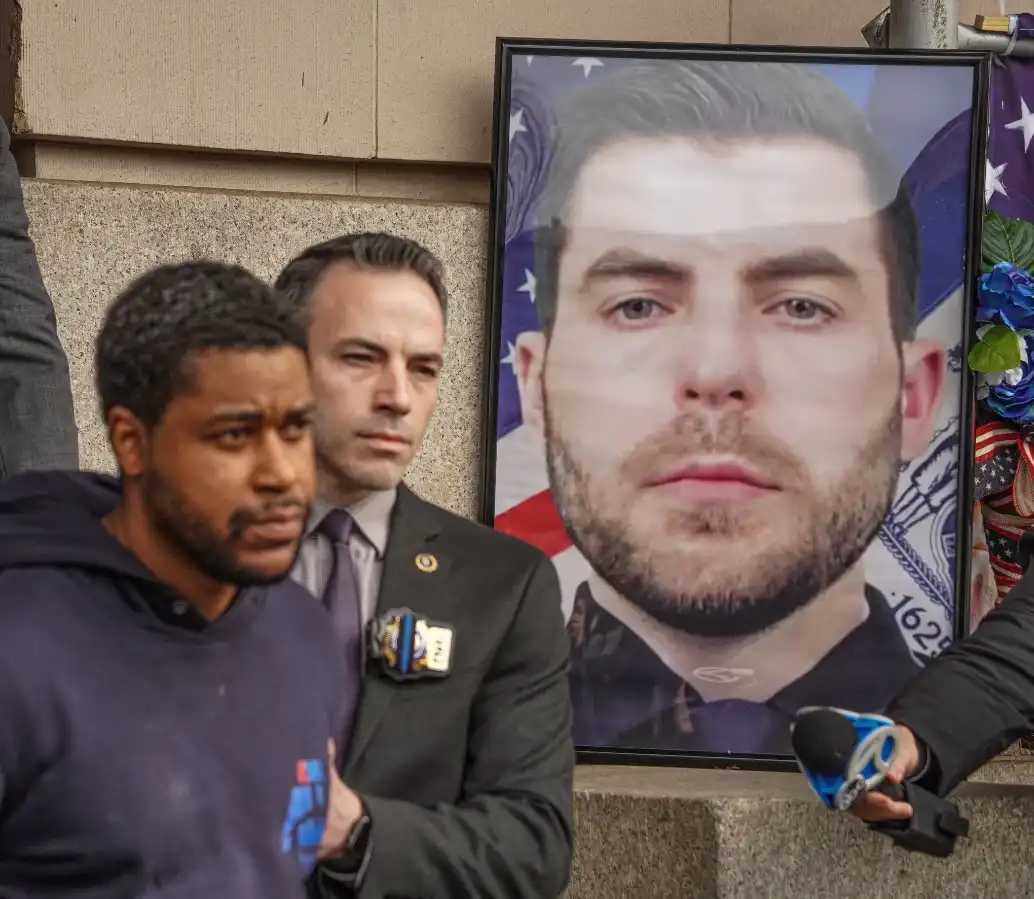 When Jones was escorted out of the 101st Precinct oin Far Rockaway after his arrest, detectives perp-walked him past a portrait of the fallen officer, who was posthumously promoted to detective. Photo by Dean Moses
On March 26, 2024, as part of an ongoing investigation, members of the Queens District Attorney’s Office and the 101st Precinct obtained a court-authorized search warrant for the vehicle. The search led to the discovery of a second gun: a loaded 9 mm pistol inside the glove compartment. The firearm was found to be defaced, with the serial number scratched off.
”Lindy Jones drove through the streets of Queens with a loaded, defaced firearm that threatened the lives of everyone he encountered,” Queens District Attorney Melinda Katz said. “We have seen firsthand the devastation illegal guns cause as we continue to mourn the killing of Detective Jonathan Diller at the hands of Jones’ codefendant. That is why my office will continue to methodically rid our streets of lethal weapons and prosecute those who choose to possess them.”
Jones will be sentenced to five years in prison to be followed by five years post-release supervision on July 14.
“I thank my Homicide Bureau for securing a guilty plea from this defendant — sparing the family the trauma of reliving the details of that terrible day — and ensuring that he is sentenced to prison for his actions,” Katz said.
 Queens DA Melinda Katz said the plea deal would spare Diller’s family the trauma of reliving the tragic day if the case went to trial.Photo by Ramy Mahmoud
Police Benevolent Association President Patrick Hendry joined dozens of officers from Diller’s 105th Precinct in the courtroom, and agreed with Katz when addressing reporters on the steps of the Queens Criminal Courthouse.
 PBA President Patrick Hendry concurred with the DA that the plea deal would spare the Diller family.Photo by Ramy Mahmoud
“What it means is his family doesn’t have to sit through a trial of uncertainty, reopen wounds day after day during that trial [and] listen to an individual who is not taking responsibility for his criminal crimes,” Hendry said. “This will not take away the pain of their loss, but it gives them some comfort that this individual is taking responsibility, and he will stay behind bars where he belongs.”