
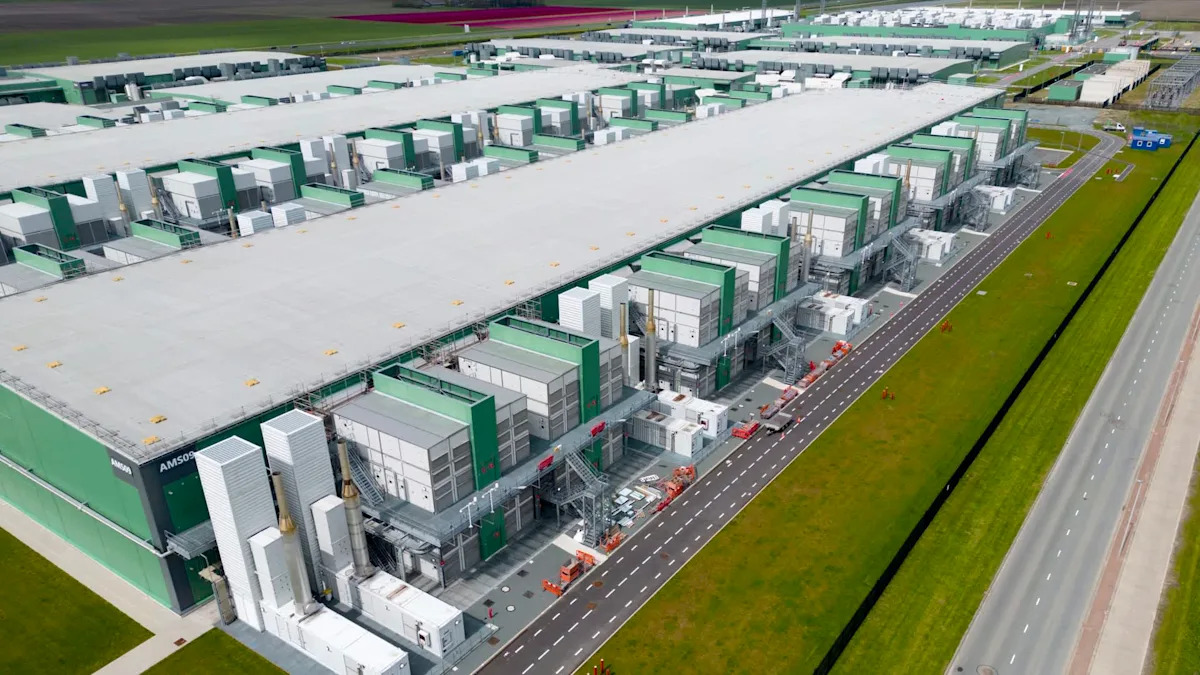
The National Nuclear Security Administration announced in late September that it plans to power massive new artificial intelligence data centers on two federal sites in South Carolina and Tennessee, which will help the United States get ahead in the AI race while reducing pollution from the industry.
As a news release from the Department of Energy detailed, the NNSA is “seeking proposals from U.S. private sector partners” to construct and power data centers on large tracts of land at the Savannah River Site in South Carolina and the Oak Ridge Reservation in Tennessee.
According to the American Nuclear Society, the sites were chosen because they can serve dual purposes: hosting data centers and nuclear power production, thereby boosting grid reliability, reducing energy costs, and bolstering national security.
Other selected sites include the Idaho National Laboratory and the Paducah Gaseous Diffusion Plant, both of which are awaiting requests for proposals.
The NNSA has identified 10 tracts totaling more than 3,100 acres at the Savannah River Site for the development of AI data centers, along with approximately 44,000 acres at the Idaho National Laboratory, according to the ANS. The DOE stated that private-sector partners chosen for the project will enter into long-term leasing agreements at the site and will be tasked with constructing, powering, and decommissioning each data center.
“Proposals will be competitively evaluated for technological readiness, financial viability, and detailed plans to complete regulatory and permitting requirements,” the DOE added.
While the DOE selected the sites for their easy access or potential for energy development, it also expects proposals to include innovative on-site energy generation, such as co-located nuclear reactors, geothermal energy, and energy storage solutions.
The DOE has acknowledged several risks associated with nuclear power, including public perception, safety concerns, high upfront costs for power plants, and the safe disposal of used fuel. It is working on many improvements, including “accident-tolerant fuels” that will boost performance and produce less waste.
Since data centers and artificial intelligence applications are notorious for needing enormous amounts of water and energy to operate, powering them with nuclear will help reduce heat-trapping pollution and conserve resources. Not to mention, it provides a major opportunity for the U.S. to take the lead in the digital and clean energy transition.
“The work being carried out at NNSA to harness AI will have an impact on national security as the Manhattan Project did in the 1940s,” Under Secretary for Nuclear Security and NNSA Administrator Brandon Williams said in the press release.
“Today’s solicitation is a great example of public-private partnership that accelerates scientific research to solve today’s challenges and strengthens U.S. leadership in AI and energy infrastructure,” Williams added.
Join our free newsletter for good news and useful tips, and don’t miss this cool list of easy ways to help yourself while helping the planet.