
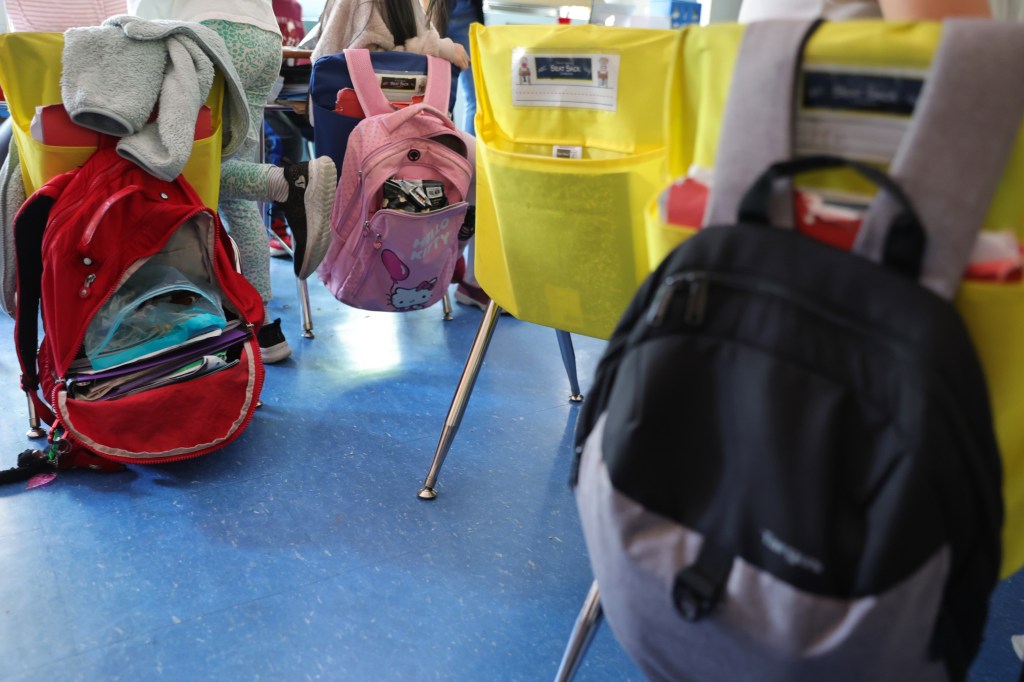
New York City will provide schools with another cash infusion to help meet class size requirements, as it retains a former education official known as the “shadow chancellor” as a consultant on the matter, according to documents obtained by the Daily News.
In an internal email, Chancellor Melissa Aviles-Ramos launched a systemwide survey to help determine how much funding each school needs ahead of a deadline next school year for 80% compliance. Their responses will serve as this year’s application for extra resources, she said.
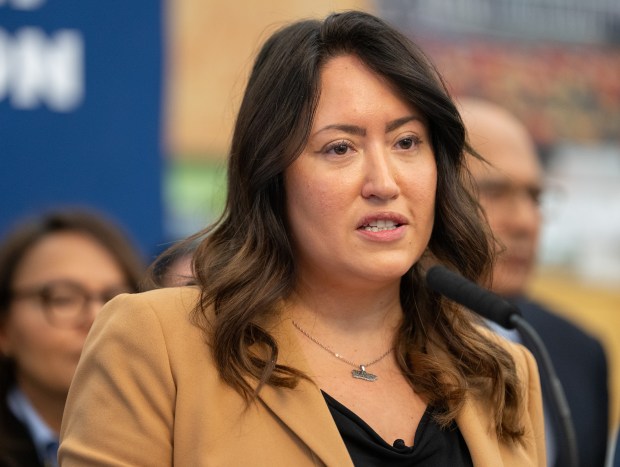
Barry Williams/ New York Daily News
Schools Chancellor Melissa Aviles-Ramos speaks at the DOE headquarters in Manhattan in April. (Barry Williams/ New York Daily News)
Principals are expected to participate in a training on the survey Monday.
“Building on the school-driven approach that guided our work for this school year, [New York City Public Schools] will continue to center school-level input in planning for class size reduction as we work to identify necessary resources to reduce class sizes for the school year ahead,” read the Oct. 29 memo.
Reps for the school system did not return a request for comment over the weekend.
The survey asks administrators to share their space availability, assuming their enrollment stays the same, and say how many new teachers they would need to reach their “maximum possible compliance.” While not a requirement, principals are also able to say if they want to convert any noninstructional rooms into new classrooms.
Schools that received funding this year will get the same amount next year, barring any major changes, the email said. The city planned to spend $400 million this year on 3,700 new teachers across 741 schools.
The survey is due by Dec. 3.
The issue of capping enrollment has become a flashpoint in the implementation of the class size law. Proponents say it’s necessary in order to meet the requirements without widespread exemptions or costly new space, while critics warn it will shut students out of popular programs — possibly even leading them to abandon the city’s school system entirely.
“I’m concerned the instructions from the chancellor do not seem to allow for any school to cap enrollment,” said Leonie Haimson, executive director at the group Class Size Matters. “Without allowing them to adjust enrollment, even when here are underutilized schools nearby, is going to prevent them from lowering class sizes any time in the foreseeable future.”
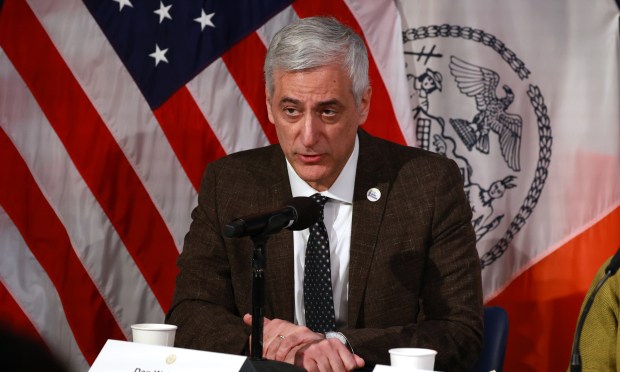
Luiz C. Ribeiro for NY Daily News
Former First Deputy Chancellor Daniel Weisberg speaks at City Hall in 2023. (Luiz C. Ribeiro for NY Daily News)
The next round of funding comes after Daniel Weisberg, the former first deputy chancellor who was involved in drafting this year’s plan and helped lead the school system’s compliance with the class size law, departed the agency on Aug. 14.
But he did not go far: Weisberg was retained by the school system as a part-time consultant at a $71.41 per hour through December — approximately $17,141 over a four-month period.
The former official was tapped to work on the class size law, reading and math curricular requirements, and other issues he worked on while employed by the city, according to a Sept. 9 notification to the city’s Conflicts of Interest Board. He was also expected to help train the official acting as his replacement, Isabel DiMola.
Attempts to reach Weisberg were not successful.
The class size requirements, signed into law in 2022, limit most classrooms from 20 to 25 students, depending on grade level. It will be fully phased in by school year 2027-28.