
by Michelle Mullen
The plants and trees at Wave Hill and the New York Botanical Garden are more than seasonal displays. Many are living collections intended to endure for decades, even centuries. But as New York’s climate grows warmer and weather patterns become more irregular, horticulturists say caring for those collections is becoming less predictable.
This year’s growing season, shaped by lengthy winter cold, lingering snowpack and sudden bursts of spring heat, offered a glimpse at what gardening in a changing climate may continue to look like in the Bronx.
At Wave Hill and the New York Botanical Garden, horticulturists said increasingly erratic weather — from prolonged droughts and warmer winters to sudden heat waves and cold snaps — is changing not only how they care for their collections, but also what they can grow and what may survive in the future.
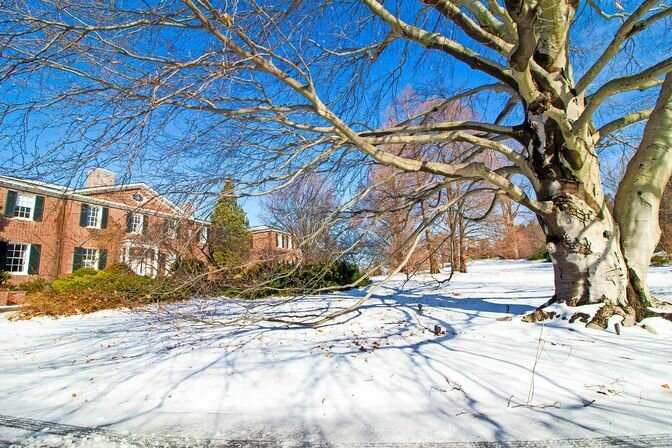
This season, after one of New York City’s coldest, snowiest and iciest winters in recent memory, said Jess Brey, senior horticultural interpreter at Wave Hill, staff expected spring to arrive late. Instead, a series of unusually warm days in late March accelerated bloom times for some plants, while others suffered damage from the prolonged cold.
“This was a very different spring,” Brey said. “There were a couple of things that occurred that made it a unique spring.”
At Wave Hill, early spring bulbs such as glory-of-the-snow responded dramatically to the sudden warmth. The plants, native to mountainous regions in Europe and western Asia, are adapted to cool temperatures and bright spring sunlight.
“When you get something like 78 degrees and these plants are prepared for like 40 degrees, they just melted,” Brey said.
The flowers did not disappear entirely, but their peak display was shortened as foliage emerged more rapidly than usual. Other plants, including some daffodils, appeared less vigorous than in previous years.
New York Botanical Garden experts like Melissa Finley, the garden’s Thain curator of woody plants and Peggy Rockefeller Rose Garden curator, witnessed similar surprises.
“I thought going in, with such a cold winter, that we would be really delayed compared to previous years,” she said about blooms and growth at the garden. “But we didn’t really see that for the most part. A lot of things were very on time or slightly early, which was not what I thought was going to happen.”
The season underscored what public garden professionals are beginning to describe as the new normal — unpredictability.
According to the National Oceanic and Atmospheric Administration’s Fifth National Climate Assessment, the Northeast has experienced the nation’s largest increase in heavy precipitation events, with the amount of rain and snow falling during the most intense storms increasing by about 60 percent since the 1950s.
“Extreme weather conditions like we experienced are having both a positive and a negative effect on plants,” Finley said.
This winter’s prolonged cold helped suppress insect populations that often thrive in mild winters, she said. But it also damaged newly planted shrubs and caused extensive damage to trees and broadleaf evergreens.
“We had a lot of broken branches,” Brey said. “We had trees that are needled like pines that usually can let the snow just roll off their leaves, and it stuck on it, so that broke them.”
Some plants did not survive. For public gardens, said Cathy Deutsch, Wave Hill’s director of horticulture, adapting to climate change means thinking far beyond a single growing season.
As temperatures rise and weather patterns become more erratic, horticulturists are evaluating which species will remain viable and which may struggle.
“We’re really thinking about what our climate will look like in 50 years, in 100 years, and how we can allow plants to thrive then as well as now,” Deutsch said.
Some plants are already showing signs of stress. Brey pointed to iconic northeastern trees, such as sugar maples and eastern hemlocks, as species vulnerable to warming temperatures, pests and disease.
Seasonal cues are shifting as well, particularly noticeable in familiar spring bloomers such as lilacs.
According to Brey, Wave Hill’s lilacs traditionally bloomed around Mother’s Day. In recent years, flowering has steadily moved earlier. This year, many reached peak bloom in mid-April. At the New York Botanical Garden, Finley said the garden’s lilacs bloomed about a week earlier than expected.
What horticulturists are observing in the Bronx reflects a broader trend. For years, the United States Environmental Protection Agency has documented earlier leafing and blooming across much of the Northeast as temperatures warm. In New York City, spring leaf-out now occurs about 16 days earlier than it did in the early 1980s, according to independent research nonprofit Climate Central.
Gardens are responding to climate change in a variety of ways, adjusting planting schedules, monitoring pest pressures or rethinking how collections are managed. Reducing water use and improving soil health through practices including composting are also becoming more important.
Those decisions increasingly involve determining which plants will remain viable as conditions change, Finley explained, pushing horticulturists to experiment with more climate-resilient species, like those better adapted to heat and drought.
The trees being planted today, she added, may not reach maturity until long after current gardeners have retired, forcing horticulturists to think far beyond immediate weather patterns and consider what New York’s climate could look like going forward.
“We’re seeing plants respond to conditions differently than they did even a decade ago,” Finley said. “As gardeners, we’re constantly observing those changes and thinking about how to care for our collections not just for this season, but for the future.”
For institutions whose mission includes preserving plants for future generations, those changes are no longer theoretical. They are becoming part of the day-to-day calculations that determine what the Bronx’s gardens will look like not only next spring, but decades from now.
Keywords
climate change,
Wave Hill,
New York Botanical Garden,
Bronx gardens,
climate resilience,
horticulture,
New York City climate,
plant collections,
extreme weather,
spring blooms,
warming temperatures,
Bronx environment,
urban gardening,
climate adaptation