
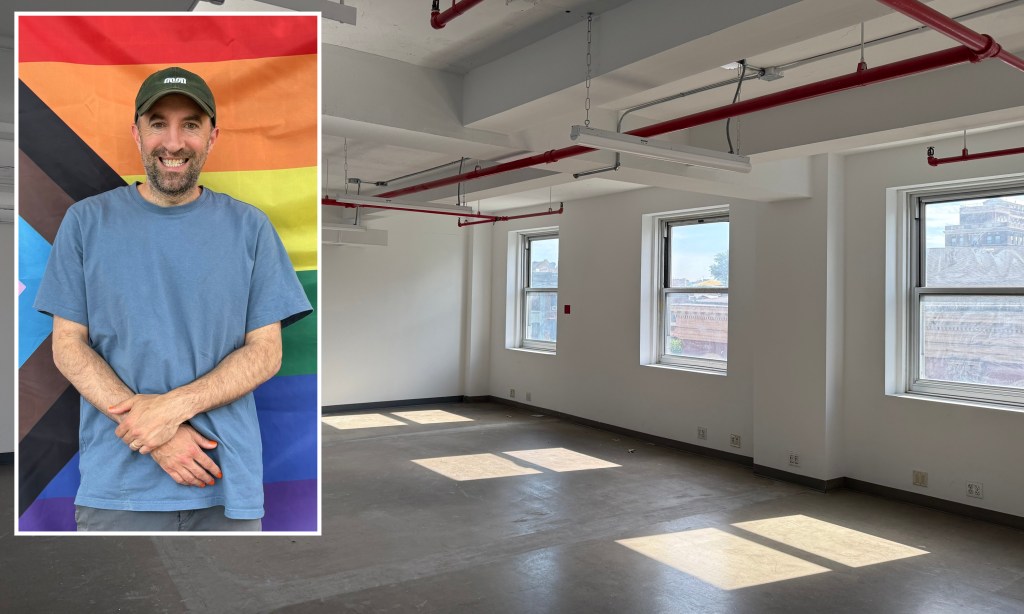
Despite the Trump administration’s crackdown on how schools teach sexuality and gender identity, a middle school designed for LGBTQ+ students and families is scheduled to open in Brooklyn.
Nearly two years after it was passed over for a license to open as a charter school, Miss Major Middle, a tuition-free “microschool” focused on theater and the arts, will start admitting students this fall for the following academic year. The school will launch as a one-room, 1,200-square-foot schoolhouse in Fort Greene, similar to the learning pods that proliferated during the COVID-19 pandemic.
Miss Major Middle was envisioned as a place where kids, whether they identify as LGBTQ+ or not, can explore their identities and develop a sense of belonging.
While plans for the school have long been in the works, its official launch comes as President Trump has launched investigations into LGBTQ+ school curriculum and looked to deny transgender children the opportunity to play on sports teams aligned with their gender identity and receive gender-affirming healthcare.
In New York City, the Trump administration planned to cancel $36 million in federal magnet school grants after the school system declined to change its gender policy; a Manhattan federal judge vacated the cuts in April.
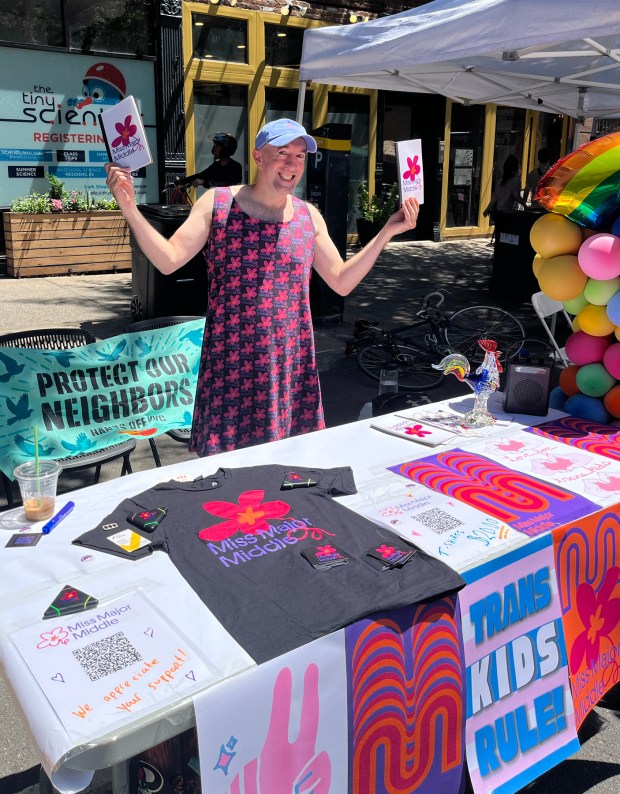
Courtesy of Joji Florence
Joji Florence, the founder and head of Miss Major Middle. (Courtesy of Joji Florence)
It also comes against the backdrop of new anti-LGBTQ+ state laws on school curriculum, facilities and libraries outside of New York, and Supreme Court decisions that Joji Florence, the founder and head of school, believes made the school “absolutely necessary.”
“There are a million different ways to fight back and support our kids and families,” Florence said. “One is in the courts, but if we don’t continue to make strong, evidence-based, beautiful, caring places that can be supportive and center the LGBTQ+ community at the school level, then that erosion is just going to continue.”
“You have to build little things that can emanate and radiate outward some sort of joy, and some sort of power. That’s why we’ve got to do it.”
Florence first applied to open Miss Major Middle as a charter school, but was shut out of the process when the state ran out of licenses to reissue in 2024. Their resolve was strengthened last year when Miss Major, the eponymous Black transgender activist, died last October.
“Her legacy is here. Her spirit is here. The work that she did — it will continue,” Florence said of the real-life Miss Major.
To remain tuition-free, Miss Major Middle is launching as a microschool, a nontraditional educational model gaining traction nationwide. Families register for home-school, but students take classes in person for the regular school day and year.
Administrators work with families to submit quarterly reports to the city’s Education Department as required by law for home-school students. Students create portfolios at the end of each unit, which are assessed on common core standards, historical and cultural frameworks, and school-specific rubrics developed by Miss Major Middle. Kids also take digital standardized exams that adapt questions to test-takers’ proficiency levels in real-time.
Administrators are in discussions with private donors, as well as its local school district and the City Council, to fundraise and secure grant money. The school’s affiliated nonprofit has already received funding for community engagement through Brooklyn Org, teacher training through School District 13, and a Pride month fundraiser through the Brooklyn Borough President’s office.
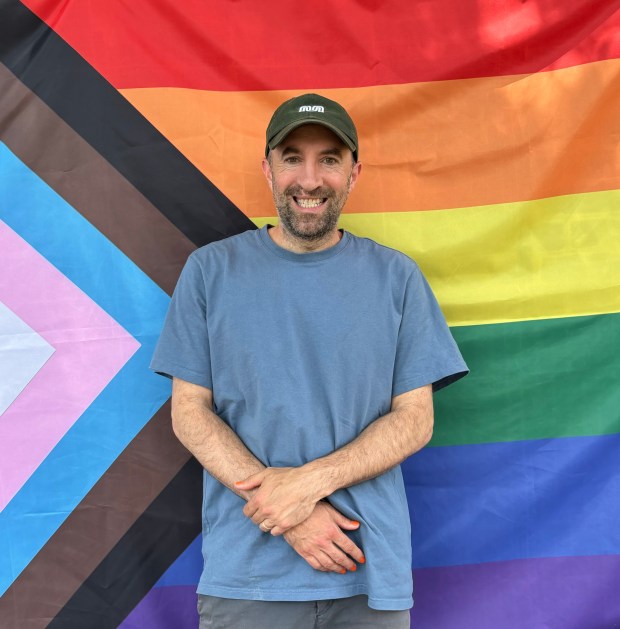
Courtesy of Joji Florence
Joji Florence, the founder and head of Miss Major Middle. (Courtesy of Joji Florence)
Miss Major Middle will open in fall 2027 with an inaugural class of sixth graders, adding a grade level each year until it runs through eighth grade.
In the morning, “teaching artists” will run two-week units based on different art forms, incorporating English, social studies, math and science instruction. The artists are set to develop those units over the next year, focused on topics such as the history of drag or community maps as visual art or even a dance.
“This is an opportunity to look at education differently, not as just a place where we’re depositing knowledge,” said Andre Zarate, the director of curriculum and instruction, a curriculum writer for different companies with 13 years of experience as a teacher.
Students will still need to master core subjects: “Creativity is important, but they also exist in a world where the traditional form of academics … is also important,” Zarate said.
In the afternoon, students will partake in book clubs that read novels — a dying art in traditional public schools, driven in part by the increasing popularity of literacy curriculum programs that favor textbooks with short reading passages over whole books. For the last hour of the school day, students will work on three shows that run throughout the year, either in theater, music, script writing or marketing.
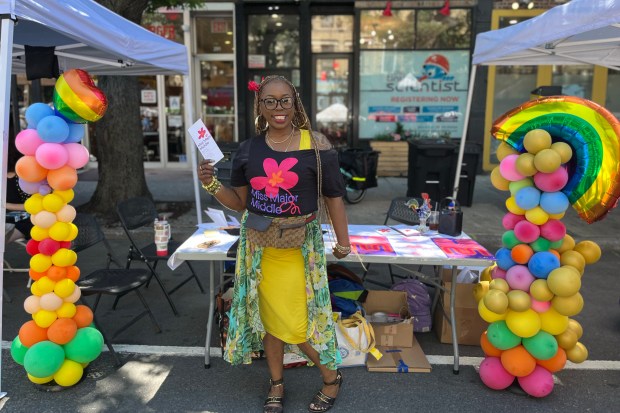
Courtesy of Joji Florence
Miss Major Middle will open in fall 2027 with an inaugural class of sixth graders, adding a grade level each year until it runs through eighth grade. (Courtesy of Joji Florence)
“We wanted to make sure that our students were able to have access to the arts, but also look at the arts through the lens as members of the LGBTQIA+ community, and learn about the heroes and ‘she-roes’ and those in between who often don’t make the history books,” said Rajendra Maharaj, the school’s founding artistic director.
Before graduation, students receive support applying to high school, including help preparing a portfolio or for auditions, and workshops for parents.
School admissions are based on a lottery system, which will run twice next year: first in October, then in May if spots remain. Half of seats are reserved for students from low-income families. All families can apply, regardless of gender identity or sexual orientation.
Florence, the head of school, said he hopes to continue scaling the program after its launch.
“I would like as many kids to apply as possible,” said Florence. “Because if we have a lot of kids apply, we can’t take all of them, then I can take that back to the district and back to New York City Public Schools and say, this is obviously needed. Let’s find a way to better support this community.”