
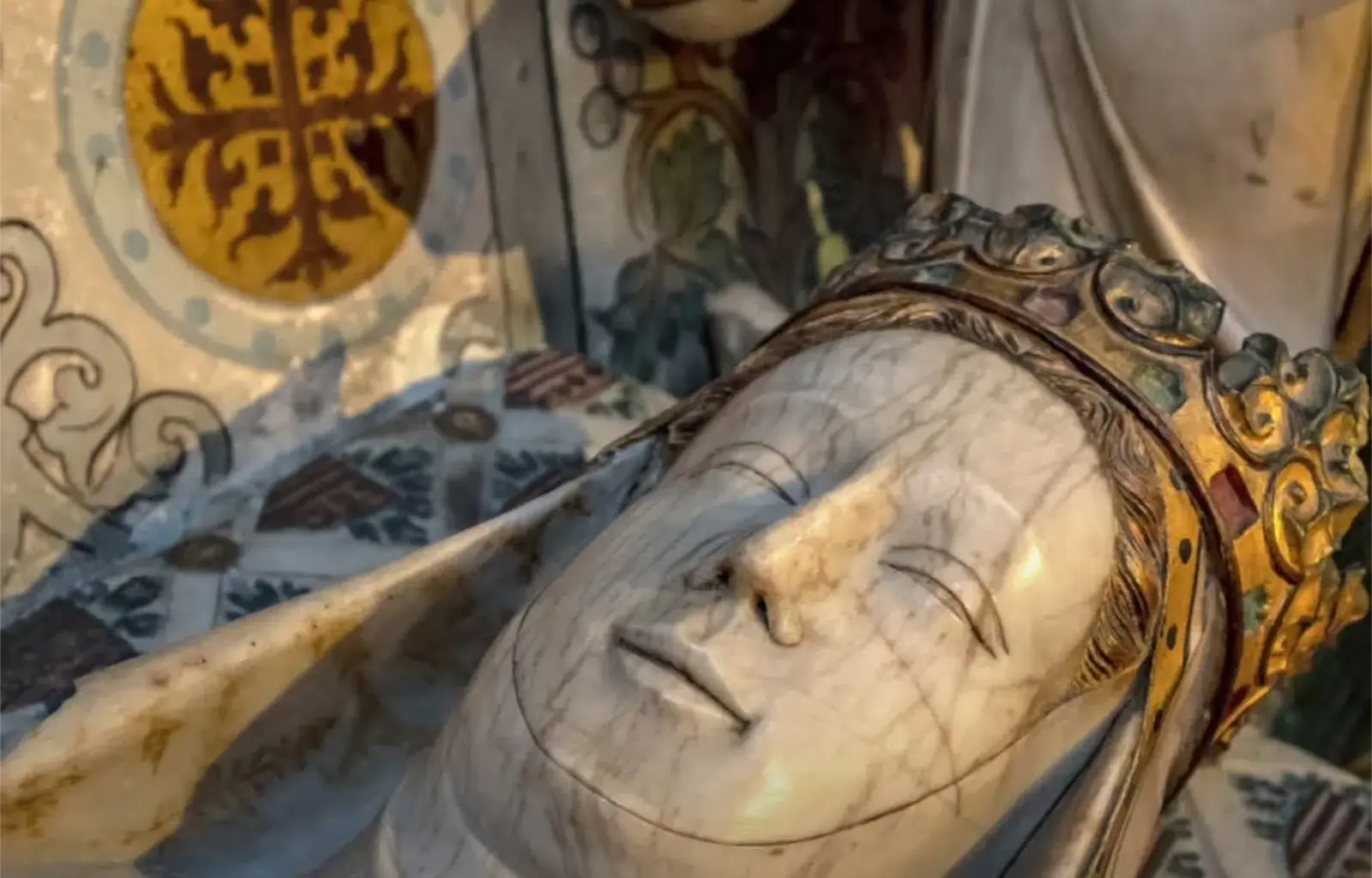
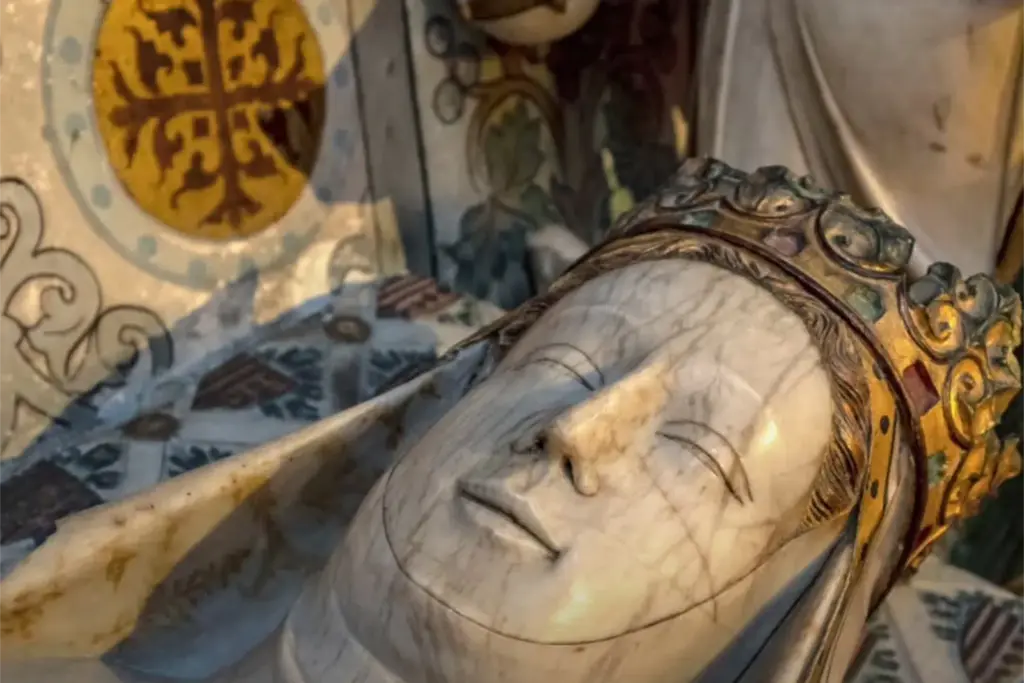
 The Pedralbes Monastery project aims to investigate, restore and conserve the tombs from the founding time of the monastery, with the objective of deepening the knowledge of the community that lived in the 14th century. Credit: Pedralbes Monastery / Instagram
A team of researchers from the Barcelona Institute of Culture exhumed the skeletal remains of 25 people at the Royal Monastery of Santa Maria de Pedralbes, a number that triples the official capacity of the eight cataloged medieval tombs within the complex. The most significant find is that of Queen Elisenda de Moncada, founder of the monastery and fourth wife of King James II of Aragon. However, the opening of the 14th-century graves revealed a scene not recorded by official historiography: multiple bodies buried clandestinely, wounded by bladed weapons and showing signs of severe violence.
Among the most notable forensic findings within the abbesses’ crypts is the mummified torso of a woman with a 22-week-old fetus in her birth canal. In the same tomb, assigned to the second abbess, Francesca Saportella, archaeologists unearthed four male skulls with perforations and fractures caused by sharp weapons. The scientific team is now investigating these deaths using forensic medical criteria to determine the origin of the homicides within the context of the medieval Catalan court.
Findings in the monarch’s tomb and bone pathologies
The exhumation was part of the events commemorating the 700th anniversary of the monastery, founded in 1326. The initial objective of the project was to study the living conditions and diseases of the first community of nuns of the Order of the Poor Clares, but the results far exceeded what the team expected to find. A double structure between the church and the cloister concealed the wooden coffin of Queen Elisenda de Moncada, who died in 1364.
Upon opening the box, anthropologists recovered the complete skeleton of a woman approximately 70 years old and 1.60 meters (5’3”) tall. The skeletal remains were clothed in a monastic habit of coarse fabric with traces of silk and gold thread, along with botanical remains of rosemary and myrtle. A medical examination of the monarch’s remains confirmed that she suffered from advanced osteoarthritis in her spine and leg joints.
Evidence of trauma in the tombs
The analysis of adjacent graves shifted the focus of the historical investigation toward criminal analysis. In the grave of Sobirana Olzet, the first abbess of Pedralbes, scientists identified a fracture in her facial structure, sustained shortly before death and caused by a sharp object. Experts are evaluating whether this impact was the direct cause of the nun’s death.
The greatest discrepancy between the written record and physical evidence lay within the tomb of Artau de Foces. The knight served as advisor and steward to Queen Eleanor of Sicily, the niece of Elisenda. Archaeologists found no male remains compatible with the warrior; instead, the tomb contained the skeletons of two adult women and three children. One of the women had a long braid of hair attached to her skull in a state of partial mummification.
Laboratory analysis and documents
During the Saportella crypt inspection, the team transferred fragile parchments, official documents, and medieval musical scores to laboratories for thermal stabilization. The materials had suffered severe deterioration from seven centuries of moisture seeping through the stone walls.
Currently, archaeologists from the University of Barcelona are conducting carbon-14 dating and ancient DNA analysis on the 25 recovered bodies. These tests aim to establish the biological relationship between the murdered individuals and the monastic authorities in order to identify the stabbed men and determine the reasons for the burial of the women and children in the cloistered area.