
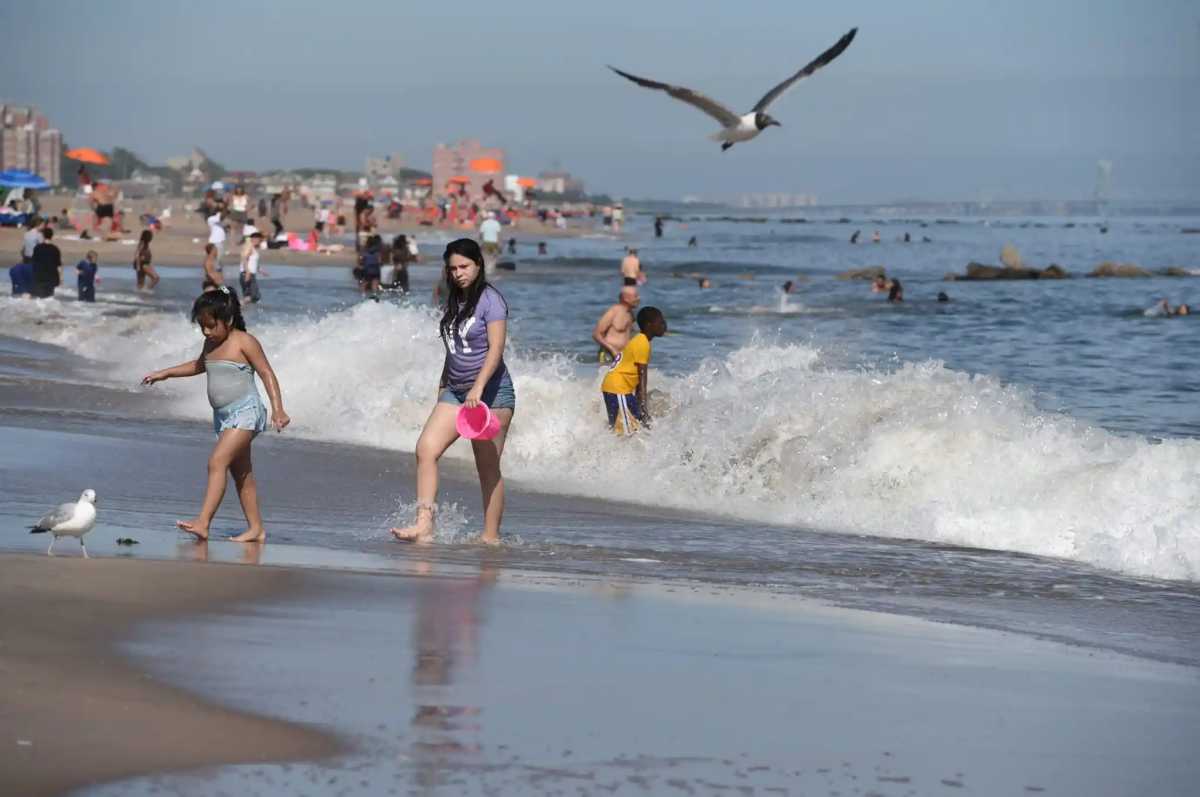
This week’s heatwave in NYC is likely to be a biggie, with daily afternoon temperatures expected to reach the upper 90s and even flirt with triple-digits, meteorologists said on Monday.
Extreme heat will likely continue even after the sun sets this week, with overnight temperatures expected to be 15 to 20 degrees above the historic average. And even if the thermometer doesn’t top out at above 100, when combined with humidity, the real-feel temperatures will make it feel like it is well above 100 outside, making it dangerous to be outside for long periods.
“While temperatures during the day will be dangerous, the lack of any relief from the heat and humidity at night can be especially stifling and even deadly, especially for those that don’t have air conditioning,” AccuWeather meteorologist Matt Benz said.
The National Weather Service (NWS) has the Big Apple under an extreme heat watch from Wednesday through Friday. Thursday is expected to be the hottest day, with a high of 98 degrees and a low of a very uncomfortable 80 in Manhattan. Dangerously hot conditions could put heat index values between 105 to 110, according to the NWS.
Health experts are also concerned about air quality this week.
NYS officials issued an air quality health advisory for NYC on Monday as elevated ozone levels are expected throughout the day.
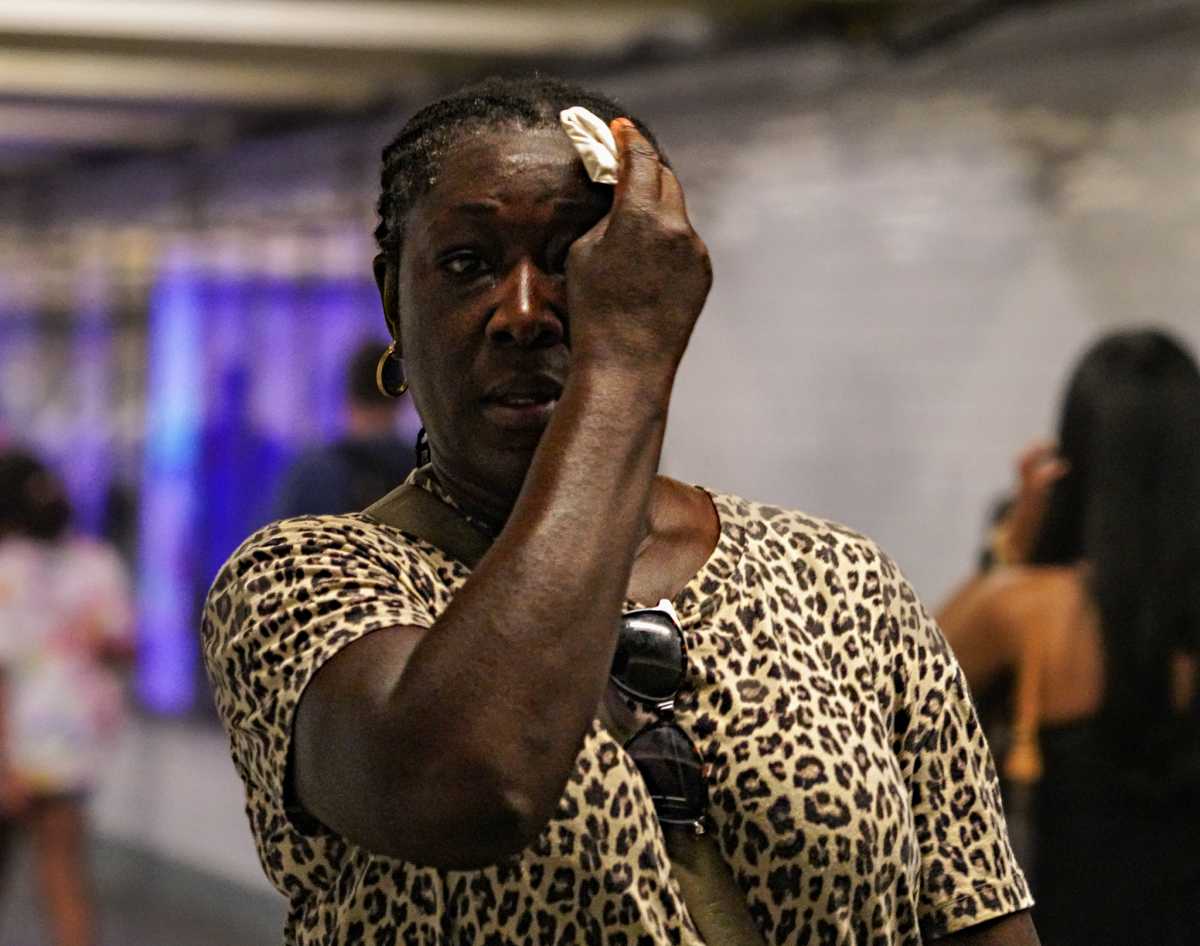 FILE – A woman wipes sweat from her brow while waiting for a subway train during a heat wave on July 16, 2024.Photo by Dean Moses
Both the NYS Department of Environmental Conservation and the Department of Health announced the advisory for the city and nearby counties will be in effect through 11 p.m. Monday.
State officials issue air quality health advisories when meteorologists predict pollution levels will exceed an Air Quality Index value of 100. The pollutant expected to reach higher levels on Monday is ground-level ozone, which forms when sunlight drives reactions between nitrogen oxides and volatile organic compounds emitted by vehicle exhaust and industrial sources. Ozone is a major component of photochemical smog and should not be confused with the protective ozone layer high in the atmosphere, experts advised.
Health officials said people with respiratory conditions, young children, older adults, people who exercise outdoors and those who perform strenuous outdoor work should consider limiting vigorous physical activity during the afternoon and early evening. Anyone experiencing coughing, chest pain, or shortness of breath should call a doctor, officials said.
Officials said spending more time indoors can help reduce exposure when outdoor ozone levels are elevated. Ozone concentrations usually decrease when the sun goes down.
Tips to reduce air pollution and conserve energy, per state officials, include using public transit instead of driving, turning off lights and electronics when possible, limiting the use of major household appliances until later in the day, setting AC to 78 degrees, and closing blinds or shades to reduce indoor heat.
Important information on staying cool
NYC officials urge residents to call 311 for heat safety information and tips on staying cool. Older adults and people with chronic medical or mental health conditions are at greater risk of heat-related illness. A home without AC can become much hotter than the temperatures outside, according to the NWS.
New Yorkers are encouraged to use AC whenever possible or spend time in air-conditioned places, such as cooling centers. Officials also encourage New Yorkers to check on older relatives, neighbors and others who may be vulnerable.
Importantly, anyone overcome by heat should be moved to a cool and shaded location, experts said. Heat stroke is a medical emergency, and anyone experiencing symptoms should call 911 right away.