
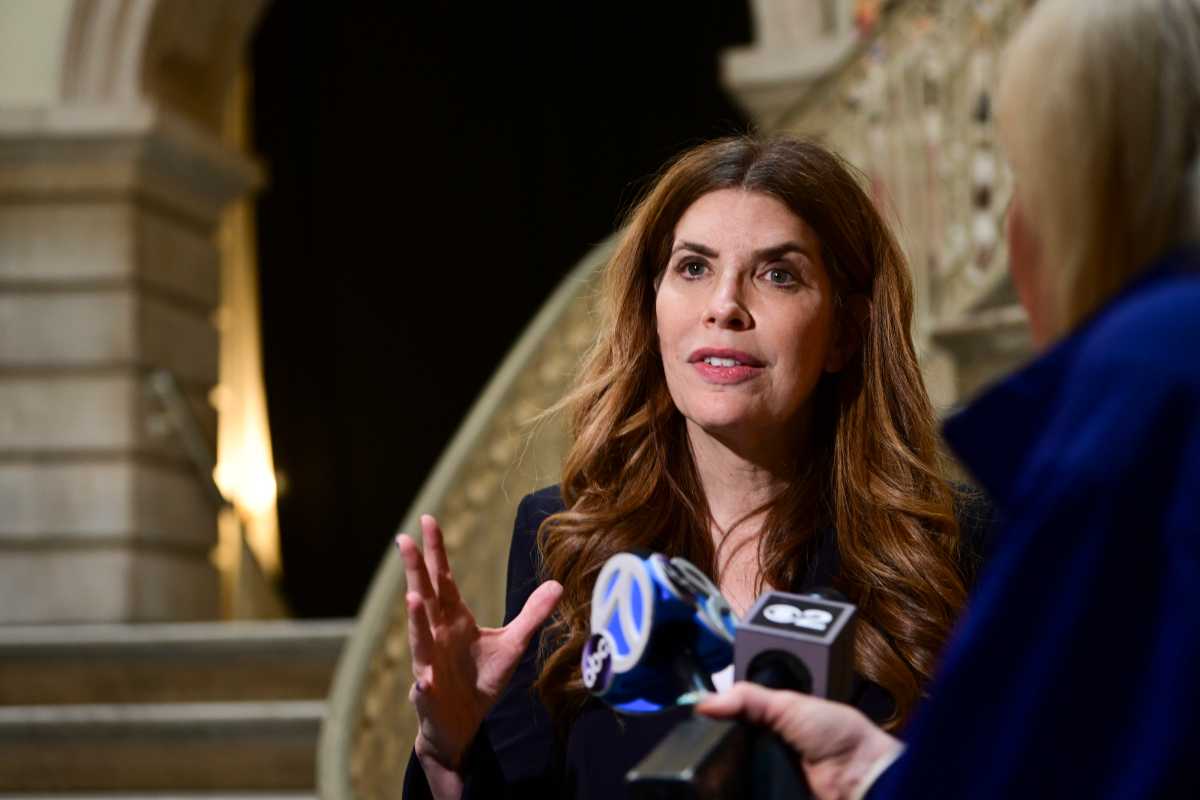
Mayor Zohran Mamdani and City Council Speaker Julie Menin entered the final stretch of budget talks Monday without a handshake deal, days after a fight over funding for the city’s rental assistance program derailed an expected agreement and sent Council members into the weekend demanding more money for CityFHEPS.
The absence of a deal one day before the June 30 budget deadline marked an escalation in what had become one of the final sticking points in Mamdani’s first budget negotiations with the Council.
By Friday, Menin was publicly saying the budget was “stuck” on CityFHEPS. By Saturday, the Council’s Progressive Caucus was warning that members needed “to see movement to fund this critical program before the handshake.”
The fight has left Mamdani, who campaigned on expanding CityFHEPS and dropping the city’s legal challenge to the Council’s 2023 expansion laws, facing pressure from housing advocates, progressive members and at least some Council members outside the Progressive Caucus as he tries to close his first city budget.
“We stand committed to further funding for CityFHEPS in the FY27 budget,” the Progressive Caucus said in a Saturday statement. “Every day that this program remains unexpanded, New Yorkers are forced out of homes, unable to keep up with ballooning rent.”
The caucus added that it appreciated Mamdani and Menin’s work to close the city’s deficit, but said the emerging budget still fell short.
“We urge the Speaker and Mayor to ensure that a balanced budget does not rest on the backs of New Yorkers grappling with an historic affordability crisis,” the statement said. “We need to see movement to fund this critical program before the handshake.”
The Progressive Caucus, a 23-member bloc that includes nearly half the Council, stopped short of an explicit threat to vote no, but its statement showed that the fight over CityFHEPS continued to shadow budget talks through the weekend. The size of any potential no-vote bloc remained unclear Monday, with members and aides largely unwilling to put hard vote commitments on the record.
Still, two council members — one in the Progressive Caucus and one outside it — told amNewYork they would be a hard no on a budget deal without additional CityFHEPS funding.
The pressure has not been confined to the Progressive Caucus. Majority Leader Shaun Abreu, said in a Friday statement that “a budget deal is incomplete without” a deal on CityFHEPS.
Other non-caucus members, including Linda Lee, Eric Dinowitz, Yusef Salaam, Susan Zhuang, Selvena Brooks-Powers, Ty Hankerson and Carl Wilson, also issued statements Friday supporting CityFHEPS funding or expansion.
Zhuang sharpened her position Monday, saying she would not support a budget that “walks away from the families this program was built to serve.” Zhuang, who has also been one of the most vocal opponents of a homeless shelter planned for her Southern Brooklyn district, argued that the city was spending money on shelters while fighting a cheaper rental-assistance expansion in court.
“The math is simple,” Zhuang said in a statement. “It costs the city far more to keep a family in a shelter than to help them stay in their home with a voucher. The Mayor promised to expand this program. Now he is fighting it in court while building shelters in neighborhoods like mine. That is backwards.”
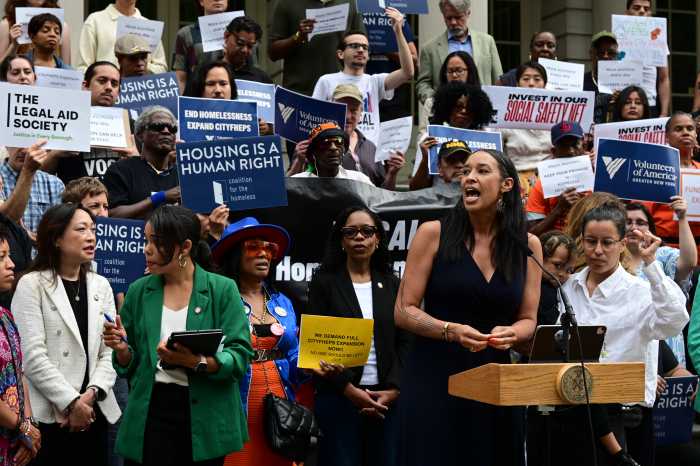 Council Member Sandy Nurse, co-chair of the City Council’s Progressive Caucus, joined housing advocates and fellow lawmakers Friday to press Mayor Zohran Mamdani for more CityFHEPS funding before a budget deal is finalized.Photo by Lloyd Mitchell
On Friday, Menin joined 14 Council members and housing advocates outside City Hall, rather than announcing a budget agreement with Mamdani. She later told reporters that the Council was seeking at least $300 million more for CityFHEPS, while housing advocates and aligned members have pushed for $500 million.
“We are not seeing from the administration the type of investment that we need to see in CityFHEPS,” Menin said Friday. “The Council is insisting on CityFHEPS.”
The Council had previously flagged CityFHEPS as underfunded in its preliminary budget response earlier this year, saying the city’s financial plan failed to adequately account for rental assistance costs, including $145 million for first-year implementation of the Council’s 2023 expansion laws.
Council Member Pierina Sanchez, who chairs the Council’s housing committee, said Friday that there were enough members willing to oppose a budget without more CityFHEPS funding to delay the handshake. Asked whether a majority had committed to voting no, Sanchez said, “It’s enough that they held back the handshake.”
Mamdani’s team says working ‘around the clock’ on an agreement
City Hall has not said whether Mamdani will agree to additional CityFHEPS funding in the final budget, with a mayoral spokesperson saying Monday, “We are working around the clock to deliver a budget agreement that is fiscally responsible and puts our city on a path of long-term stability.”
“The Mayor believes in CityFHEPS and keeping New Yorkers stably housed, which is precisely why we are pursuing major reforms to the program,” said spokesperson Matt Rauschenbach.
The city comptroller’s office also urged both sides Monday to reach a deal before the deadline, while warning against adding to future budget gaps.
“With the deadline fast approaching, I urge the Mayor and City Council to reach an agreement as soon as possible to prevent the potential downsides of a late budget,” the office of Comptroller Mark Levine said in a statement. “In doing so, it is critical that they avoid adding to the already large out-year gaps ahead.”
Levine’s office said that would require “clear parameters and effective cost controls” for fast-growing programs like CityFHEPS.
“This program plays a vital role in helping New Yorkers leave shelter and remain stably housed, and it must be structured and funded in a way that is sustainable over the long term – otherwise we risk putting this and other vital programs we are fighting to protect today in future jeopardy,” the statement said.
CityFHEPS subsidizes rent for New Yorkers leaving shelters or at risk of homelessness, with tenants generally paying about 30% of their income and the city covering the rest. The Council passed a package of laws in 2023 to expand access to the program, including by eliminating the shelter-stay requirement, removing work requirements and expanding income eligibility.
Then-Mayor Eric Adams vetoed the bills, and the Council overrode him. The legal fight over the laws has continued under Mamdani, despite his campaign promise to drop the litigation.
His administration appealed the case to the state’s highest court in March, arguing the Council lacked authority to enact the expansion and that the city could not afford its full cost.
The lawsuit has become intertwined with the budget talks, with Menin and other Council members calling on the administration to settle the case and put money toward a narrower expansion. Sanchez said Friday there was no possibility that the full expansion mandated by the 2023 laws would be included in the budget.