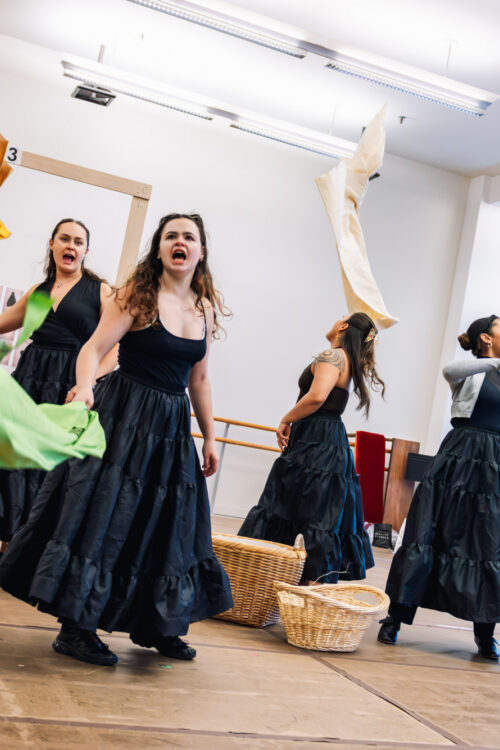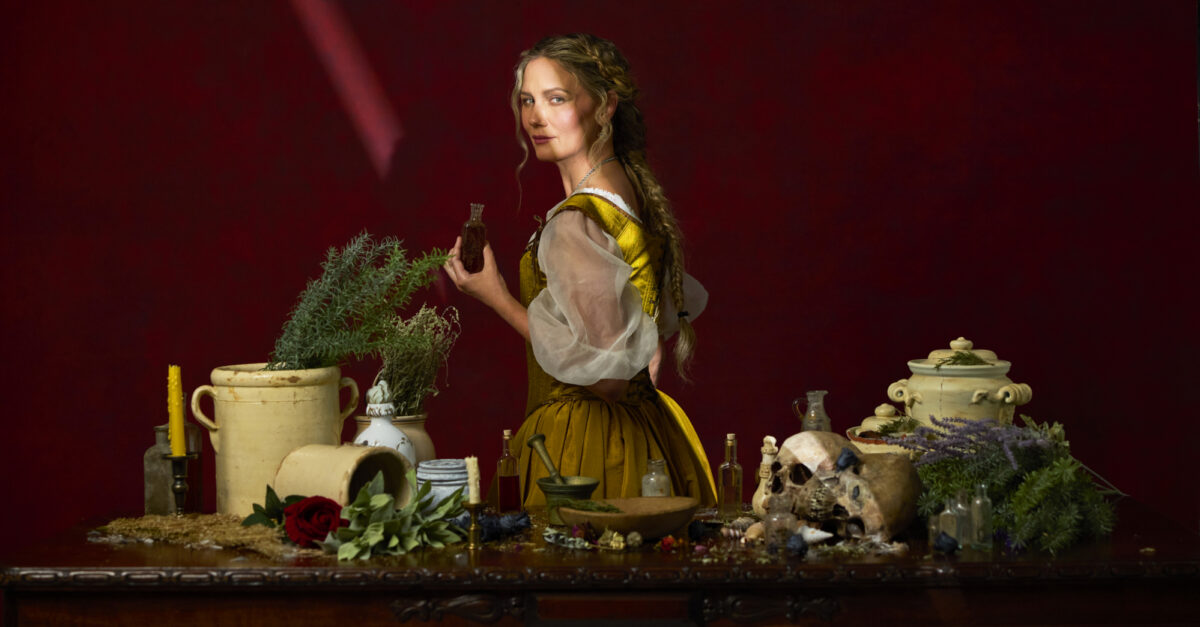
Jennifer Nettles isn’t afraid to get her hands dirty.
The country music superstar has been flirting alongside the edges of musical theatre stardom for over a decade, serving her time as Roxie in Chicago and making it work as Jenna in Waitress. Now, she’s stepping out of the replacement cycle to offer something completely new: writing and starring in Giulia: The Poison Queen of Palermo at Off-Broadway’s Perelman Performing Arts Center.
“Creating a new musical is it’s own beast,” Nettles shares, tucked away in a chaotic corner of PAC ahead of the productions first preview June 28. “With the number of hats that I’m wearing, it should be overwhelming. But I have found a real joy and excitement in the flow. It has its intensities, and it has its questions and curiosities, but it also has such deep rewards. I sit in the back, oftentimes, just to watch these talented people bringing these characters I had in my head and on the page for so long, into embodiment. It’s unlike anything else I’ve ever experienced.”
Giulia is one part fact, 10 parts fable. Based on the sparse records of the historical apothecary Giulia Tofana, Nettles has imagined the events that led to Tofana being remembered by history as one of the most prolific poisoners of all time. A skilled chemist, she became known for her practically undetectable Aqua Tofana, an arsenic-based poison that was used by 17th-century Italian women who wanted to kill their abusive husbands when divorce was not an option under the Catholic church. Her body count was allegedly over 600.
“She first entered my knowledge base nine or 10 years ago. I was online, and happened across an article about female serial killers… My understanding of a serial killer is someone who enjoys the actual act of killing, right? And I immediately felt like it was a stretch to lump Giulia in with that. Sure, she had admitted under torture (which we all know is not a very trustworthy way of getting the truth) that she aided in the killing of 600 men, but that also seems quite…” Nettles scoffs. “I mean, listen, if that’s the case, ‘Wow, good for her.’ But I definitely think those numbers were stretched, and then to call her a serial killer…”
After discovering her, Nettles couldn’t stop digging. Very little is known of the actual Giulia Tofana, with multiple sensationalized versions of her life eclipsing the actual facts. While Aqua Tofana is well-known (arsenic has become the defacto “woman kills man” poison in countless stories, including in Chicago’s “Cell Block Tango”), the circumstances that led to Tofana creating and secretly distributing such a noxious brew were never documented during her lifetime. Her real-life story has been overlooked by those who would rather have a provocative, high-numbered hook for stories about female serial killers.
“There was just enough information to be inspiring, without so much being known that it would then be limiting. There’s no pre-existing IP to hem me in in any way. She just kept coming in to my mind, year after year. Eventually I shared her with Adam Zotovich, and he said to me, ‘Well, does she want to sing?’ And I said, ‘I think she does want to sing. From a watery grave, I believe she does.'”
The idea of Giulia Tofana the Great Liberator of Women, versus Giulia Tofana the Serial Killer, took hold almost immediately.
“If someone being a serial killer is more about numbers than pathology, then there are so many people, not only throughout history, but in modern society, that we could look at and call a serial killer,” explains Nettles. “Every general that has ever called a military action, to start. To me, what makes someone a serial killer is obviously their intent.”
“Not surprisingly, this is yet again one of the many ways that, when a man does something, it’s called one thing, and when a woman does something, it’s labeled something else. And that’s intentional.” Nettles pauses. “There’s a line in the show that says, ‘A true story, kept buried and hidden, but the juiciest apples are those forbidden.’ It’s not surprising to me that many of these stories where women fought back, we just don’t know. Because they don’t want us to know that is an option. At the very least, if they are known, they’re known in a way that depicts the woman as villainous as opposed to heroic, because they don’t want us to think that we have agency. And they don’t want us to hear these stories and be inspired by them.”
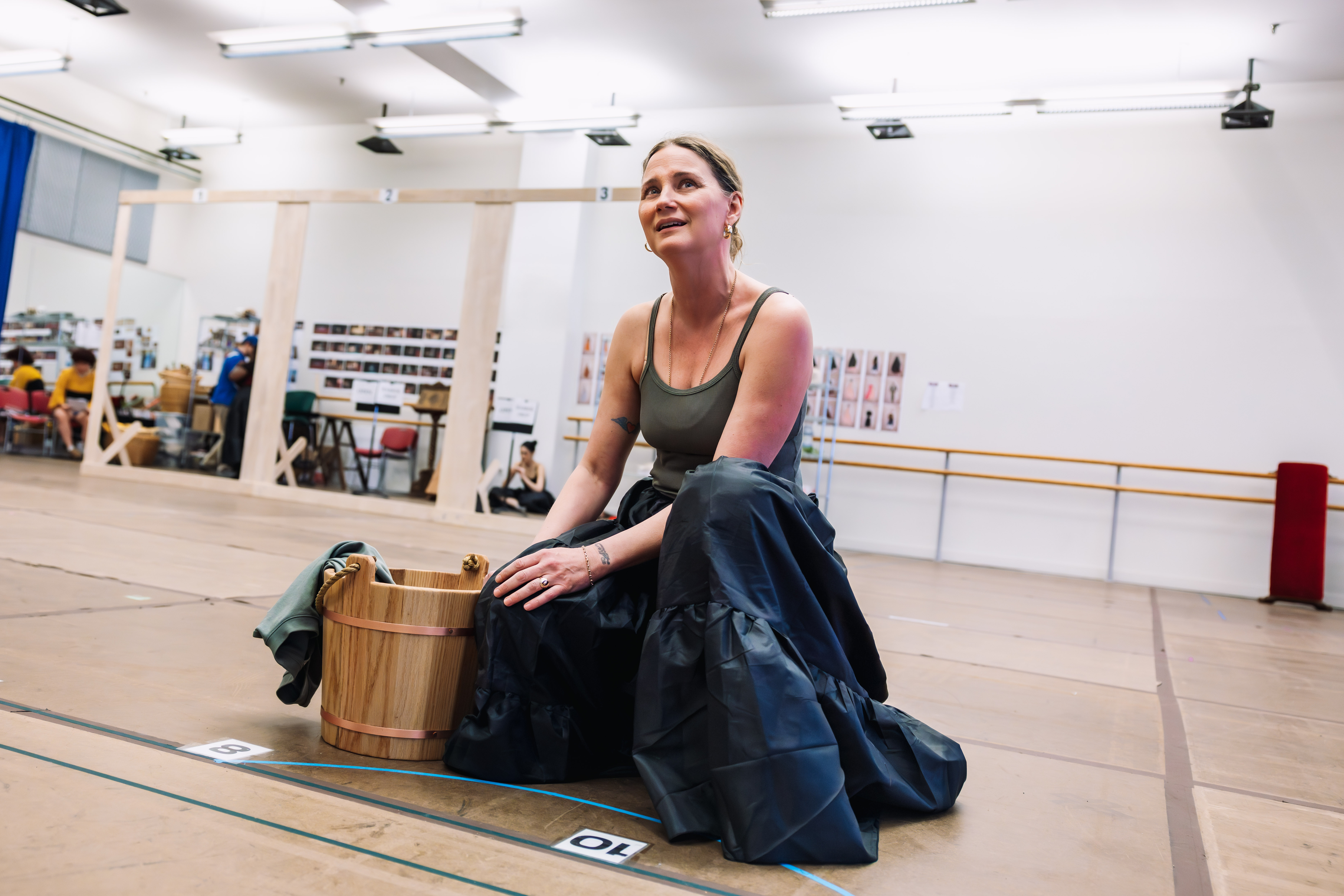
Jennifer Nettles
(Rebecca J. Michelson)
As imagined by Nettles, Tofana is a woman forced to invent a way for her and her greater sisterhood to survive under the oppressive influences of both the church and their husbands. Death by Aqua Tofana was quick, clean, and untraceable—the perfect escape route for a woman trapped. As women’s rights are stripped away throughout the United States, Nettles is wryly aware of the need many women once again have for such an escape.
“There’s never been a bad time to learn about Giulia, but boy, is it really a good time. I feel an absolute hum of energy that I would call divine feminine rage … I believe that there is a vibrational divine feminine spirit who is enraged right now, and that we feel that within all of us.” Nettles takes a deep breath through her teeth.
“We see the rights of women being taken back, our human rights are being taken away … All of that comes up in this show. Men position women into places where they have no choice but to collude with each other. When you look at the things that get the most oxygen, in terms of those who are screaming the loudest in this country right now, it always boils down to punishing women. Right now, they’re discussing taking away women’s right to vote, not to mention the realities of our reproductive rights, and I just—” Nettles pauses, exhaling slowly as she attempts to bite back her fury. “It’s sadly a really good time for this musical, and for women to see an example of someone who claimed her own agency and thereby reclaimed her life.”
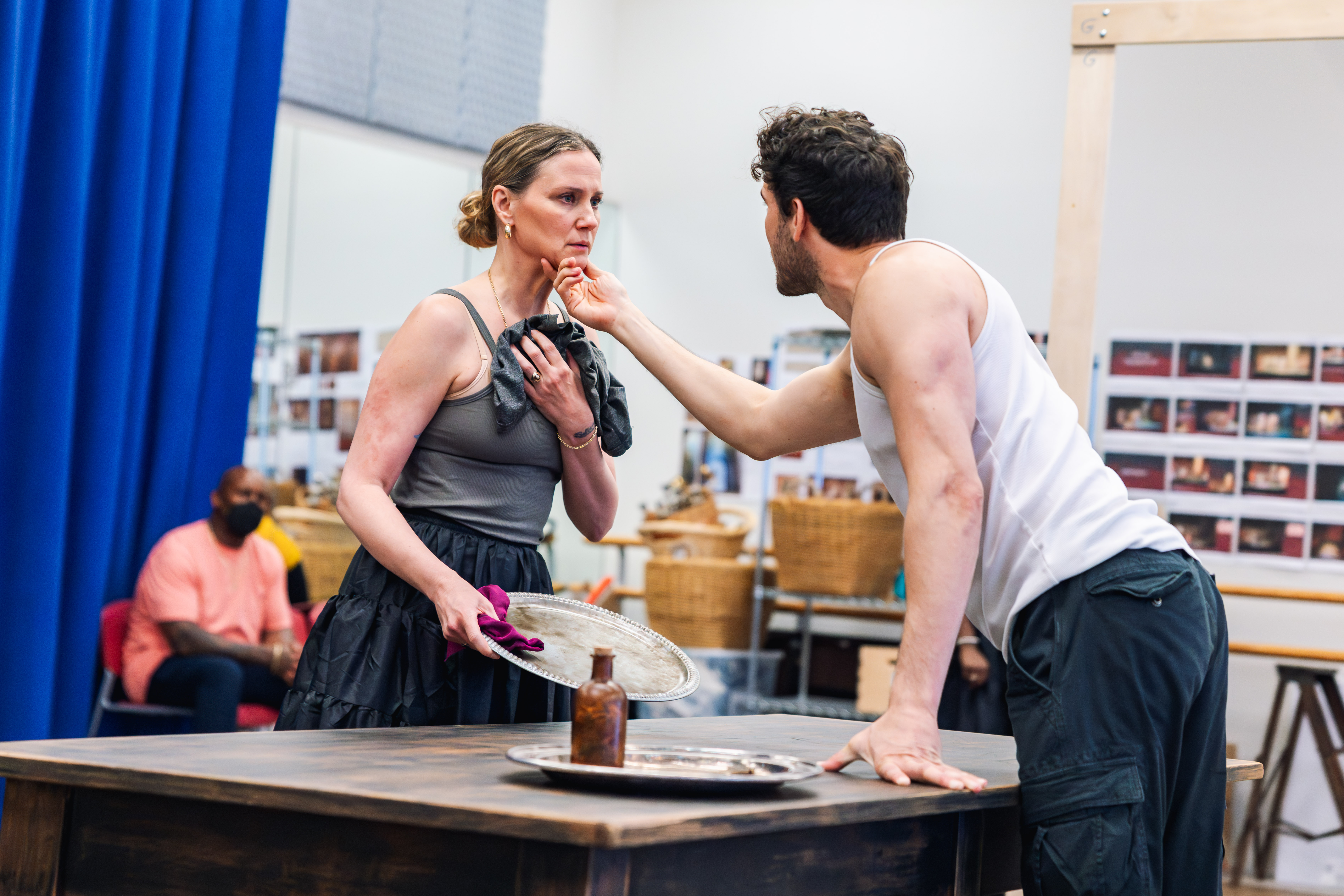
Jennifer Nettles and Matthew Amira
(Rebecca J. Michelson)
There is a concept in fourth-wave feminism that the core of misogyny is jealousy over a woman’s inherent ability to create. Nettles thinks it is bang on.
“I think that is very accurate. A woman’s ability to create, not just in the reproductive sense, but in the larger metaphoric sense, is unending. We can create, in the very visceral sense, life itself, be it taking a single cell from a man to build an entire new person, or to create the things that make life worth living: joy and community and love and laughter and, and, and.” Nettles chuckles lightly to herself. “It is quite powerful to be the creator of life, and if we go back in history, we see examples where that has been celebrated and venerated, and where it has been taken and made ugly, where they have tried to lessen it, or vilify it. I don’t know if these men are conscious of their jealousy of that power, but I think that jealousy is the earth in which that seed of misogyny has grown.”
In the musical, Giulia is trained from birth to accept the abuse forced upon her. It is only when she witnesses that abuse leveled against her daughter that she snaps.
“That moment is so cathartic. You don’t have to be a literal mother to be inspired to strength in service of another woman. We definitely have so many stories, every family has them, of women doing the impossible to save each other… And I think that’s so ironic, how men have placed themselves in a ‘position of protection’ culturally, when the reality is that women are fierce protectors.” Nettles scoffs once more. “Men fantasize about being heroes, but women have this ability to call upon a fierce warrior within themselves when cornered. The fact that every night I get to be that protector, and to call upon that fierce warrior within me, is so delicious.”
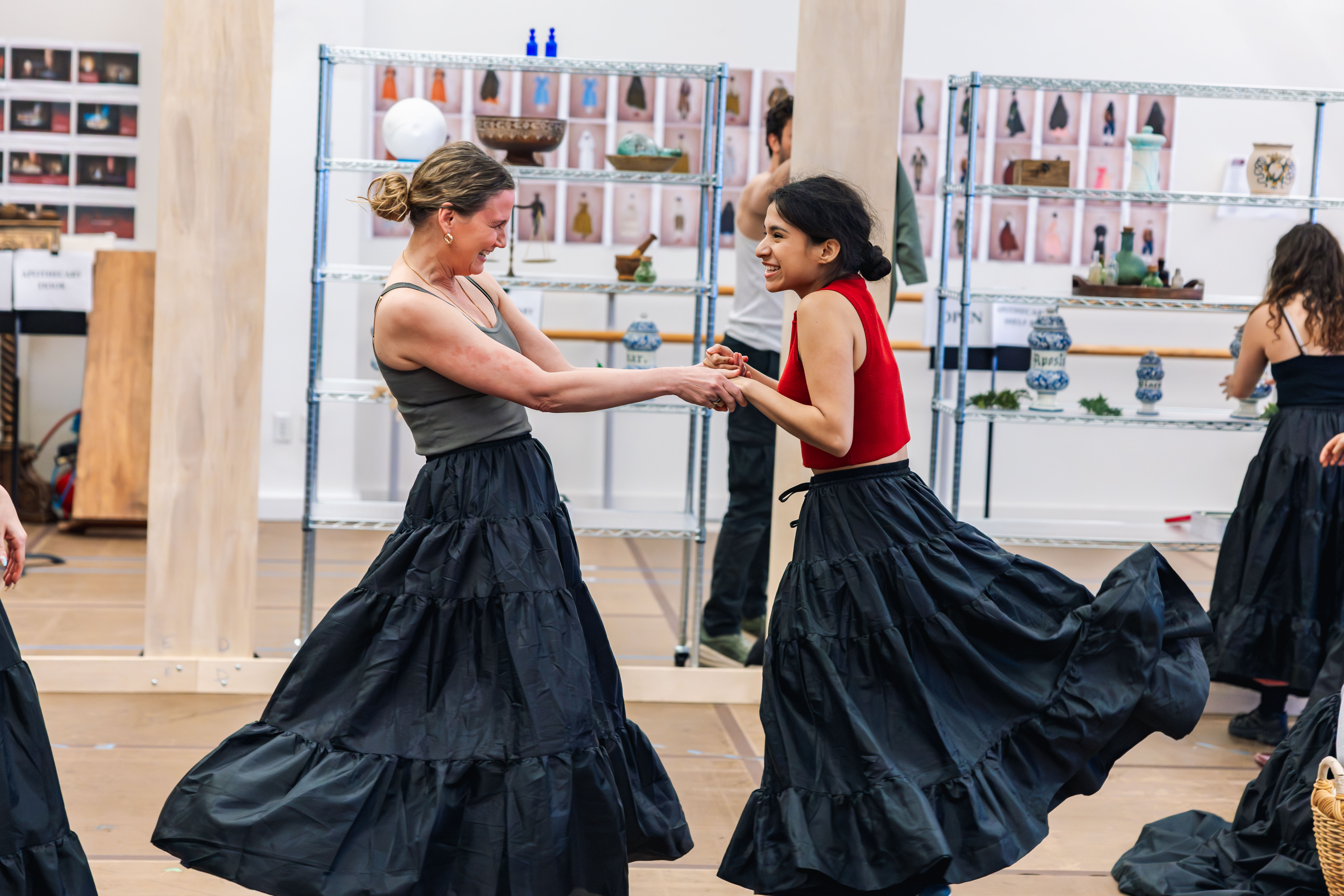
Jennifer Nettles and Naomi Serrano
(Rebecca J. Michelson)
Nettles may be a delicately beautiful woman externally, but internally, she considers herself an avenger of the wronged. “My favorite movie of all time is Gladiator, which surprises people sometimes. But, frankly, I want to be that dude. I related to him, I related to his drive, I related to his absolute unstoppable will and plan and mission for vengeance for his beloved family. I think women have that kind of a warrior inside of them, but we’re taught to ignore it in order to be soft and gentle and ‘nice’.” You can practically hear Nettles’ eye roll. “We haven’t been shown that we are allowed to fight back fiercely, heroines are always away from the battle ring, but I’m ready to charge in.”
For such a fiercely political musical, you’d expect Nettles to have received pushback from the powers that be. But PAC has embraced Giulia with open arms. To Nettles and the team around her, the concept that “the personal is political” is deeper than just a saying. The stories we tell are political, and in fact, those stories are the most powerful political force there is, because they’re what we emotionally connect to—more than policy or legal line items or precedent rulings.
“One of the things that I hope to do with this piece, is that I want people to watch and say, ‘Oh, for sure, I would have done the same damn thing if I were in her shoes.’ Once you’ve got them saying that, you’re building empathy, which is the most important thing we need if we want to make any progress. The more I focus on telling Giulia’s human story, the more those political messages are going to come through … I wanted to make sure with this piece that, as long as I held on to Giulia and made this about her, all of the messages that we need to receive from this, in all of their complexity—would be communicated through that empathy.”
In other words, there’s a difference between being told how to react, and feeling your own instincts react. As Nettles maintains: “This is a show about a person and about what she is experiencing. Watching it requires you to put yourself in that place, as opposed to approaching her story from some external ‘famous female serial killer’ judgement. What I think good art does, and what a real artist wants to do, is make an invitation to see yourself in a story.”
That invitation is extended to every person, of every creed, class, and culture, who can get to PAC before July 26. “Those in power want us as far apart as possible. Screw them.”