
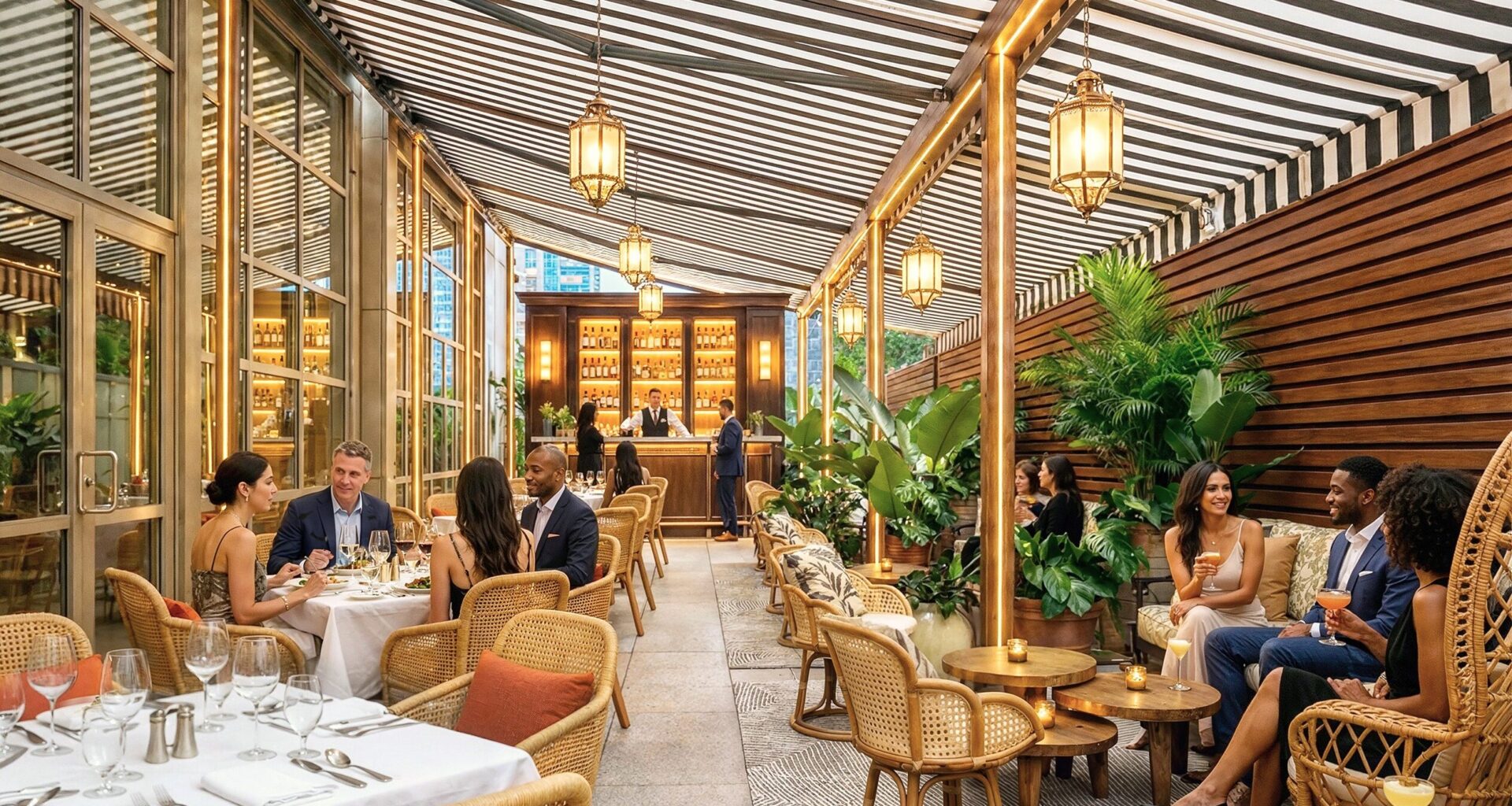
Manhattan’s most consequential real estate story right now isn’t about developers or institutional funds. It’s about occupiers – private clubs, family offices, healthcare systems, international brands, nonprofits and other occupiers who looked at a rare window in the market and decided that paying rent every month was no longer the smartest thing they could do with their capital.
The window opened for a specific reason. Uncertainty surrounding office demand in the post-pandemic era, combined with the fastest interest rate spike in a generation, pushed values down on a category of assets that had been effectively untouchable for years. Quality, flexible, well-located buildings became attainable at prices that made the ownership math work for a new class of buyers that had never seriously considered ownership.
That window is closing. Institutional capital is returning to the Manhattan office market with conviction. And simultaneously, the supply of quality commercial stock is being permanently removed, converted to residential apartments and condos under programs such as the Midtown South Mixed-Use (MSMX) district and City of Yes initiatives, or simply demolished. Our team advised on the sale of 29 West 35th Street to developer Marty Burger, the first office property converted to residential rental under MSMX. That transaction wasn’t an outlier. It was a signal. When a building becomes apartments, it doesn’t come back. The occupier-buyer who hesitates long enough will find that the asset they were evaluating is now someone’s living room.
Who’s Actually Doing This
The transactions tell the story better than any thesis statement.
Amazon has made the most visible case in recent years. Their 2020 acquisition of 424 Fifth Avenue, the former Lord and Taylor flagship, for $978 million was striking on its own. Their follow-up purchase of 522 Fifth Avenue in May 2025 for approximately $425 million removed any doubt that this is deliberate strategy. When one of the largest companies in the world buys twice on the same avenue four years apart, it’s not opportunism. It’s a capital allocation philosophy.
Bloomberg Philanthropies’ $560 million acquisition of 980 Madison Avenue at $4,720 per square foot is a different kind of signal entirely. That’s a family office deciding where its institution lives, permanently. No DCF model on exit cap rates. No five-year hold period. Just a conviction that this is where the organization belongs and that ownership is the only structure that honors that conviction.
Then there are the international buyers, who bring something to this market that domestic occupiers largely can’t match: structural accounting advantages that allow them to underwrite aggressively and still make the numbers work. Japanese tax rules permit significantly accelerated depreciation on certain asset classes, in some cases writing down a building over fifteen years versus the thirty-nine years required under U.S. GAAP. That’s not a footnote. It’s a competitive edge. Geshary Coffee’s acquisition of 560 Fifth Avenue for $38 million, at $2,800 per square foot, makes considerably more sense once you understand the depreciation math. We advised on that transaction. We also advised on the sale of 576 Fifth Avenue to a South Korean family for $101 million, and 16 West 39th Street to a user-buyer sitting directly adjacent to Amazon’s 424 Fifth campus. Across 19 user-buyer transactions since 2021, including 175 Spring Street, the pattern is consistent regardless of buyer nationality. These are organizations optimizing for something that, structurally, leasing cannot deliver.
What Ownership Actually Does
Four things, and they compound.
Control. When you own, the space reflects your organization, your culture, your security requirements, your operational needs, not a generic landlord’s buildout. For a private club, a healthcare provider, or a family office, that’s not a preference. It’s a requirement.
Stability. Leases reset. Quality space in Manhattan has gotten expensive again. An organization that owns has eliminated the single most unpredictable line item in its long-term budget.
Optionality. Ownership opens choices that leasing forecloses entirely. Refinance, sublease a floor, reconfigure the program, or ultimately sell into a market that has consistently rewarded patient holders. A lease offers none of that.
And then there’s the balance sheet conversion, the one that tends to close the argument for CFOs. The rent check disappears every month and builds nothing. The owned real estate compounds in value, serves as collateral, generates depreciation deductions, and sits on the asset side of the ledger. For any organization thinking in decades, that distinction is profound.
The Live Example
Which brings us to 66 East 55th Street, currently available at $49 million and in our view one of the cleaner expressions of this thesis in the market right now.
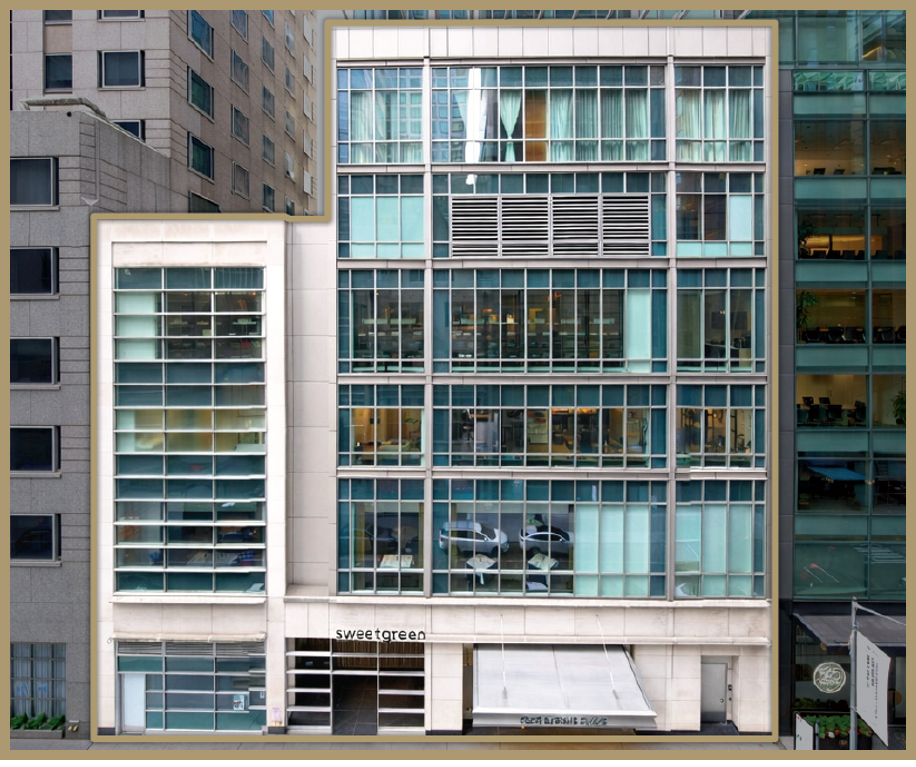
The building was formerly home to the Core Club, one of Manhattan’s most celebrated private membership experiences, and was constructed to hospitality standards that would cost years and significant capital to recreate. The infrastructure is already there: a commercial kitchen, spa and wellness facilities, a screening room, multiple lounges, two private outdoor terraces, and high ceilings on every level. Approximately 40,000 square feet across six usable floors, between Park and Madison Avenues, delivered vacant.
Zoning is C5-2.5, accommodating private clubs, office headquarters, private wellness hospitality concepts, concierge medicine, consulates, educational institutions, or art gallery uses, all as-of-right. The Sweetgreen retail condo on the ground floor is leased and cash-flowing, with the option to exclude it from the purchase.
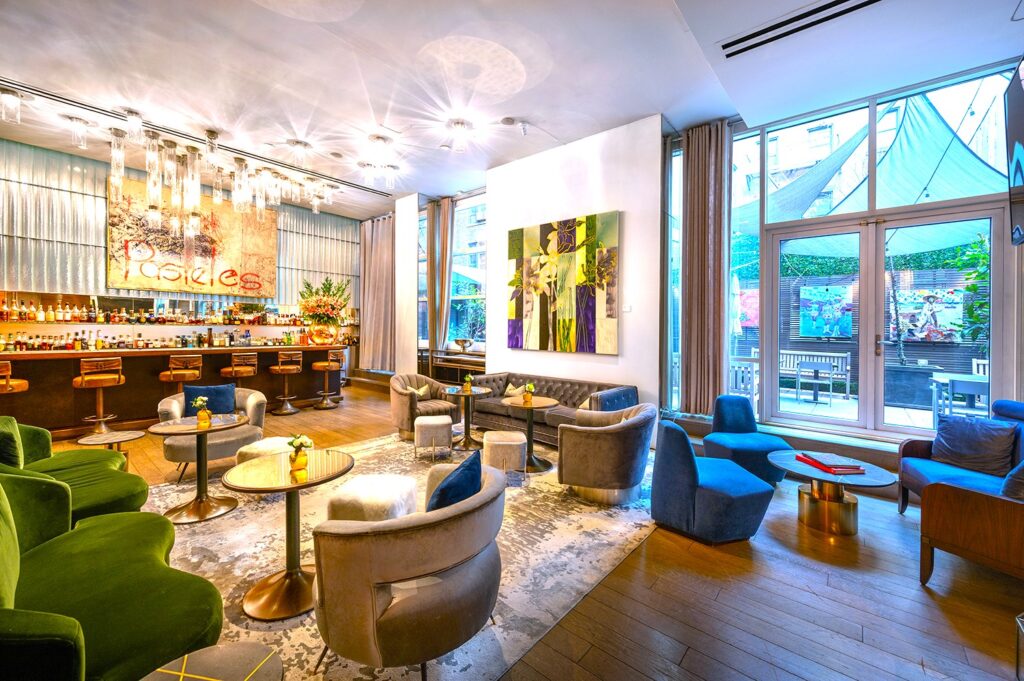
The neighbors are JPMorgan, Blackstone, and Citadel on the office side. Tiffany, Cartier, and the Peninsula on the retail and hospitality side. The asking price is $49 million for a full-building condominium with irreplaceable infrastructure in one of Midtown’s most recognized corridors.
For the right buyer, this isn’t a real estate decision. It’s a strategic one about where an organization plants its flag, and whether it wants to own that ground or keep renting it.
The Reason This Works Long Term
Strip away the transaction data, the zoning analysis, and the depreciation math, and the reason Manhattan ownership has compounded over every cycle for fifty years is straightforward. Talented, ambitious people still want to be here. They want to build things alongside other talented people, in a city that rewards that impulse and makes the rest of life somewhat easier to navigate alongside a demanding career. That’s not a real estate thesis. It’s a human one. And as long as it holds, which it has through considerably worse than anything the last few years have thrown at it, the ownership argument takes care of itself.
The window created by rate spikes and office uncertainty will not remain open much longer. Institutional capital has noticed. The conversion pipeline is accelerating. The supply is shrinking in ways that don’t reverse.
The occupiers who move now will own the opportunity. The ones who wait will be back to negotiating their next lease.
Dylan Kane and Zach Redding lead the Colliers New York Capital Markets group, a capital markets advisory team specializing in investment sales, debt placement, and equity advisory. Learn more about the 66 E 55th Street property listing.