
New York farmers can now apply for $30 million in funding for tariff relief to offset what state leaders say are growing costs and lost income because of federal tariffs.
The funding was proposed during Gov. Kathy Hochul’s State of the State address in January.
“The tariffs imposed by the Trump administration are reckless and damaging to so many of our industries, including our agricultural producers, who rely so heavily on the forces of international markets. I promised to stand up and fight for our farmers and I’m proud that our agricultural resiliency against tariffs program will provide the much-needed relief to New York’s farmers who feed our communities,” Hochul said in a press release Monday.
New York Commissioner of Agriculture Richard Ball said tariffs hurt farmers whether they were importing or exporting.
“In the spring, at the start of everything, cost of inputs, whether it be building materials, seed supplies, tools, equipment, things coming in from other countries that were affected by this and raising the cost of fertilizer,” Ball said in an interview Tuesday. “On the going part, after you’ve raised the commodity and you go to sell it in the marketplace, you’ve got trade issues with those countries, and it can affect the market price in a big way,” Ball said.
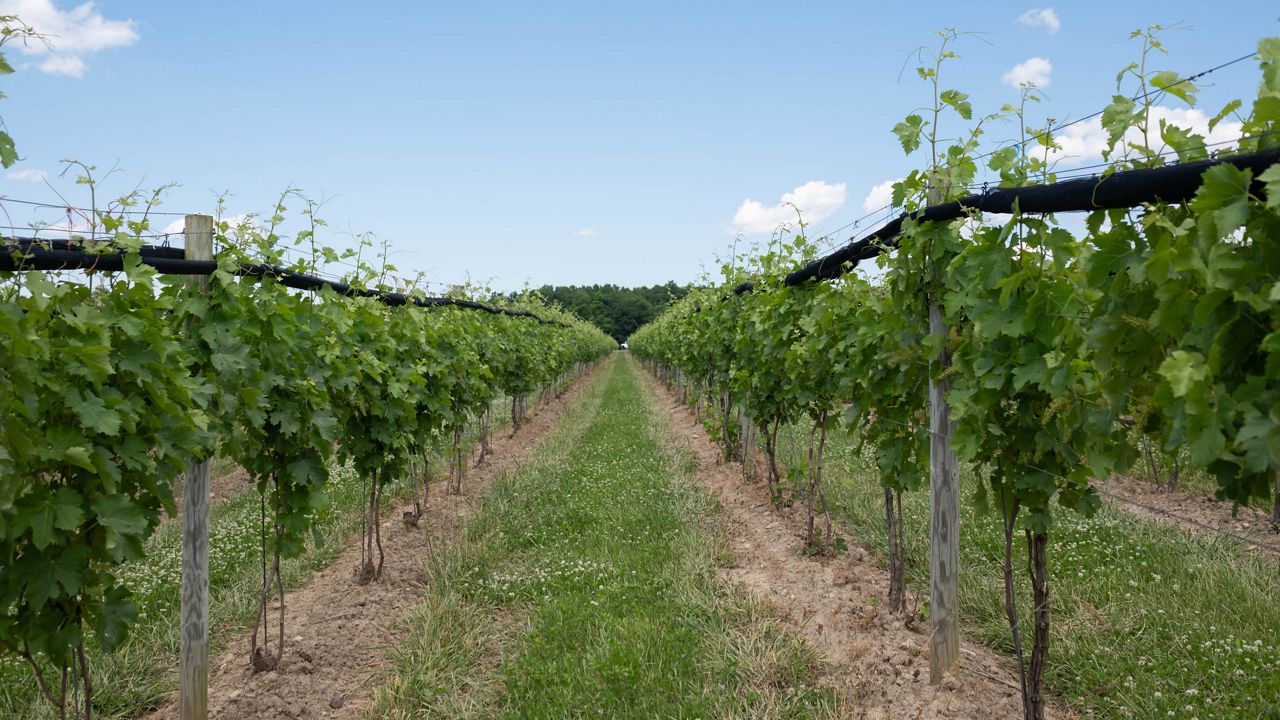
The New York wine industry has seen a reduction in exports to Canada by over 70%, he said. However, the impact of tariffs has not been solely on one industry.
“I was talking to a dairy farmer in the North Country who said his feed bill went up $10,000, so anecdotally we’re hearing everyone is feeling it,” he said.
Costs increased for many growers, he said, from greenhouses to peat moss. Ball added that machinery parts and tractors often go back and forth over the border for work, which increased costs for all farms as well.
Over 80% of chemicals used on farms and 70% of machinery come from countries that were subjected to tariffs, according to state officials in a press release.
There are two tracks for applicants to follow, one for dairy farmers and the other for all other products, including livestock, specialty crops and aquaculture.
During a recent visit to New York, U.S. Department of Agriculture Secretary Brooke Rollins discussed the farm economy, citing a trade deficit left over from the Biden administration.
“We knew that we were inheriting a really, really tough economy for our farmers, not one new trade deal in four years,” Rollins said.
Additionally, Rollins said the administration is working to increase more fertilizer production in the U.S. by approving “the largest ammonia plant in the world” in Louisiana.
“We’ve got almost 100 fertilizer projects that are coming online all around our country. What will hopefully become the largest phosphate plant will be breaking ground very soon, right next to that ammonia plant,” Rollins said.
Ball said that while the tariff relief funding was welcomed by farmers, it doesn’t address all of their concerns.
“The biggest enemy that we have right now is uncertainty. If you haven’t sold all of last year’s crop and you’re getting ready to plant, do you expand? Do you plant more, plant less? What’s the market going to look like? Are you going to be able to afford the fertilizer to finish the crop?” Ball said.
Adding to the uncertainty, there’s concern about the U.S. Mexico-Canada Agreement (USMCA) and its potential termination, Ball said.
“Is the USMCA trade agreement going to stand? We export about 40% of what we grow in New York, so we’re fortunate in many ways that our corn and soybeans, for example, stay here in the state to feed our dairy herd. They don’t get shipped to China or Southeast Asia, but having said that, when we’re not shipping out there from Nebraska or Iowa, then that’s affecting the market prices here. So the uncertainty of all of this, I think, is one of the biggest concerns I have,” Ball said.
President Donald Trump signed the USMCA in 2020, which ensures preferential market access for U.S. farm and food products, according to the U.S. Department of Agriculture. This year is a mandatory six-year review. However, Trump now has said the trade agreement is “irrelevant,” according to reporting from Politico. Mexico and Canada both agreed to renew the deal for another 16 years, but the U.S. has until July 1 to decide if they agree, otherwise, it will expire in 2036.