
In early May, the United States Postal Service declared that the smell of the sewage in front of an affordable housing complex in Brooklyn had gotten so severe that it was too hazardous to deliver the mail there, according to court papers.
Weeks later, on May 22, tenants of the 438-unit Mitchell-Lama development in Brownsville called Rutland Plaza filed a lawsuit asking for the court to force their landlord to correct the waves of vermin infestations, alarming elevator failures and recurring raw sewage backup they have been plagued with.
To add insult to injury, New York State announced a $96 million investment in 2016 to improve development, but tenants say the funding has come up short. All they have seen are shallow attempts at repairs.
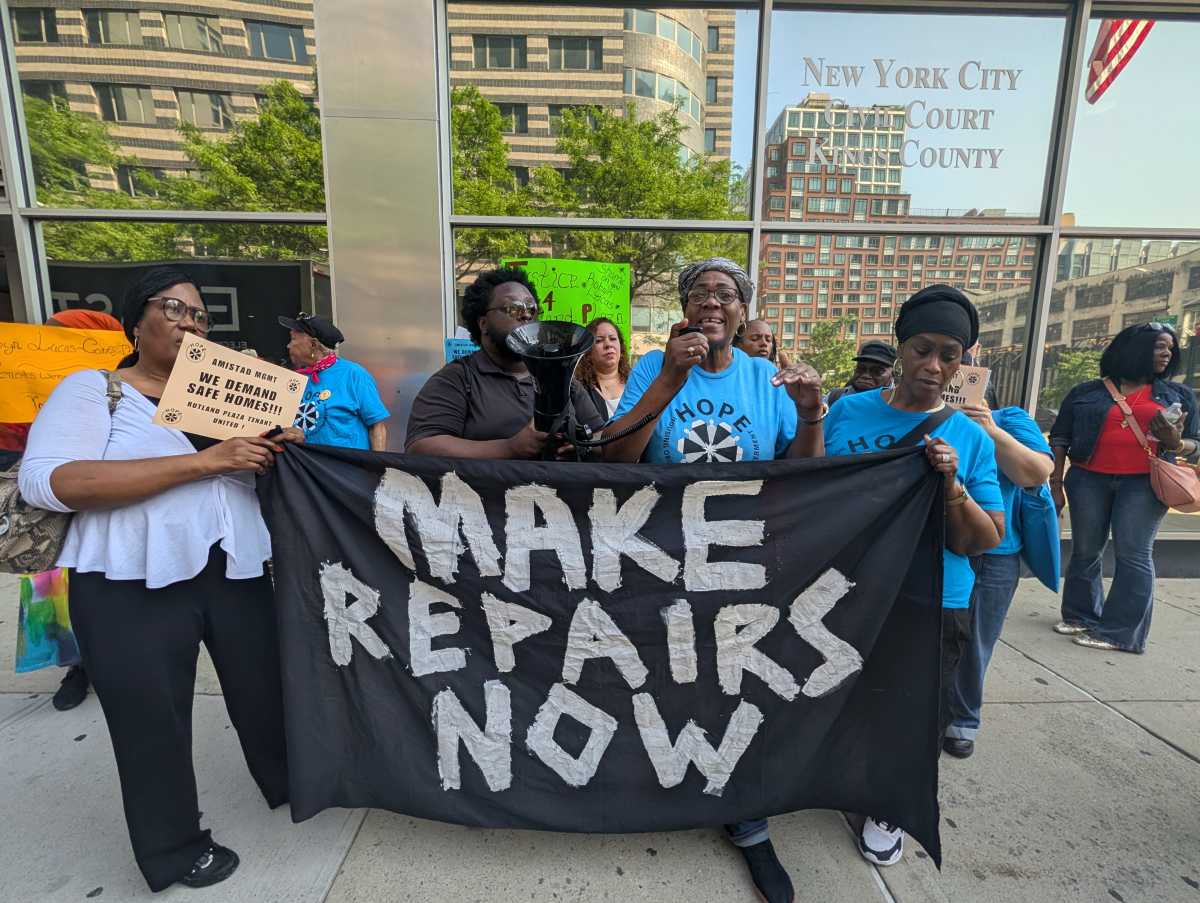
On June 29, those Rutland residents who have formed a tenant union rallied on the steps of the Brooklyn court against their landlord, Robyn Lucas-Cora, and state and city housing agencies for failing to compel her to comply with the law. Lucas-Cora is currently listed as number six on the city’s Worst Landlords List.
“We are done being ignored, exploited, and forced to live in uninhabitable conditions,” tenant Cynthia Hammond said in a statement. “We have watched our rents go up while sewage leaks, mold, and dangerous building conditions were left to fester. No one else would accept these conditions and neither will we. We demand accountability and justice now!”
Brooklyn tenants’ lawsuit seeks accountability and repairs
The lawsuit is not just seeking repairs to the building, but accountability for millions in public funds that were designated for building improvements, tenants say they’ve never seen.
Last year, the state Department of Homes and Community Renewal, which oversees the building, conducted inspections of the apartments that found widespread violations of the project’s regulatory agreement. A 14-page list of open violations that the state regulators gathered last year included roach infestations, mold violations and plumbing failures that led to recurring backups of sewage into the property.
“However, these [agencies’] collective oversight mechanisms have proven insufficient to compel meaningful compliance by owner respondents, leaving tenants to live with the consequences of years of inaction and neglect,” wrote the tenant’s Legal Service NYC attorneys in the lawsuit.
At the top of the list of hazards the tenants are contending with are unsanitary water conditions, which include discoloration, contamination and recurring raw sewage backups.
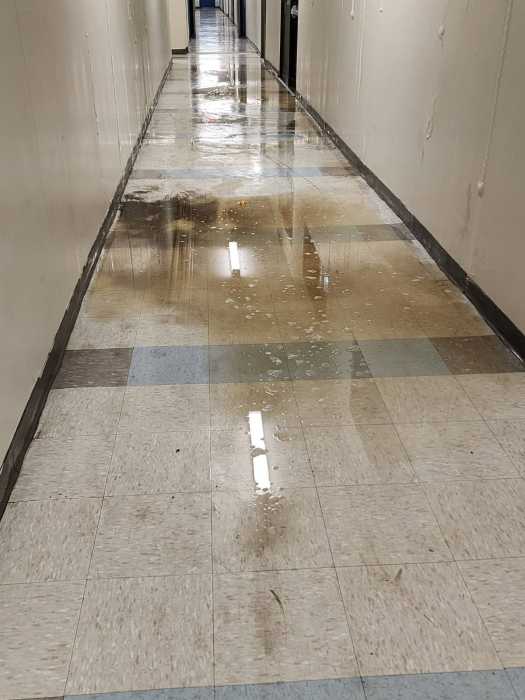 Brown water spreads over the floor of Rutland Plaza hallway.Photo via Legal Services NYC
Tenants recently received water testing results showing that Legionella bacteria — the cause of Legionnaires’ disease — are present in the water they use to shower, cook, and drink.
Other persistent issues include chronic mold tenants say is caused by leaks and persistent ventilation failures; defective and unreliable elevators compounded by power outages; broken entryway locks that make the building unsafe; and ongoing harassment characterized the landlord’s failure to make timely fixes.
Tenants say the mold problems are widespread throughout the building complex and have been made worse by issues with the ventilation system, according to the court papers.
In one case, a tenant nearly lost her Section 8 subsidy as a result of the landlord’s failure to respond to the hazardous conditions, according to the legal filing. A failed Centers for Disease Control and Prevention inspection from that tenant’s unit described a stream of water that “cascades from the [bedroom] wall when raining,” and noted that an “electrical heater is right below where the water is falling.”
The lawsuit claims that in the decade since the development received the extra funding, state regulators failed to monitor or audit landlords’ use of the $96 million or to hold landlords accountable for mismanagement.
Legal representatives of the apartment’s management company did not respond to a request for comment. A DHCR spokesperson said the agency does not comment on pending litigation. A New York City HPD spokesperson also declined to comment.
In the suit, the tenants are asking the court to compel the landlord to bring the building up to the legal standards at the city and state level by correcting hazardous conditions, restoring essential services, and stopping housing management from harassing their tenants.
They are also seeking civil penalties and lawyers’ fees for the years of outstanding violations of the city building codes.
“This is not a typical housing court case,” said Dana Klasky, a staff attorney with the Tenant Rights Coalition at Brooklyn Legal Services. “These tenants aren’t just asking a judge to order repairs. They’re asking the court to hold both their landlord and the government agencies responsible for overseeing this development accountable for years of neglect after the state allegedly invested millions of dollars to rehabilitate these buildings.”