
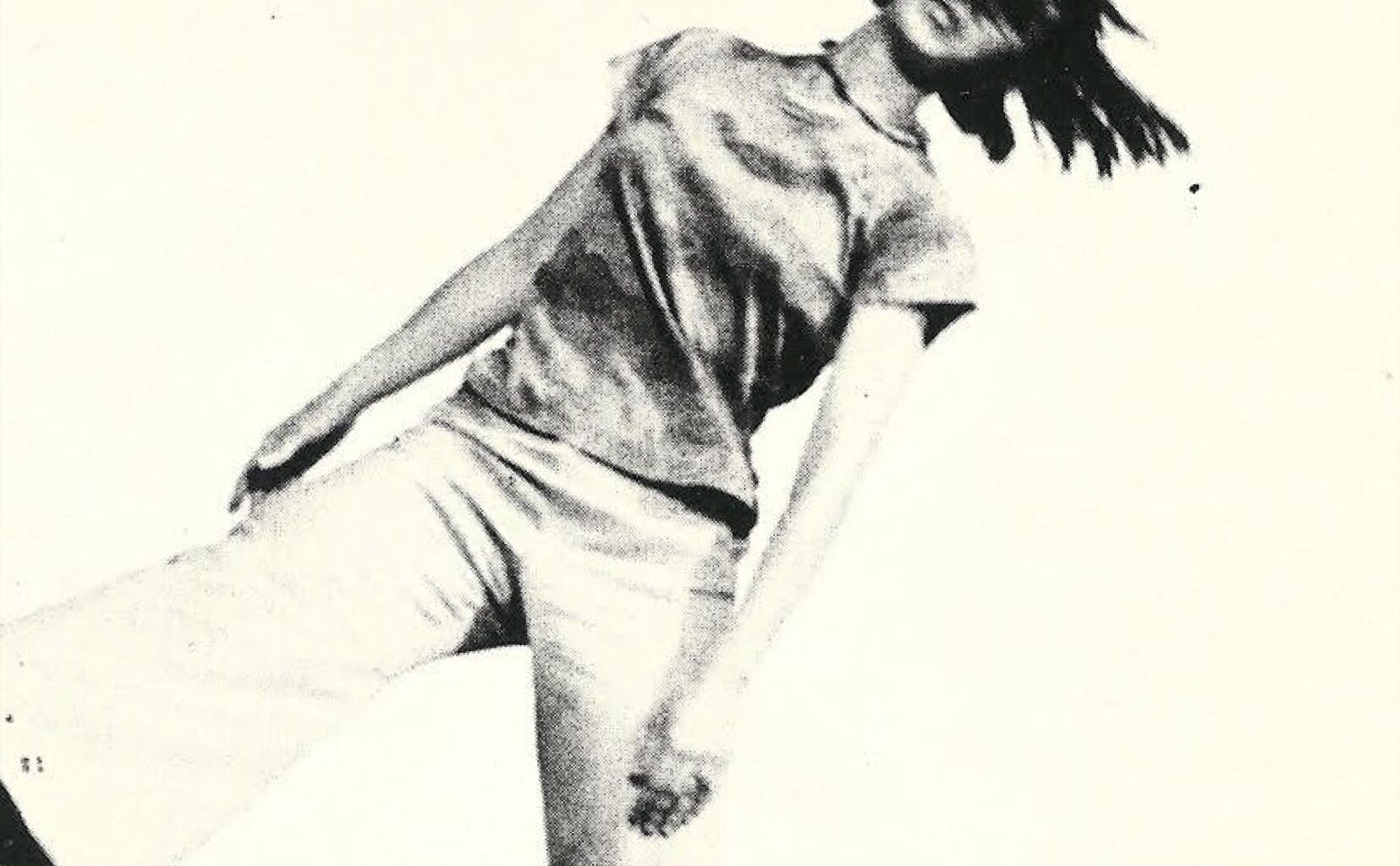
Rennie McDougall
Nonstop Bodies: How Dance Shaped New York
Abrams Press, 2026
New York City, the real-life land of a thousand dances, has long been a hotbed for new movement styles. From all over the world to all five boroughs, hoofers, tappers, stompers, and shufflers have flocked en masse to partake in what one could only assume is the greatest party, with the greatest music and the greatest drinks, on earth. That is, at least, how the city comes across in Nonstop Bodies: How Dance Shaped New York City, Rennie McDougall’s sweeping new cultural history of dance in twentieth-century New York. A writer, critic within these very pages, and former professional dancer, McDougall brings both a practitioner’s understanding and a historian’s eye to his subject, tracing everything from mambo’s rise at the Palladium on 53rd and Broadway in the 1940s, to ballet’s modernization in the studios of Midtown in the 1960s, to breakdancing’s birth in the lobbies and playgrounds of the Bronx in the 1970s. Across these diverse genres, McDougall employs both ease and flair, utilizing time and space as only a dancer could to tell the stories of countless movement cultures and the movers who made them.
On the occasion of the book’s publication in May 2026 by Abrams Press, I spoke with McDougall over Zoom, discussing his research process, dance as a form of care, and what gets lost when spaces for collective movement begin to disappear.
Phoebe Roberts (Rail): What was it about New York, particularly in the twentieth century, that made it such a fertile environment for so many different dance cultures to emerge simultaneously?
Rennie McDougall: The twentieth century in general was interesting. I picked it almost arbitrarily at first, because I needed some kind of container, and a lot of the dances I was looking at were in that time frame. But then, because I was tying dance to these big social and liberatory movements, I realized that the twentieth century was all really about the body, particularly about people seeking freedom or liberation through their bodies. It began with the anti-puritanical movement at the turn of the century, and then continued through the sexual revolution and the civil rights movement of the 1960s, and so on. People were discovering their own bodies and freedom through their bodies, but then also pointing out the repression, or oppression, that occurs when people define other people’s bodies. That made dance seem like a really apt lens to look at all of those tensions across the century, because they are about embodiment.
And then, if you look at the significant American choreographers in the twentieth century, they were all based in New York. Also, all of these movements—the Lindy hop, breaking, the New York mambo—were tied to the city. It felt like a kind of book that could only exist when talking about New York. Somebody asked me recently, “Are there versions of this book that could be written about other cities?” And obviously, there are dance histories in other cities, but the way that so many different people and movements and artistic expressions were all coming out of one place side by side, and the way that just by being in proximity they influenced each other, felt specifically New York.
Rail: Something this book does so well is show the network of influences that contributed to dance cultures and how they were all in conversation with one another.
McDougall: The thing I really wanted to do with this book is to look at dance history through the lens of people’s lives and the way that they’re living their lives in the city, their social dynamics, and how those things infiltrate the dances. I wanted to tell the story of why these dances were so significant to the communities that created them, and then also how they reverberated out and said something about the social and political tensions at the time they were being created. The chapter on the Lindy hop is a very clear example of that. Mura Dehn, who was one of the documentarians of that period, wrote in her diaries about the fact that there are no authors of this dance. It’s a shared, communal thing being recreated afresh every night by the dancers.
It was modernism, really, that helped establish this idea about individual genius-type of artists. People like Martha Graham exemplified this idea of the excellence of a single person who was the genius in their field. Culturally, we are trained to historicize dance that way, to elevate these individuals as giants, but we lose something about what those artists were doing and how they were working and the people who were working with them. Something that was really interesting to me was going to the archives and researching the oral histories of Martha Graham’s original dancers. Graham was creating this new, very specific embodiment that really was her own language. She was working with a group of dancers who had to cultivate and translate that in their bodies in order to create the performance, so to hear the story through their own voices—about the creative act they were doing—was a nice way to reframe the history. So it isn’t just about these single figureheads.