
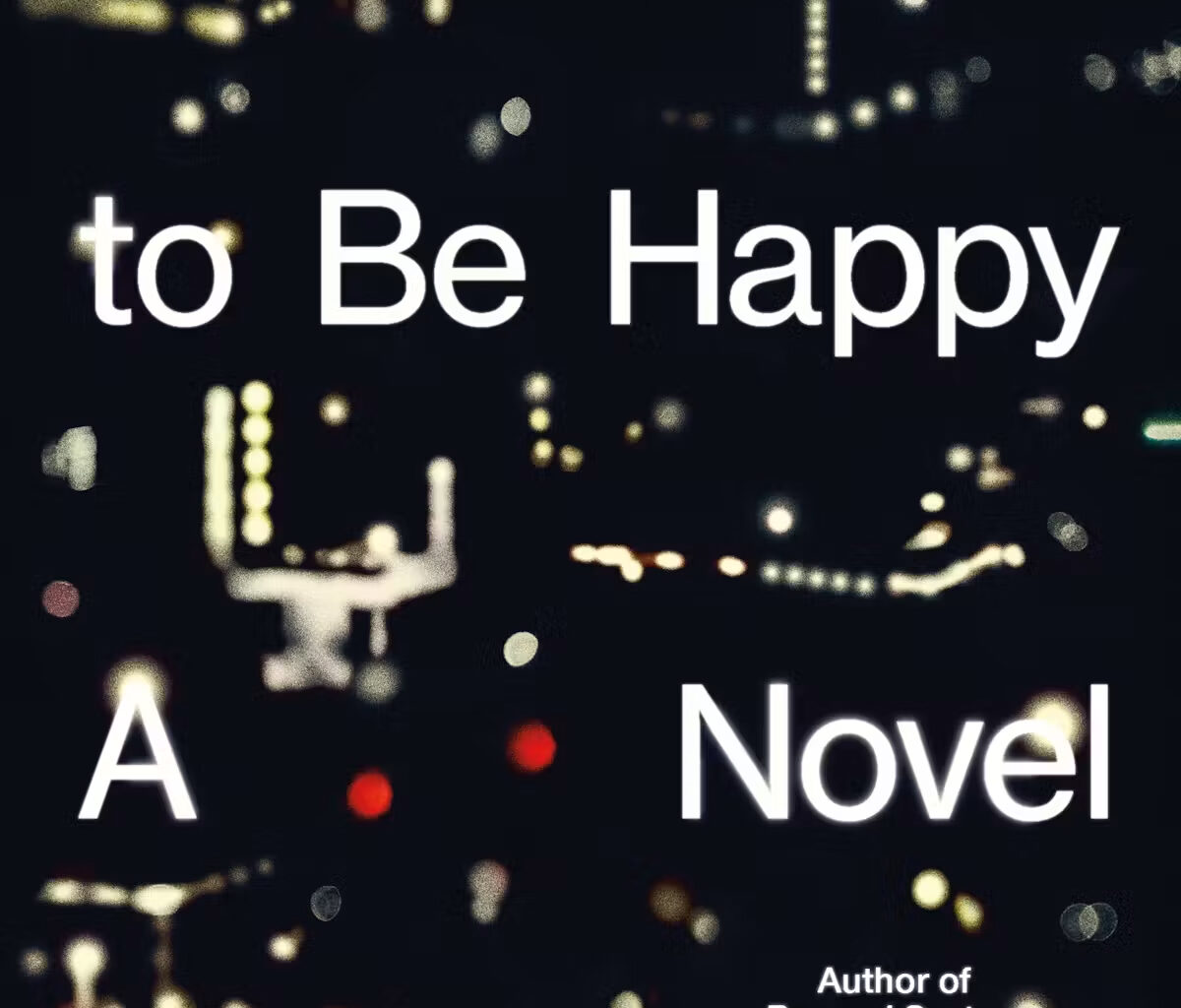
Jem Calder
I Want You to Be Happy
Farrar, Straus & Giroux, 2026
During and after the pandemic, my main literary taste were novels on Lexapro; their narrators were glassy-eyed, their prose bare. The characters write poetry and fiction, but mostly look over their poetry and fiction in Google Docs. They are invited to parties by people they sort of know and have somewhat enjoyable times. They overanalyze how many exclamation marks they send in a text and get reprimanded at work via passive-aggressive Slack messages. They’re cynical, bored, and sometimes cruel. Sally Rooney comes to mind, but also Halle Butler, Lauren Oyler—anyone whose protagonists existed to crudely depict modern life while also enjoying lying down. You can almost always sense these novels being guided by the North Star of My Year of Rest and Relaxation.
So when I read Jem Calder’s I Want You to Be Happy, I waffled on whether his debut novel was dated or a continuation of a glum universe—a simplicity achieved in his glowing short story collection, 2022’s Reward System. One could slip into one book after the other just as easily; his writing remains crystal-clear and eagle-eyed, even though his characters merge into a clump of grumpy millennials. The world, Calder suggests, doesn’t need pomp and circumstance. Our behavior alone is enough to create a story.
I think I would agree with this. Some of my favorite writers, Jennifer Egan and David Sedaris (and Calder’s friend, Rooney), rely almost exclusively on the human condition and all the silly things we do under stress or love or pressure or desperation. But Calder has the benefit of an anchor in Reward System—he’s true to this, not new to this. Even so, it’s risky to write a sentence where Joey “put in her earphones and streamed a new album by her favorite singer-songwriter: the album’s release having been brought to her attention via push notification earlier that day.” In 2026 it’s more than reasonable for someone to roll their eyes at an aversion to proper nouns.
Despite this somewhat gray world, I Want You to Be Happy’s charm is its magnetism and relatability. Chuck, a copywriter, and Joey, a barista, meet at a bar. He’s around a decade older than her, which gets some laughs from her friends. He gets erectile dysfunction when he brings her home, but she’s kind about it, and stays over. She goes from his place to work, where she scrolls Instagram. The book remains at this adrenaline level the entire time—Chuck nods off at work and is demoted on a project, Joey works on her fiction with light encouragement from him. (He snoops on her stories, published on now-defunct websites.)