
The Dutch colony of New Amsterdam lasted less than 30 years, but its profound impact on New York and the birth of the United States continues to this day.
As the nation approaches the 250th anniversary, historians say New York’s early Dutch period is more than a colonial footnote. The settlement of New Amsterdam helped shape the city’s identity as a center of trade, immigration and cultural diversity.
Vanessa Sellers, the vice president of the New Amsterdam History Center, describes Henry Hudson’s arrival to New York Harbor in 1609 as a great moment.
“He was really the one who went up the Hudson River and sought a shorter road to Asia in the East for better trading and found out it was a separate continent,” Sellers said.
The Dutch hired Hudson as a navigator to check what economic profit and new land they could find. Like real estate, it’s all about location: New York has an expansive, protective bay and an ideal location for shipping and building a port within the trading routes they already had.
As Monxo Lopez, the Curator of Community Histories at the Museum of the City of New York, noted, European nations were in competition to discover as much land as possible. This led to Henry Hudson who was working for the Dutch Republic, stumbling upon the New York City Bay.
“The main reason for New York being a major trading location was the river that was an entry point deep into the continent. They called it New Amsterdam because the organizer and main owner of stocks in the Dutch trading company was based in Amsterdam,” Lopez said.
Where the Hudson River got its name
Roger McCormack, the director of education at the Bronx County Historical Society, describes Henry Hudson sailing for India after being commissioned by the Dutch East India Company. The Dutch sailed into New Netherlands in the 17th Century.
“Hudson’s ship sailed through New York Harbor and up the Hudson River before hitting Albany. They were looking for a really great port in the fur trade and they decided on Manhattan Island and New York Harbor because they had easy access to Albany and the interior of the country with other settlements in the northeast,” McCormack said.
New Amsterdam was founded in 1625, giving us 400 years of New York City as of last year.
“The Dutch were pragmatic and frugal with money. Historians view the Dutch as the reason behind the quintessential New York capitalistic gene with religious toleration which certainly wasn’t true with New England and the puritans,” McCormack said.
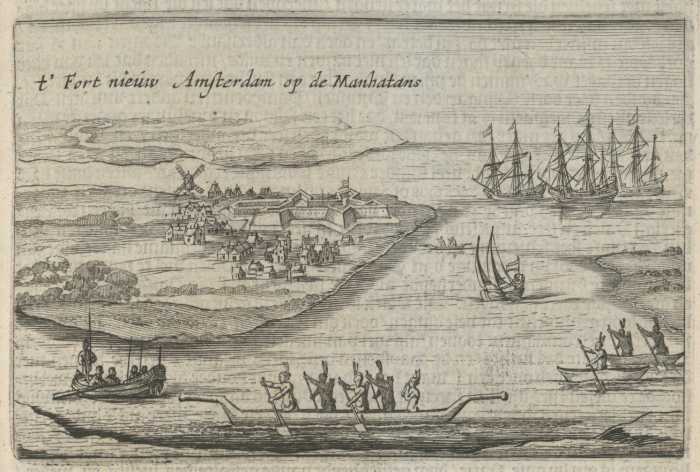 New Amsterdam mapCourtesy New Amsterdam History Center
McCormack describes conflicts in the late-1630s when Jonas Bronck arrived in New York. The Kieft’s Wars were a series of wars fought between the Dutch and the Natives, named after the Dutch Governor in the 1640s, Willem Kieft, which included immense bloodshed.
Sellers described the English takeover of New Amsterdam in 1664 was an easy transition due to New Amsterdam’s small military presence and after weeks of discussion, the Dutch surrendered the city but kept their rights.
“This was a very interesting moment in warfare, in the sense that no shots were fired and the Dutch could stay where they were and keep many of their rights,” Sellers said.
Sellers went on to explain that women were not able to be businesswomen on their own once the English took over, resulting in their rights being diminished. In Holland, women always had business rights because 50% of the men were at sea.
“The only thing that remained was the element of tolerance for religious conscience that the Dutch had and the English insisted should be kept. The way the Dutch described religious freedom became part of the Declaration of Independence,” Sellers said.
Renaming New Amsterdam
McCormack describes the transition of power to English control in 1664 as a bloodless victory. The Dutch didn’t have that many weapons to defend themselves and the English had been colonizing for a long period already.
New Amsterdam became New York in 1664, named after the Duke of York.
Lopez explains that in the 1600s there was a very long world war between different European powers in which they attacked each other’s colonies.
“The British decided they were going to attack and take over the Dutch colony of New Amsterdam. When they arrived here, the colony was still relatively populated because the Dutch were primarily interested not in land but in the fur and pelt trade. The New Amsterdam leader Peter Stuyvesant, although he originally wanted to fight, the Dutch population said that would be foolish. They were overwhelmed by the British military power. So the British took over peacefully,” Lopez said.
McCormack and Sellers claim many Dutch names have survived in New York such as Harlem, Brooklyn, Broadway, Dyckman, Van Cortlandt, Canal Street and especially Wall Street that was meant to protect the Dutch from the English and natives during the wars.
“It is often considered that New York still has that Dutch vibe in communication and collaboration. New Amsterdam being a country always influenced the whole world coming to Holland and the other way around. This idea of open trade is what became part of America,” Sellers said.
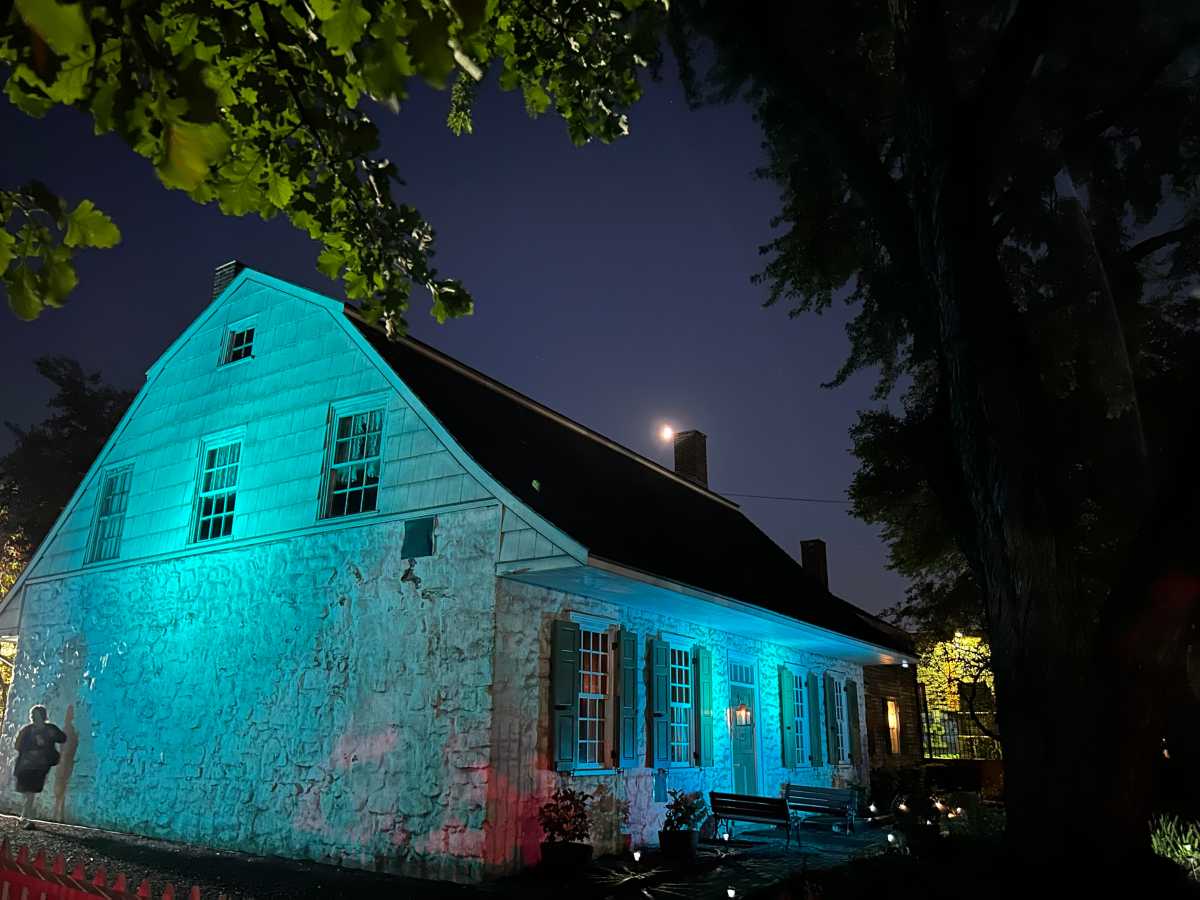
Linda Monte, a board member of the Greater Ridgewood Historical Society, claims New Yorkers should remember Dutch history. The society operates the Vander Ende Onderdonk House, a restored Dutch colonial farmhouse near the Brooklyn/Queens border that contains relics and other reminders of New York’s colonial past.
That Dutch can still be seen today in the names, neighborhoods and institutions that remain a part of New York’s identity.
Although New Amsterdam eventually came under British control and was renamed New York, the Dutch influence never fully disappeared.
“When you look at the multiculturalism of Dutch New York, that’s still the way we are. The fabric of the Dutch is still with us.”